




Edwardian Animal Landscape Painting
Edwardian animal landscape painting brings together pastoral countryside and domestic or sporting animals, offering the exact rustic charm collectors seek for country houses.
Edwardian Animal Landscape Painting
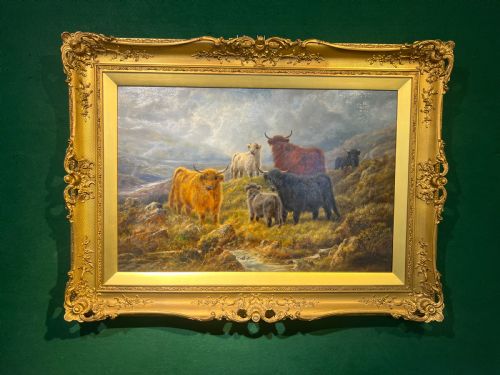
An edwardian animal landscape painting captures domestic livestock, working dogs, and wildlife set within British pastoral scenes. These works bridge the gap between traditional rural portraiture and broader landscape traditions of the era.
The pieces on this page span the nineteenth century through the early twentieth century, incorporating styles such as Victorian pastoral, Edwardian British school, and Victorian animalier. Oil paintings dominate the selection, executed primarily on canvas with occasional watercolours appearing.
Framing materials often include giltwood, plaster, wood, and gilt, which complement the traditional subjects of cattle, sheep, horses, and dogs in various rural settings.
How they were made
Artists utilised oil paint on canvas to build rich textures for animal coats and atmospheric landscape backgrounds. Watercolours on paper also appear, offering lighter tonal qualities for rural evening scenes.
Frames are constructed from wood and plaster, finished with layers of gilt or giltwood to enhance the visual weight of the paintings. These traditional framing techniques protect the canvas while providing a decorative border.
Listings feature works spanning from the nineteenth century through the 1920s, utilising oil paint, canvas, giltwood, and watercolour.
What varies in quality
The skill in rendering animal anatomy and movement distinguishes different works, alongside the depth and perspective of the surrounding landscape. Paintings that integrate the subject naturally into the pastoral environment show superior draughtsmanship.
Frame craftsmanship also plays a role, as original giltwood and plaster mouldings add considerable visual harmony compared to later replacements. The handling of light, particularly in dusk or evening scenes, dictates the overall artistic success.
Robert Watson·John Emms·Basil Bradley·Claude Cardon·W.A. Clark·Cuthbert Edmund Swan·William Sidney Cooper·Royal Worcester
The Edwardian Animal Landscape Painting Glossary
- Oil on Canvas
- Pigment mixed with drying oil applied to a woven fabric support. This combination allows for rich blending and textured brushwork.
- Giltwood
- Wood carved and covered with a thin layer of gold leaf or metal foil. It provides a bright, reflective border to traditional paintings.
- Watercolour
- Paint consisting of pigment suspended in a water-soluble vehicle. It is typically applied to paper to create translucent washes of colour.
- Animalier
- Art focusing primarily on the representation of animals. This term encompasses both paintings and sculptures of domestic and wild creatures.
Edwardian Animal Landscape Painting: Frequently Asked Questions
What subjects appear in these paintings?
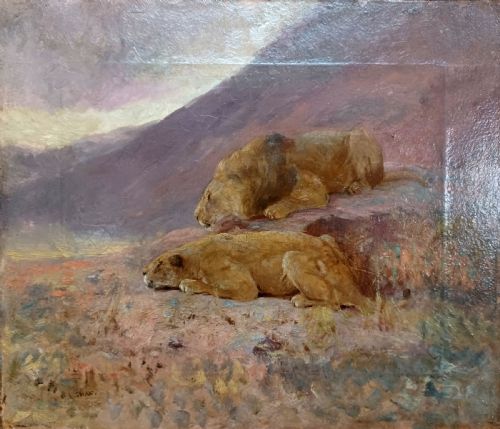
The works depict domestic and working animals including cattle, sheep, horses, terriers, spaniels, and lions within natural settings. Scenes often incorporate rivers, clifftops, and pastoral landscapes.
Human figures occasionally appear alongside livestock and poultry, reflecting rural life and farming practices of the period.
How do I care for an oil painting?
Keep paintings away from direct sunlight and fluctuating temperatures to prevent canvas warping and paint cracking. Dust the surface and frame gently with a soft, dry brush.
Avoid using liquid cleaners or water on the canvas or the giltwood frame to preserve the original materials.
Are these paintings original works?
The selection consists of original fine art paintings executed by listed artists and makers from the nineteenth and early twentieth centuries. Each piece reflects the specific handling and style of its creator.
Mediums include oil on canvas and watercolour, showing authentic period materials and framing.
What framing styles accompany the art?
Many pieces retain traditional frames constructed from wood and plaster with gilt or giltwood finishes. These frames are period-appropriate to the artwork.
The combination of gilt decoration enhances the tonal qualities of the landscape and animal subjects.