

Victorian Pastoral Art
Victorian pastoral art gathers framed oil paintings and watercolours celebrating rural life, offering buyers tranquil countryside scenes to live with.
Victorian Pastoral Art
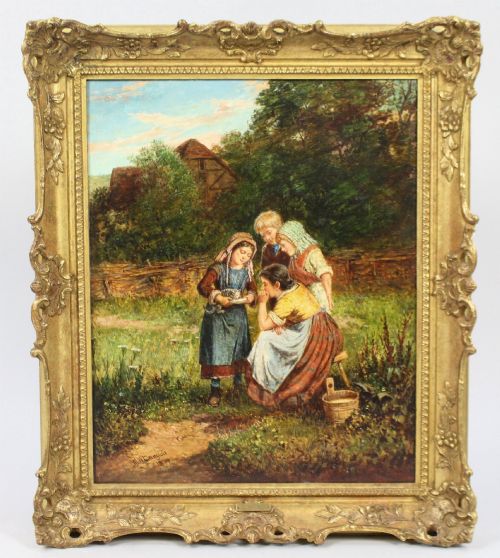
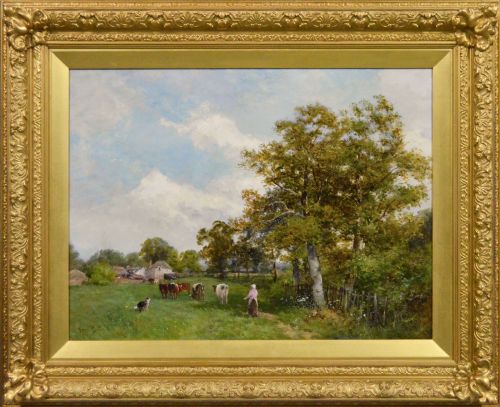
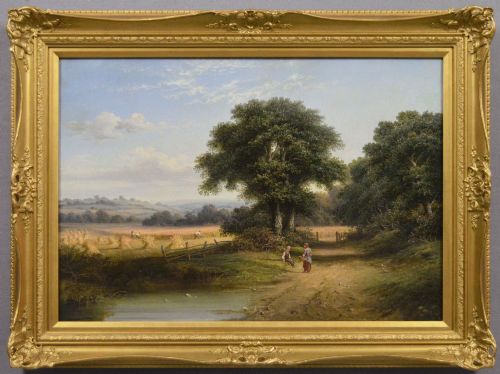
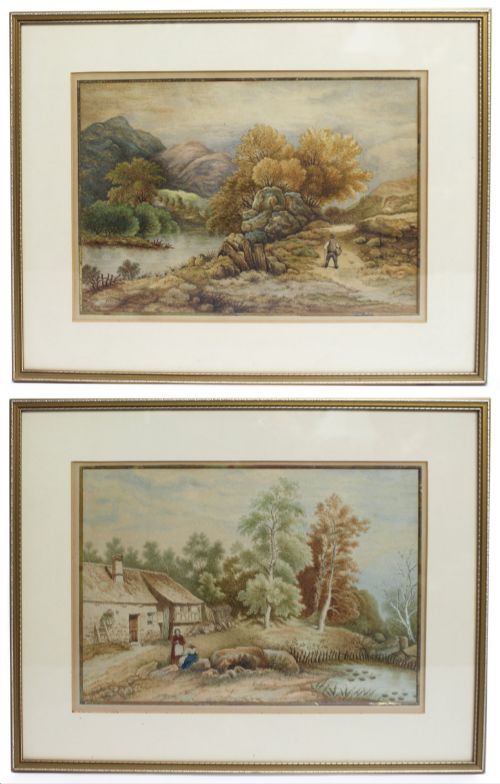
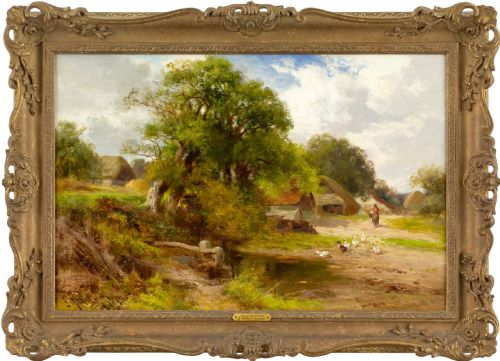
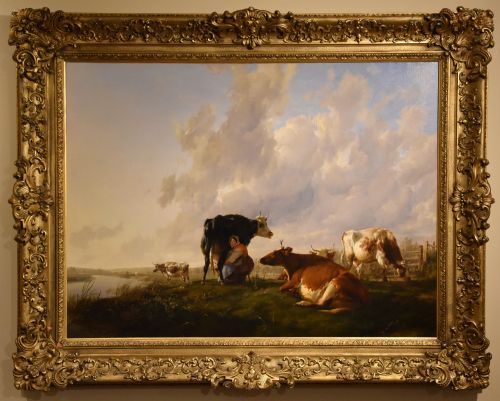
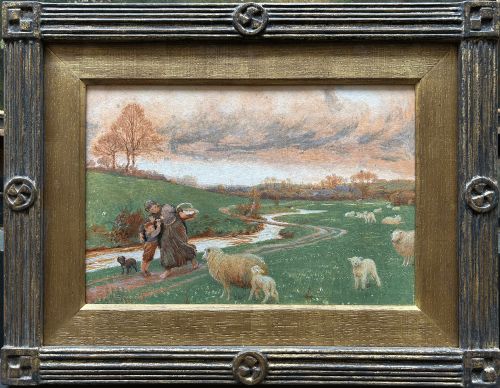
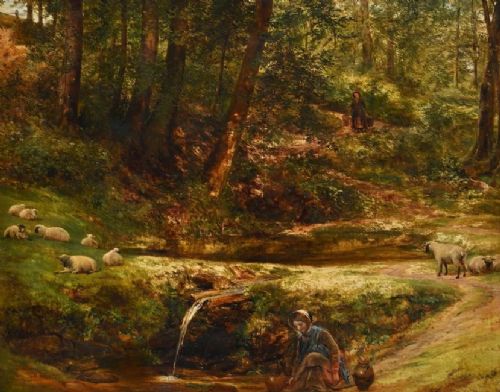
Victorian pastoral art centres on rural life, depicting shepherds, cattle, sheep, and harvest fields across the nineteenth century and into the early twentieth century.
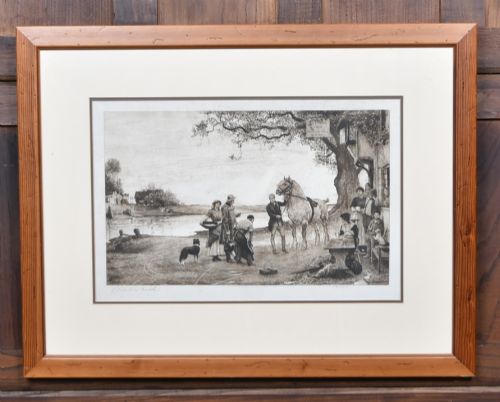
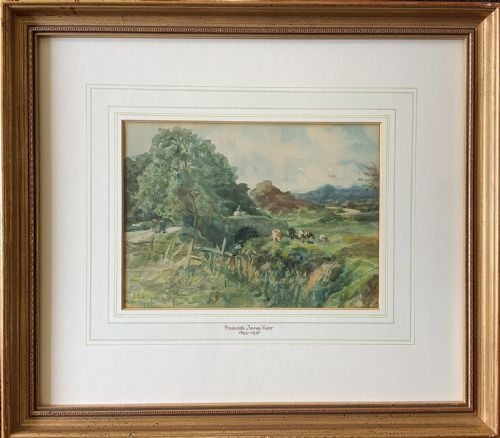
Most pieces met on this page are oil paintings on canvas or board, alongside watercolours and framed etchings showing British and European landscapes.
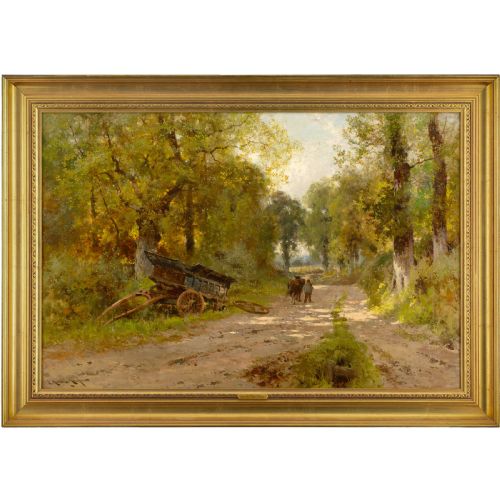
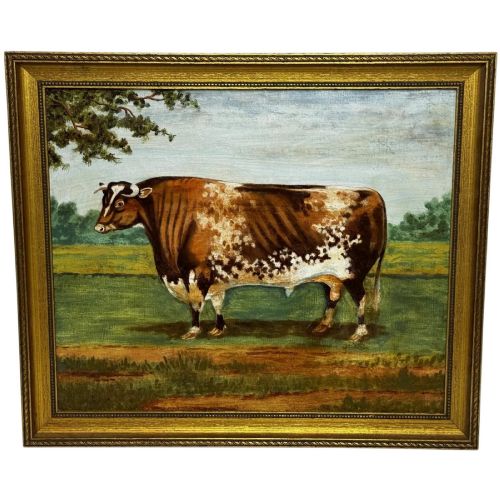
Subjects range from quiet river banks and misty morning moods to detailed studies of prized shorthorn bulls and grazing flocks.
Materials and Techniques
Artists painted primarily in oil on canvas or applied watercolour to paper, often framing the finished works in gesso and giltwood frames.
Draughtsmen and printmakers also produced rural etchings and lithographs after original paintings to capture the countryside.
Makers utilised wood and glass to construct and protect these framed artworks, preserving the pigments and paper over the decades.
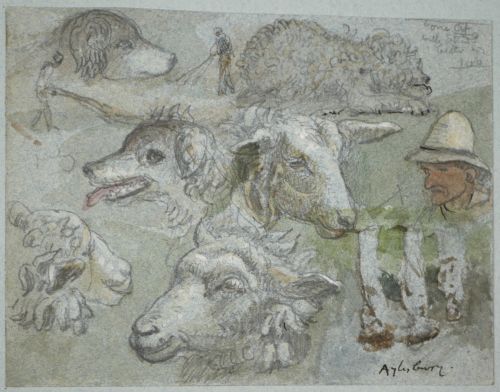
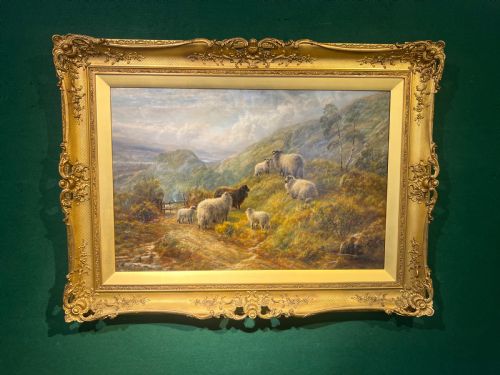
Several canvases pay special tribute to prize-winning shorthorn bulls and very fluffy highland sheep.
What Varies in Quality
Quality rests upon the artist's ability to render light, atmosphere, and anatomy, distinguishing master studies from routine studio production.
The condition of the canvas, paper, and original gilt frame dictates how well the composition survives its age.
Stronger pieces display confident brushwork and specific geographical or pastoral detail rather than generic landscape formulas.
Eugène Verboeckhoven·James Smetham·John Horace Hooper·EJ Letheren·Mark William Langlois·David Bates·Walter Heath Williams·Robert W. Macbeth·Th. Thibault·Thomas Sidney Cooper·Frederick Walker·Richard Redgrave·Frederick James Kerr·Robert Watson·Albert Rieger·William Watson Jnr·Douglas Cameron·Johann Friedrich Voltz·Henry H Parker·Miles Birkett Foster·Charles Henry Slater·Henry Schouten·Charles Edward Wilson·Frederick Hines·Johannes de Haas
The Victorian Pastoral Art Glossary
- Oil on Canvas
- Pigment mixed with drying oil applied to stretched fabric. This medium allows for deep colour blending and textured brushwork.
- Giltwood
- Wood carved and coated with gold leaf or gold paint. It provides an ornate border for traditional paintings.
- Watercolour
- Pigment suspended in a water-soluble vehicle applied to paper. It creates luminous, translucent washes of colour.
- Etching
- A printmaking process where acid cuts into unprotected parts of a metal plate to hold ink. Artists use this technique to produce detailed monochrome lines.
- Gesso
- A paint mixture consisting of a neutral binder mixed with chalk or pigment. It serves as a smooth preparation layer for frames and panels.
Victorian Pastoral Art: Frequently Asked Questions
What subjects appear in these paintings?
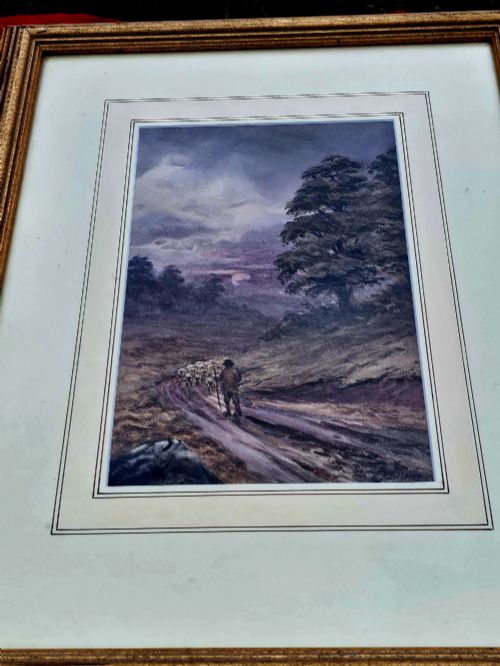
These works depict shepherds tending flocks, cattle grazing by rivers, and figures near harvest fields.
Scenes often capture rural British and European landscapes under morning light or sunset.
How should I frame these artworks?
Most of these pieces arrive in their period gesso and giltwood frames, which complement the traditional medium.
Keep original frames intact where possible, as they suit the age and style of the painting.
Are watercolours as durable as oils?
Watercolours on paper require protection behind glass to prevent fading from direct sunlight and moisture.
Oil on canvas is more robust, though both benefit from stable indoor humidity and gentle placement away from heat sources.
How do I date these pastoral scenes?
Dates appear in signatures, dealer records, and stylistic clues linking the works to the nineteenth century or Edwardian era.
Realism and romanticism movements heavily influence the aesthetic during these decades.