



Victorian Parlour Stool
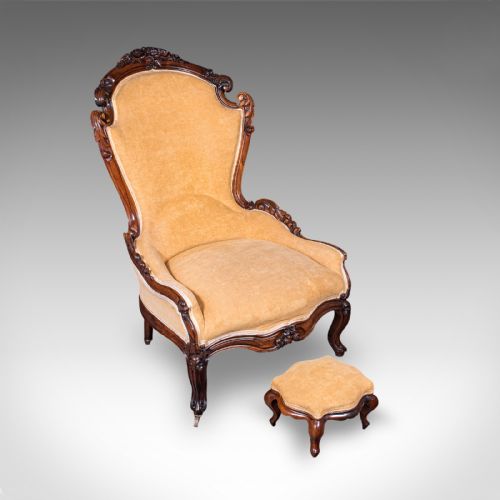
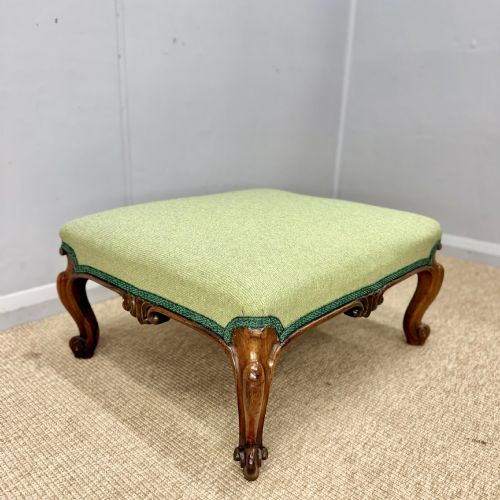
A victorian parlour stool brings domestic comfort and fine timberwork into a room, offering seating or a place to rest feet.
Victorian Parlour Stool
When buyers search for a victorian parlour stool, they encounter low seats designed for sitting or resting feet in reception rooms. These pieces include single stools, pairs, and small round designs intended for specific domestic settings.
The versions most commonly met on this page span the Victorian era, with dates recorded around eighteen-sixty and eighteen-eighty alongside examples attributed to the Georgian period. Forms range from simple upholstered footstools to carved centre stools and geometric needlepoint pieces.
Makers shaped these items as footstools, ottomans, and freestanding stools to suit the formal layouts of nineteenth-century parlours. Their varied proportions and upholstery reflect the changing tastes of the period.
Materials and construction
Cabinetmakers constructed these stools using dense hardwoods such as rosewood, mahogany, and walnut, frequently incorporating carved wooden frames. Timber elements were shaped with decorative details, while brass components appeared on select fittings.
Upholstery forms an essential part of the construction, utilising textile, fabric, and tapestry needlework including geometric kilim designs. Specialised techniques such as Tunbridge ware inlay appear on specific small round examples, adding surface pattern to the wooden bases.
Victorian Parlour Stool Retail Price Guide 2026
Typical asking prices for victorian parlour stool among the pieces listed under this phrase on Sellingantiques today, from the lower quarter to the upper quarter. They describe what is for sale here now, not the wider market.
A tiny mosaic of wood blocks forms the Tunbridge ware top, proving that Victorian artisans could paint pictures with a pocket knife and a forest.
Assessing quality and craftsmanship
The distinction between standard examples and superior pieces rests upon the crispness of the wood carving and the complexity of the timber selection. Walnut and rosewood frames with detailed carved decoration demand greater skill from the maker than plain timber structures.
Upholstery choices also indicate the grade of the piece, with intricate needlepoint and Tunbridge ware inlay representing higher standards of decorative finish. Pairs and freestanding centre stools generally demonstrate more ambitious design than simple utility footstools.
The Victorian Parlour Stool Glossary
- Rosewood
- A dense, dark timber valued for its rich grain and reddish-brown colouring. It was frequently utilised for high-status nineteenth-century parlour furniture.
- Tunbridge ware
- A form of woodwork featuring minute mosaic patterns constructed from tiny pieces of naturally coloured woods. It creates geometric pictures and borders on small decorative items.
- Needlepoint
- A type of canvas work embroidery executed with yarn, commonly seen on nineteenth-century footstool upholstery in geometric and floral patterns.
- Centre stool
- A freestanding piece designed to be viewed from all angles in the middle of a room rather than placed against a wall.
- Rococo Revival
- A nineteenth-century design style drawing inspiration from the eighteenth-century French Rococo, characterised by flowing curves and naturalistic carving.
Victorian Parlour Stool: Frequently Asked Questions
What is a victorian parlour stool used for?
These low seats served as portable resting places for feet or as occasional seating in formal reception rooms. Their compact proportions allowed them to be moved easily around the parlour.
Today they function similarly as decorative low seating or footrests beside armchairs and sofas in living spaces.
How do I tell different periods apart?
Dating relies heavily on timber selection, carving styles, and structural forms recorded in the piece. Mid-nineteenth-century examples often feature elaborate rosewood or walnut frames with revival decoration.
Earlier pieces show simpler timber framing and distinct joinery methods. Comparing the specific carved motifs helps clarify the decade of production.
Are these stools sturdy enough for daily use?
Solid hardwood frames constructed from mahogany, walnut, or rosewood provide substantial structural integrity. Most pieces remain structurally sound after generations of domestic service.
Upholstered surfaces may require new webbing or padding depending on their condition, but the wooden frames are generally robust.
What woods were used for these stools?
Cabinetmakers primarily worked with rich dark timbers like rosewood, walnut, and mahogany. These materials were selected for their strength and ability to take sharp carved details.
General timber and brass fittings also appear on specific variations to complement the primary wood.