




Victorian Parlour Chair Pair
A victorian parlour chair pair brings nineteenth-century drawing-room character into a modern interior.
Victorian Parlour Chair Pair
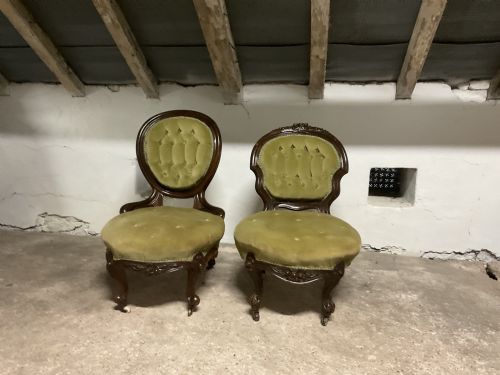
A victorian parlour chair pair consists of matching seats designed for formal reception rooms during the nineteenth century. These seating pairs often take the form of his and hers matching sets, combining lower ladies' chairs with taller gentlemen's armchairs.
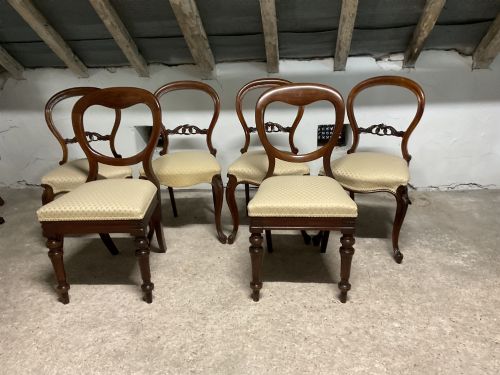
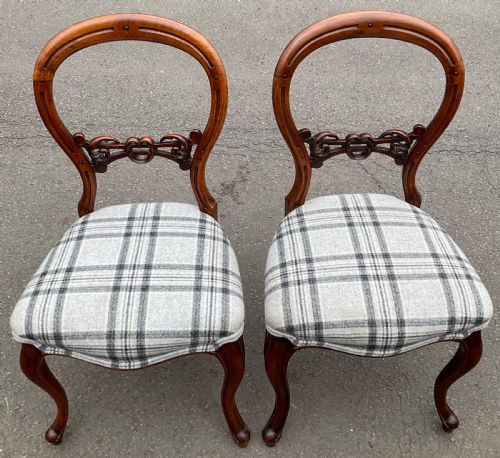
The selections span from the mid-nineteenth century through the Edwardian era, encompassing walnut, mahogany, and rosewood timbers. Common configurations include balloon backs, side chairs, and salon suites featuring carved wooden frames.
Buyers encounter various formats including nursing chairs, low armchairs, and dining chairs suited for drawing rooms. The pieces reflect stylistic shifts from mid-century rococo revival to later Victorian designs.
How they were made
Cabinetmakers constructed the frames using dense hardwoods like walnut, mahogany, and rosewood, frequently shaping them into curvilinear balloon backs and incorporating hand-carved details. Timber components were joined using traditional mortise and tenon methods to ensure structural stability.
Upholstery techniques involved sprung seats layered with horsehair or stuffing, then covered in velvet or patterned fabric, sometimes finished with traditional buttoning. Brass castors and metal hardware were frequently fitted to the legs of heavier armchairs for mobility.
Upholstery materials recorded on these chairs range from plain fabric and velvet to traditional buttoned finishes across various Edwardian and Victorian examples.
What varies in quality
The distinction between standard examples and top-tier pieces rests on the depth and crispness of the timber carving. Elaborate rococo revival scrolling and finely figured walnut or rosewood veneers elevate the status of a pair.
Proportion and matching also dictate excellence, particularly in his and hers sets where the symmetry of the pair must remain balanced. Original upholstery details and intact internal webbing contribute to the integrity of the surviving pieces.
The Victorian Parlour Chair Pair Glossary
- Balloon back
- A chair back shaped like a continuous, rounded loop resembling a balloon. This silhouette became extremely popular in nineteenth-century domestic seating.
- Rococo revival
- A nineteenth-century design style drawing inspiration from eighteenth-century French rococo motifs. It is characterised by asymmetrical scrolling, floral carvings, and flowing organic lines.
- His and hers chairs
- A matched pair of seating pieces comprising a lower, open chair for a lady and a larger, often armed chair for a gentleman. They were standard furnishings in Victorian reception rooms.
- Button back
- An upholstery method where deep buttons are pulled through the padding to create a padded, diamond-patterned surface. This technique provided both comfort and visual texture.
- Salon suite
- A coordinated group of seating furniture designed for a drawing room or parlour. These sets typically include a settee accompanied by matching armchairs and side chairs.
Victorian Parlour Chair Pair: Frequently Asked Questions
How do I use a pair in a modern room?
These seating pairs fit naturally into living rooms or bedrooms as accent pieces alongside contemporary furnishings. Their distinct wooden frames and upholstered backs provide focal points without overwhelming a modern floor plan.
Positioning the two matching chairs opposite a sofa or beside a fireplace maintains the traditional balance they were originally built to provide.
Were these chairs meant for everyday sitting?
Nineteenth-century parlour seating was primarily utilised for entertaining guests and formal social gatherings in the home. Because they furnished reception rooms rather than casual living spaces, many survive in sound structural condition.
Lower ladies' chairs were specifically constructed to accommodate the voluminous skirts of the period, while gentleman's chairs offered higher backs and supportive arms.
How do I distinguish walnut from mahogany?
Walnut typically displays a warmer, lighter brown tone with pronounced grain figuring and occasional golden undertones. It was the favoured timber for elaborately carved rococo revival frames.
Mahogany generally exhibits a deeper, reddish-brown hue with a straight, tight grain pattern. Cabinetmakers frequently selected it for formal dining and side chairs throughout the nineteenth century.
What is the difference between a side chair and an armchair?
Side chairs are built without armrests, designed to be easily moved around a parlour or tucked against a wall when not in use. They frequently served as flexible seating for larger gatherings.
Armchairs feature structural side supports designed for extended sitting. In period pairs, the armed version was traditionally designated for the male head of the household.