
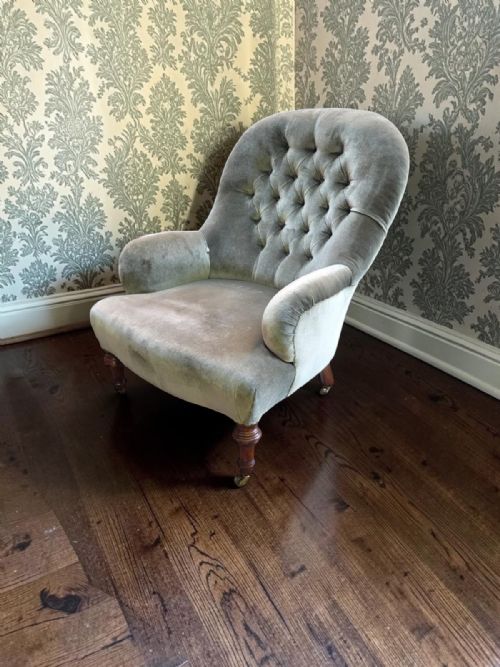


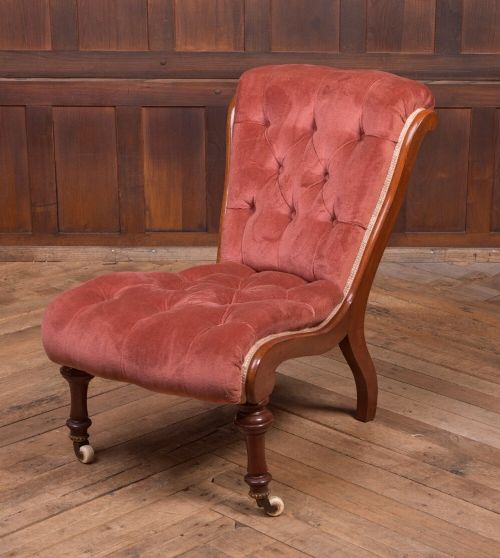


Tufted Velvet Nursing Chair
A tufted velvet nursing chair brings low seating and buttoned upholstery to a bedroom or parlour, offering period comfort and distinct nineteenth-century character.
Tufted Velvet Nursing Chair
When you search for a tufted velvet nursing chair, you encounter low-slung seating designed originally for Victorian nurseries and bedrooms, where the low seat height accommodated the fashions and daily tasks of the period. The selection on this page is dominated by Victorian and Edwardian examples, spanning the mid-nineteenth century through to the early twentieth century.
Makers and workshops of the era, such as Gillows and Howard and Sons, occasionally surface among the listings, alongside stamped pieces and simpler vernacular examples. The forms range from simple parlour chairs to elaborately carved walnut frames resting on castors.
How they were made
Frames are constructed from solid hardwoods including walnut, mahogany, rosewood, and general hardwood or wood, often shaped with carved details and spoonback or balloon-back profiles. Joinery and structural support rely on traditional timber framing, sometimes augmented by iron frames or brass castors.
Upholstery techniques involve deep buttoning through plush velvet fabrics, securing the padding to the internal frame to create the characteristic tufted surface. Woodwork is polished or carved by hand, reflecting the workshop methods of Victorian and Edwardian cabinet makers.
Some nineteenth-century sitters were so fond of their low chairs they insisted on taking them between rooms.
What varies in quality
The degree of hand-carving on the walnut or mahogany frames sets finer examples apart from simpler, utilitarian pieces. Crisp detailing on the woodwork and substantial timber weight indicate superior craftsmanship.
The integrity of the original frame construction and the quality of the timber selection determine the longevity and firmness of the chair. Pieces bearing workshop stamps or attributions to notable makers command greater interest among collectors.
Holland and Sons·Howard and Sons·Gillows
The Tufted Velvet Nursing Chair Glossary
- Button back
- An upholstery method where tufts or buttons are pulled deep into the padding in a diamond pattern, creating a textured surface.
- Spoonback
- A chair back shaped like the bowl of a spoon, curved to fit the human spine and typical of mid-nineteenth-century seating.
- Nursing chair
- A low-seated chair historically used in bedrooms or nurseries, designed to allow comfortable seating close to a hearth or cradle.
- Balloon back
- A rounded, oval chair back resembling the shape of a hot air balloon, popular in Victorian parlor furniture.
- Castors
- Small wheel attachments fitted to the feet of chairs to allow smooth movement across carpets and floors.
Tufted Velvet Nursing Chair: Frequently Asked Questions
What is a nursing chair?
A nursing chair is a low-seated Victorian armchair designed for bedrooms and nurseries, allowing women to sit comfortably while tending to infants or dressing.
The lower seat height distinguished these chairs from standard parlour or dining seating of the period.
How do I date a Victorian armchair?
Dating relies on stylistic shifts such as the transition from heavy William IV scroll arms to carved walnut spoonbacks and later Edwardian lighter frames.
Timber choices and upholstery styles also provide clues, with rosewood and mahogany dominating mid-nineteenth-century pieces.
Are these chairs comfortable to use daily?
Most antique examples provide supportive seating, though the low seat height requires some adjustment if used at modern desk levels.
They function best as bedroom accent pieces, fireside chairs, or reading seats in a quiet corner.
What is button back upholstery?
Button back upholstery involves sewing through thick padding to pull buttons deep into the fabric, creating distinct diamond tufts.
This technique secured the horsehair or wool stuffing while adding decorative texture to Victorian velvet chairs.