



Victorian Parlor Suite
A victorian parlor suite brings matching seating and social comfort into a formal reception room, offering coherent period charm for the home.
Victorian Parlor Suite
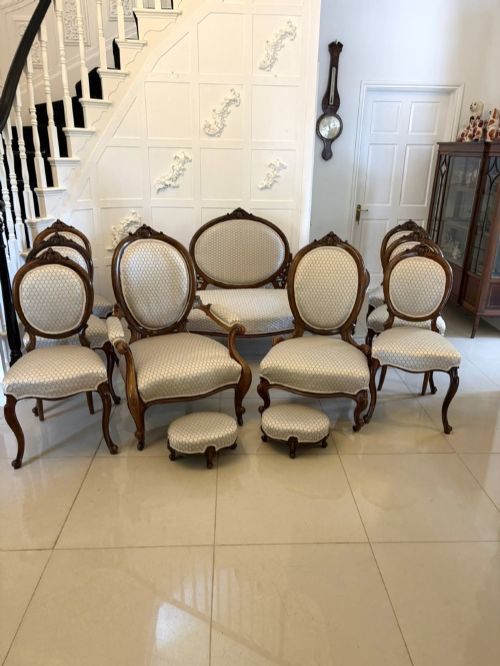
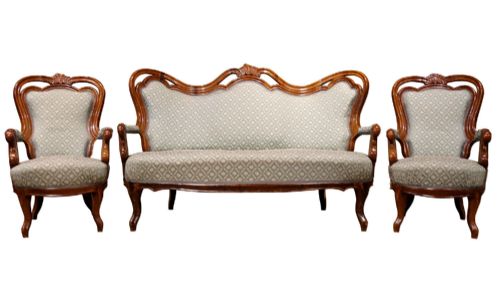
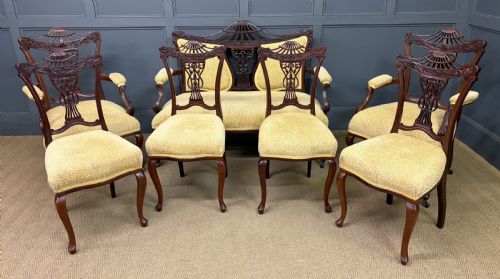
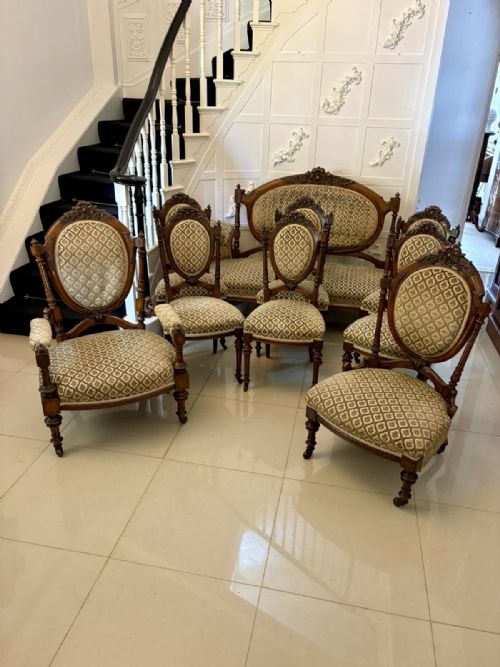
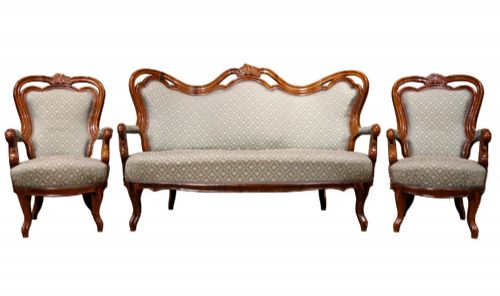
A victorian parlor suite comprises matching sets of seating designed for formal reception rooms, frequently including settees, armchairs, and side chairs made during the nineteenth century. These groupings range from intimate three-piece settings to expansive multi-piece drawing room suites featuring sofas, armchairs, and occasional footstools.
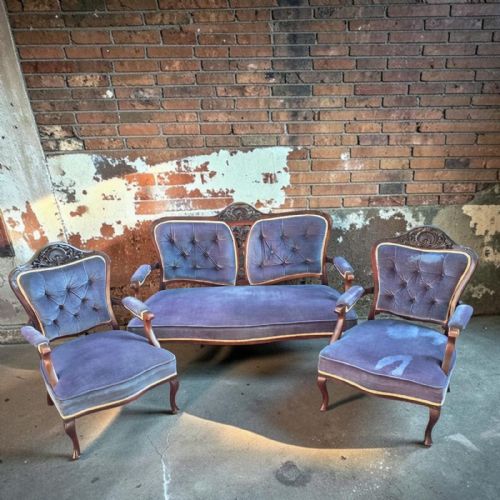
The styles seen on this page span several distinct aesthetic movements, from early Victorian designs and robust mahogany framing to elaborate Rococo Revival walnut and later Aesthetic Period ebonised pieces. Buyers encounter various configurations, including cameo back, double spoon back, and button-backed upholstered seating from the mid to late nineteenth century.
Factors of quality
Quality in a victorian parlor suite is defined by the crispness of the hand-carved woodwork and the integrity of the timber framing, particularly in walnut and mahogany. Superior examples exhibit harmonious proportions across every piece in the set, maintaining stylistic consistency from the largest settee to the smallest side chair.
The refinement of the upholstery work and the selection of fine textiles also separate standard groupings from exhibition-grade pieces. Greater depth in buttoning and superior framing signal higher craftsmanship.
Victorian Parlor Suite Retail Price Guide 2026
Typical asking prices for victorian parlor suite among the pieces listed under this phrase on Sellingantiques today, from the lower quarter to the upper quarter. They describe what is for sale here now, not the wider market.
Listings feature pieces spanning the Victorian era, including specific dates from 1840 to 1910.
Jas James Shoolbred
The Victorian Parlor Suite Glossary
- Cameo back
- A chair or settee back shaped like a medallion or cameo, frequently edged with carved wood. This form is common in mid-century parlor seating.
- Spoon back
- An upholstered chair back hollowed out to resemble the bowl of a spoon, designed to fit the human form. It provides both ergonomic comfort and elegant Victorian styling.
- Deep buttoned
- An upholstery technique where buttons are pulled tight through the padding in a diamond pattern. This method secures the filling and creates rich folds in the fabric.
- Aesthetic Movement
- A late nineteenth-century design style that prioritised visual beauty over moral narrative. Pieces from this movement often feature ebonised wood surfaces and simpler, cleaner lines.
- Rococo Revival
- A nineteenth-century revival style characterised by asymmetrical curves, naturalistic scrollwork, and floral carvings. It appears frequently on walnut parlor seating.
Victorian Parlor Suite: Frequently Asked Questions
What pieces make up a suite?
A suite typically includes a settee paired with matching armchairs and side chairs, sometimes numbering up to eleven individual items. Smaller groupings of three pieces are also common.
These collections were designed to furnish a formal drawing room or parlour with unified seating for guests.
How do I date a suite?
Dating relies on stylistic clues, such as the transition from early Victorian mahogany frames to later ebonised Aesthetic Period finishes. Wood choice, carving depth, and upholstery style also help narrow down the decade.
Mid-century pieces often favour Rococo Revival walnut, while later items embrace different aesthetic influences.
Are these seats comfortable to use?
Parlour seating from this era was built for formal entertaining rather than casual lounging, featuring upright backs and firm upholstery. Many examples include deep buttoning and padded armrests for added support.
They function well in modern reception spaces as statement seating.
How should I care for the upholstery?
Maintenance involves gentle vacuuming and protecting delicate velvet and textile fabrics from direct sunlight to prevent fading. Wooden frames benefit from occasional dusting with a dry cloth.
Professional cleaning is recommended for antique fabrics to preserve the original material.