



Red Button Back Armchair
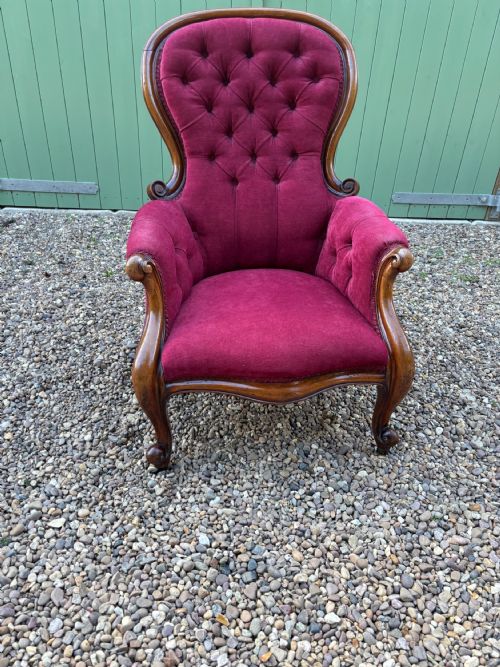
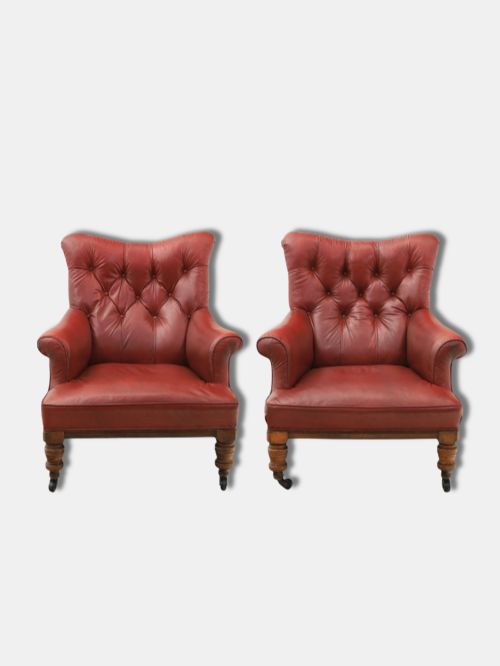
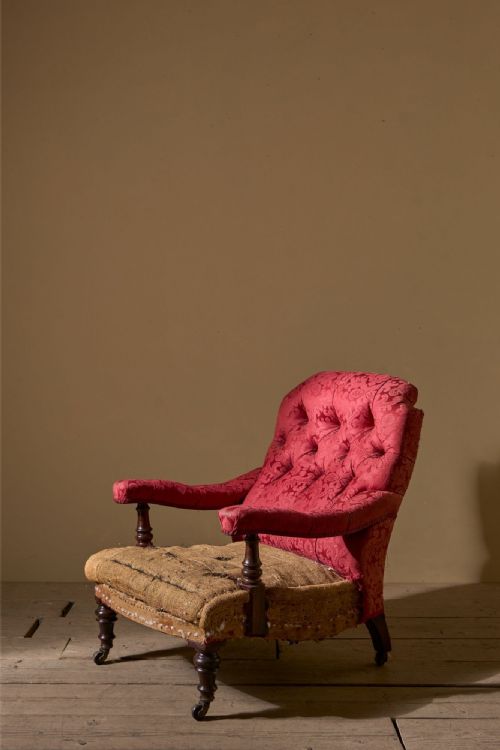
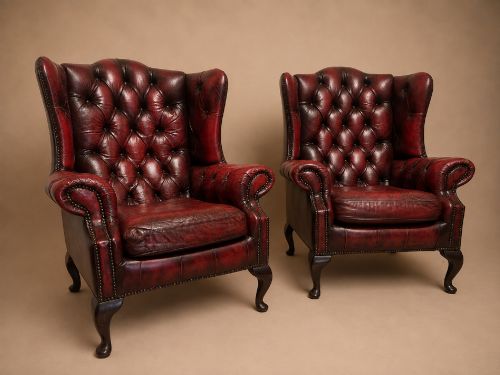
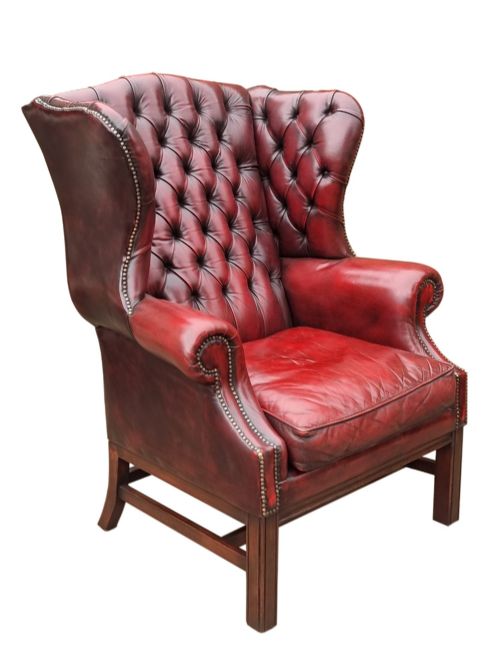
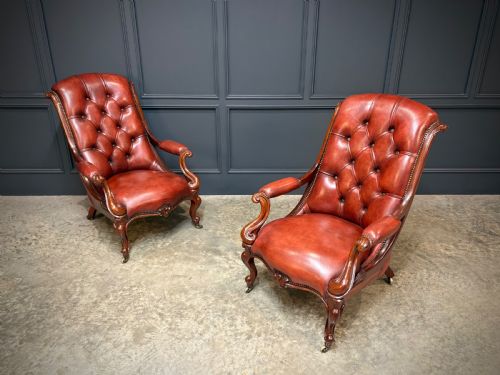
A red button back armchair brings deep-buttoned upholstery and rich crimson or oxblood tones together to create a commanding seating piece.
Red Button Back Armchair
A red button back armchair combines deep tufted upholstery with substantial seating forms, drawing from Victorian, Regency, and William IV traditions. These pieces appear frequently as library chairs, wing chairs, and low parlour seats designed for reading, fireside rest, or writing desks.
The versions most commonly met on this page date predominantly from the nineteenth century, including specific Victorian and Edwardian examples. They span various formats such as robust mahogany frames, oak desk chairs, and low walnut salon seats.
Makers and origins range from documented English cabinet makers to country house workshops utilising local timbers. They survive in diverse scales, from compact nursing chairs to expansive Chesterfield wing armchairs.
Materials and Construction
Construction relies heavily on dense hardwoods such as mahogany, walnut, and oak to form the structural frames and exposed show wood. Turnings, cabriole legs, and barley twist supports shape the lower portions of these seating pieces.
Upholstery techniques involve deep buttoning secured through sprung or webbed bases, covered in leather, velvet, or woven fabric. Brass tacks and castors frequently finish the detailing on nineteenth-century examples.
Red Button Back Armchair Retail Price Guide 2026
Typical asking prices for red button back armchair among the pieces listed under this phrase on Sellingantiques today, from the lower quarter to the upper quarter. They describe what is for sale here now, not the wider market.
Listings feature nineteenth-century and Victorian armchairs constructed from mahogany, walnut, oak, and leather.
Gradations of Quality
Quality depends on the crispness of timber carving, the depth and symmetry of the button tufting, and the structural integrity of the frame. Superior examples demonstrate substantial timber selection and balanced proportions.
The choice of covering material and the precision of edge piping distinguish standard workshop output from pieces produced by notable makers. Frame stability and the retention of original castors or turned supports elevate a piece's standing.
Howard and Sons·Gillows·Cornelius V Smith
The Red Button Back Armchair Glossary
- Buttoning
- A traditional upholstery technique where tufts are pulled tight and secured with buttons to create a diamond pattern across the backrest.
- Show wood
- Polished timber framing left visible around the upholstered sections of a chair, typical of Victorian parlor and fireside pieces.
- Chesterfield
- A deep-buttoned seating form characterised by arms and back of the same height, historically executed in leather.
- Barley twist
- A decorative turning style resembling a twisted rope, frequently seen on nineteenth-century chair legs and supports.
- Spoon back
- An ergonomic, concave chair back shaped to mimic the bowl of a spoon, popular during the mid-nineteenth century.
Red Button Back Armchair: Frequently Asked Questions
What periods do these armchairs come from?
The listings span the nineteenth century, with strong representations from the Victorian era alongside Regency and later revival periods.
Examples also stretch into the early twentieth century, showing sustained interest in traditional buttoned upholstery.
How were red button back armchairs used?
These chairs served multiple domestic functions, from fireside seating in country houses to dedicated reading chairs in libraries.
Desk and gaming variations additionally provided comfortable seating for writing and study spaces.
Are the leather and fabric coverings original?
Many nineteenth-century pieces have undergone professional reupholstering to maintain usability while preserving period silhouettes and buttoning patterns.
Some retain older or patinated oxblood leathers that show centuries of handling.
How do I identify a Victorian button back?
Victorian pieces often feature show wood frames in mahogany or walnut, combined with distinctive scroll arms and turned wooden legs.
Deep diamond buttoning and traditional coil springing further mark pieces from this mid-nineteenth-century window.