


Victorian Papier Mache Box
A victorian papier mache box brings lustrous lacquer, mother-of-pearl shimmer, and practical nineteenth-century storage to any desk or dressing table.
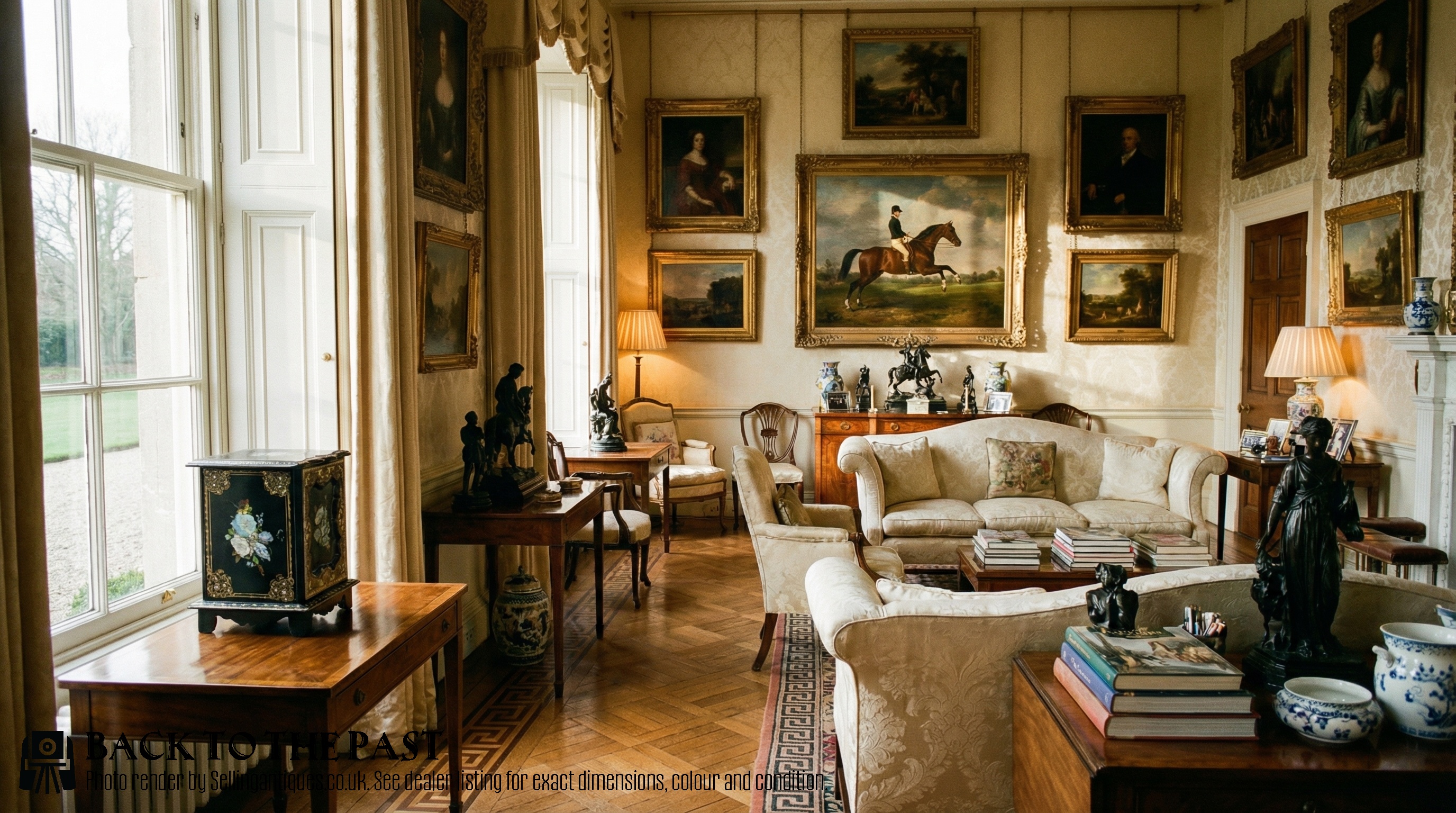
Victorian Papier Mache Box
A victorian papier mache box encompasses a diverse group of nineteenth-century containers designed for practical household use and personal organisation. These pieces range from tea caddies and writing boxes to stationery cabinets, needlework caskets, and small snuff boxes.
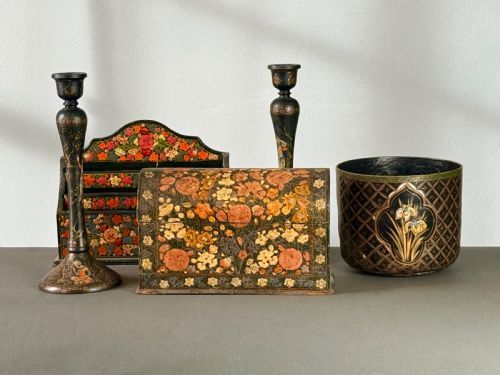
The most common examples on this page are tea caddies and writing or stationery boxes produced during the middle decades of the nineteenth century. Makers also shaped these materials into glove boxes, card boxes, letter racks, and jewellery cabinets.
Originating predominantly from English workshops, these items reflect the nineteenth-century taste for ornate desktop and boudoir accessories. Many pieces integrate fitted interiors with compartments for tea, writing implements, or sewing accessories.
Materials and construction
These items are constructed from layers of paper pulp or sheets pasted together, pressed under heavy pressure, and dried to form a rigid, durable material. This papier-mache base is then coated with multiple layers of dark lacquer to achieve a smooth, resilient finish.
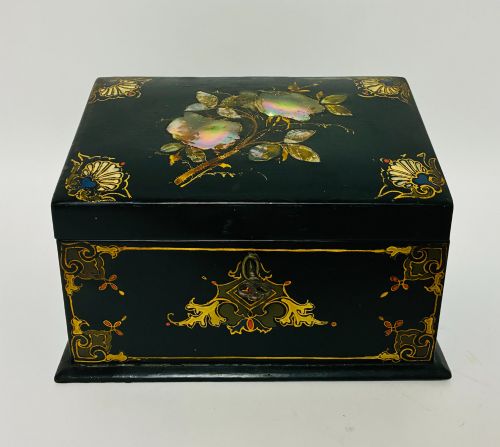
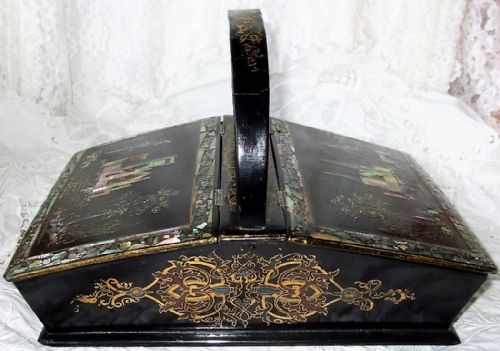
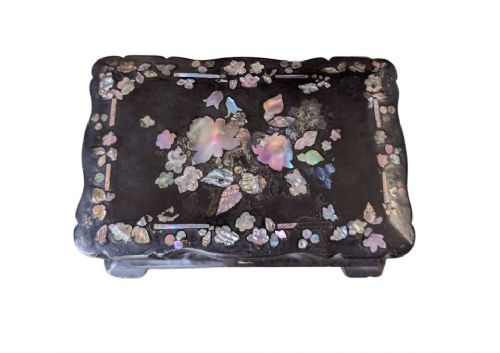
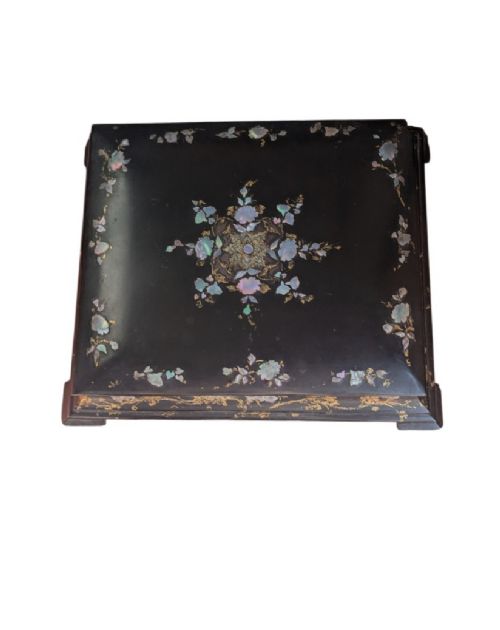
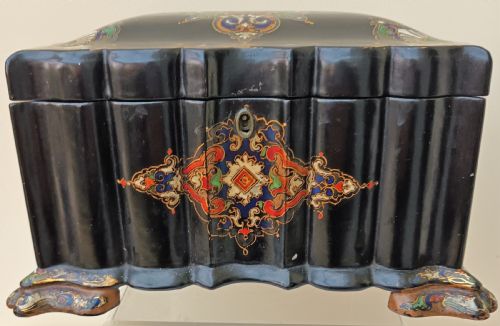
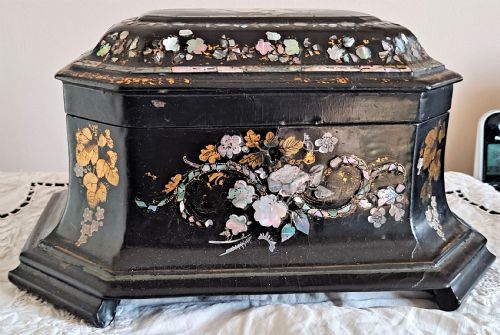
Artisans decorated the surfaces using hand-applied paint, delicate gold leaf, and inlaid mother-of-pearl to create shimmering pictorial or geometric motifs. Wood, brass, and glass frequently appear as structural supports, interior compartments, or fitted scent bottles.
Listings feature 19th-century papier-mache items utilising lacquer, mother-of-pearl, paint, wood, and brass across forms such as tea caddies, writing boxes, and stationery cabinets.
Judging the execution
Quality rests primarily on the delicacy of the hand-painting and the precision of the mother-of-pearl inlay. Finer pieces display intricate, detailed brushwork and secure, flush inlay work that sits smoothly within the lacquer ground.
The sophistication of the internal fittings also distinguishes the standard items from superior works. Fully intact velvet linings, working locks, original glass scent bottles, and clever compartmentalised trays elevate a piece considerably.
Jennens and Bettridge
The Victorian Papier Mache Box Glossary
- Papier-mache
- A composite material made from paper pulp or reinforced paper sheets mixed with glue, then pressed and dried. It provides a lightweight yet remarkably tough foundation for lacquer and ornamentation.
- Mother of pearl
- The iridescent inner layer of certain mollusc shells, sliced thin and embedded into the lacquer surface. Artisans shaped these fragments to catch the light and form floral or architectural highlights.
- Chinoiserie
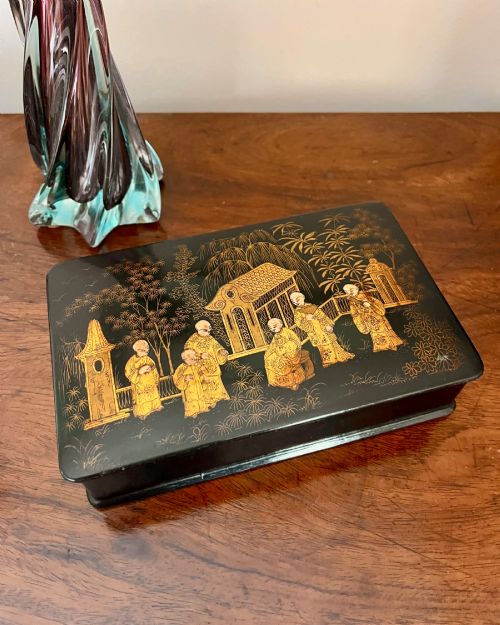
- A European artistic style reflecting Chinese motifs and landscapes. Artisans painted these whimsical scenes in gold and colour upon the dark lacquered surfaces.
- Tea caddy
- A container originally built to store loose tea leaves securely. Nineteenth-century examples often feature internal lidded compartments to keep different tea varieties fresh.
- Stationery box
- An upright desk accessory designed to hold writing paper and envelopes. These pieces typically feature tiered or compartmentalised interiors for organised storage.
Victorian Papier Mache Box: Frequently Asked Questions
What were these boxes used for?
These containers served specific domestic functions in nineteenth-century parlours, studies, and bedrooms. People used them to secure valuable tea leaves, organise correspondence, store writing instruments, or keep jewellery and sewing tools.
Many designs incorporate specialised interior fittings such as lidded tea canisters, velvet-lined trays, or slots for stationery. Their decorative exteriors ensured they remained on display rather than hidden away.
How do I care for a lacquer box?
Keep these items away from direct sunlight and damp environments to protect the delicate lacquer and paper foundation. Dust gently with a dry, soft cloth and avoid chemical polishes or excessive moisture.
Maintaining a stable room temperature prevents the lacquer and wood base from expanding or contracting. Handle hinged lids with care to protect original pivots and internal silk or velvet linings.
How do I tell periods apart?
Objects from the earlier nineteenth century often feature simpler forms with restrained gold leaf decoration and flat painted surfaces. Pieces from the middle and later decades frequently display more elaborate mother-of-pearl inlay and multi-layered Chinoiserie scenes.
Mid-Victorian production also brought greater standardisation in desktop stationery cabinets and specialised jewellery caskets. Examining the style of the hand-painted motifs and interior hardware provides reliable clues to the exact decade of manufacture.
Are the interiors original?
Many pieces retain their original fitted compartments, paper linings, and velvet or silk bases. Some items include period accessories like glass scent bottles or small mother-of-pearl handled tools.
Over the decades, hardworking items sometimes received replacement linings or updated hardware during nineteenth- or twentieth-century upkeep. Inspecting the wear patterns inside helps determine whether the internal fittings match the age of the outer shell.