
Victorian Paper Rack
A Victorian paper rack is a practical desk accessory or floor standing holder designed to keep correspondence and periodicals in order.
Victorian Paper Rack
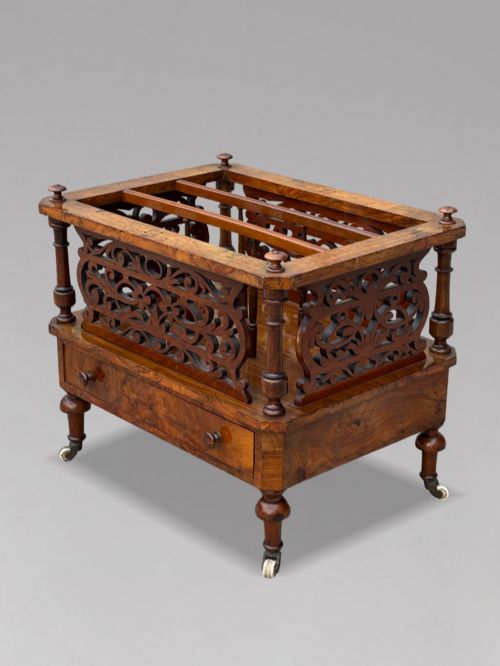
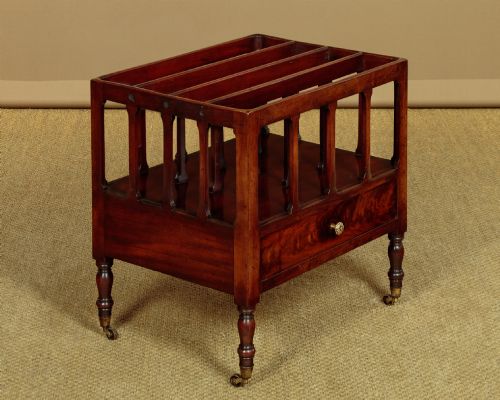
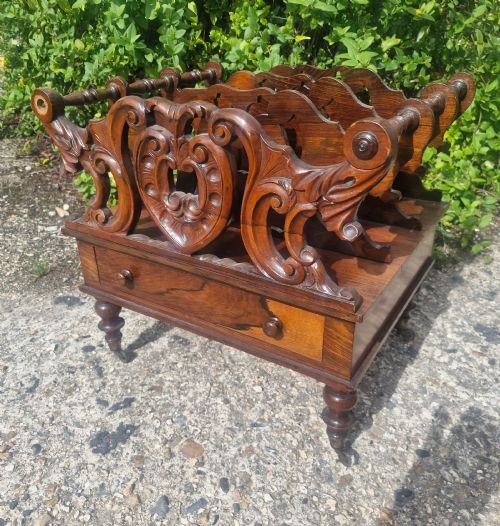
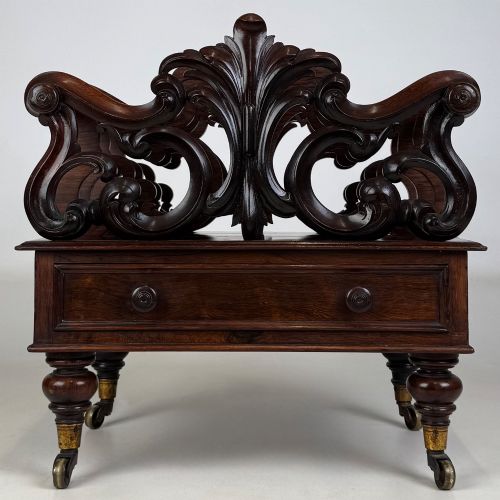
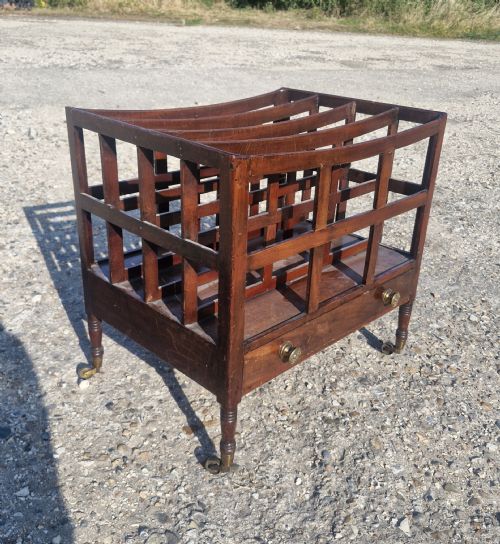
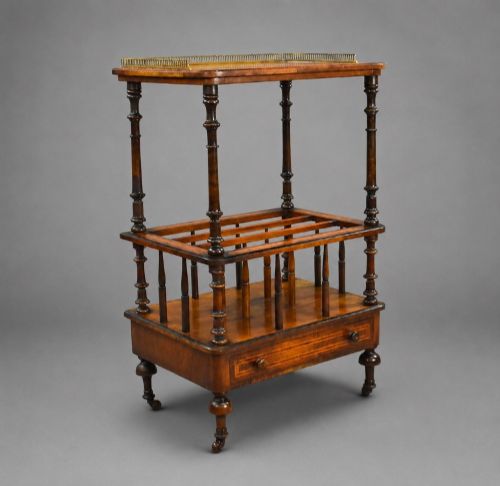
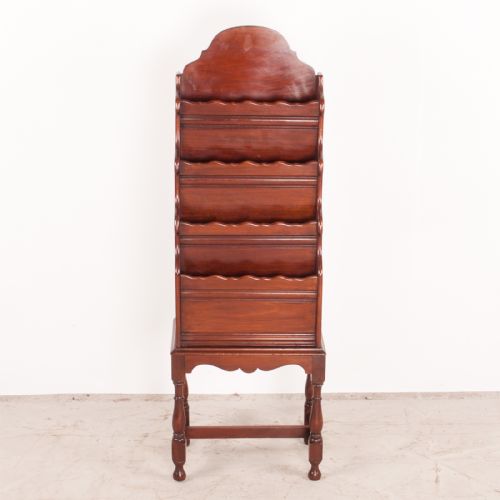
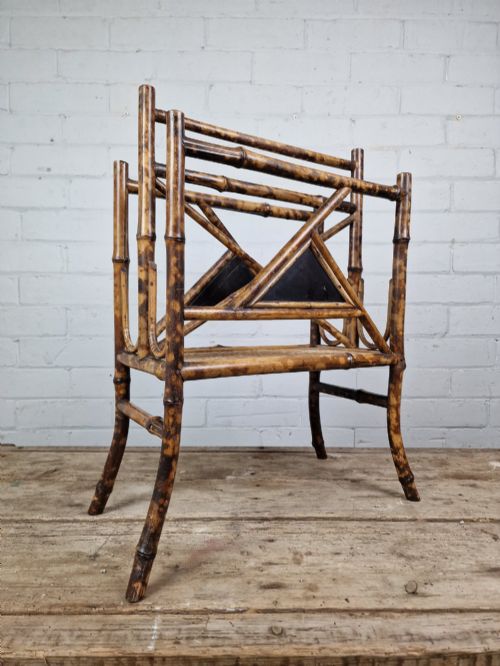
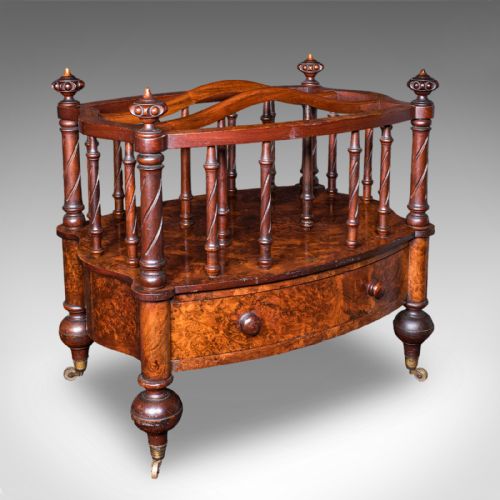
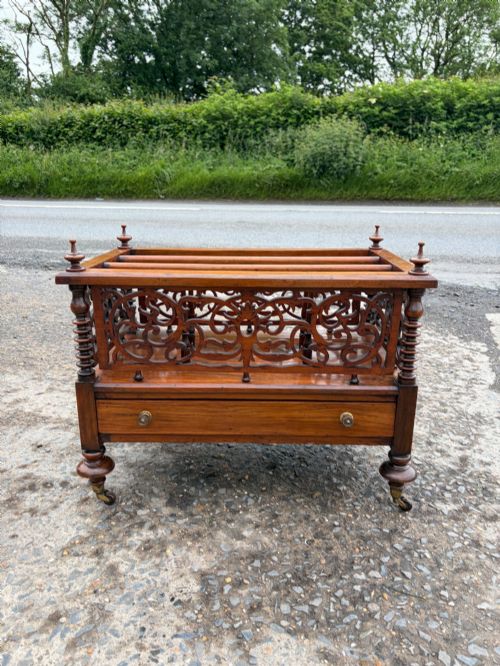
When you search for a victorian paper rack, you encounter a specialised category of domestic furnishings designed to hold letters, newspapers and magazines. The evidence shows these functional items appearing under several overlapping forms, including desktop letter racks, wall pockets, and floor-standing magazine holders or canterburys.
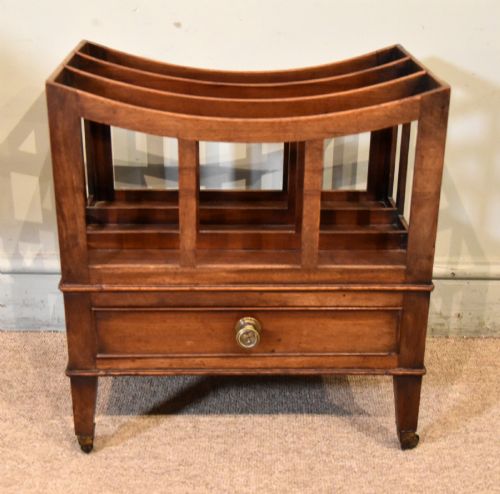
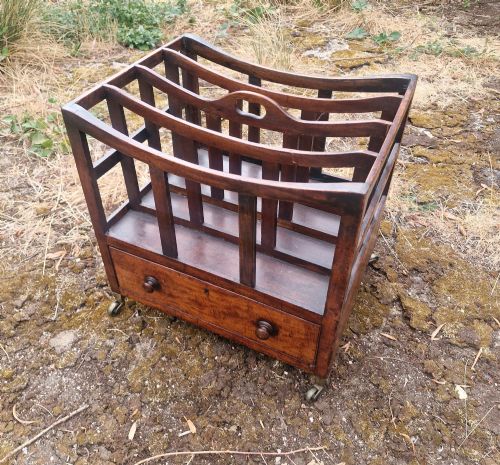
The version you are most likely to meet on this page is the classic freestanding Canterbury or the desktop tidy, largely originating from the nineteenth century. These pieces reflect the heavy reliance on written correspondence and periodicals in homes and offices of the period.
How they were made
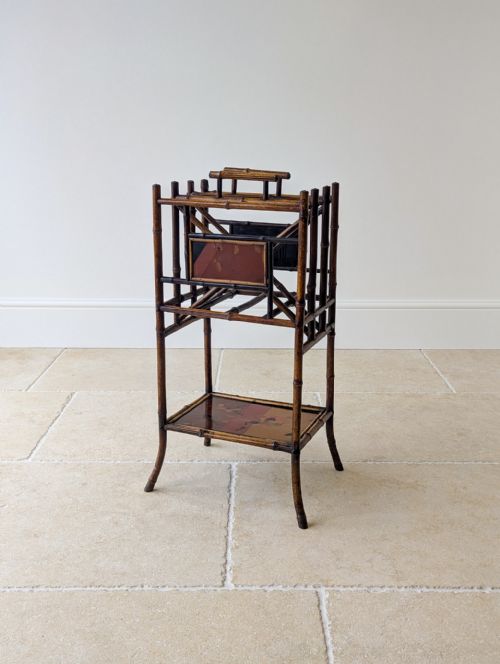
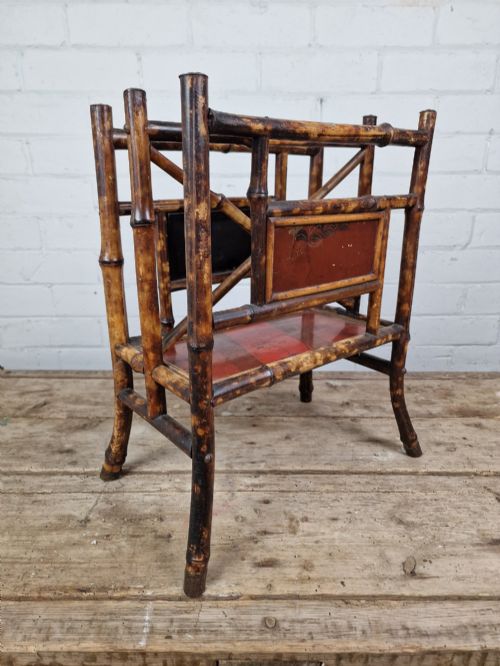
The pieces listed record a diverse palette of timber, incorporating dense hardwoods such as mahogany, rosewood, walnut, burr walnut, fruitwood, and oak alongside lighter organic materials like bamboo. Cabinet makers utilised these woods for their grain and structural strength, frequently incorporating inlaid details or turning components into spindle and lyre shapes.
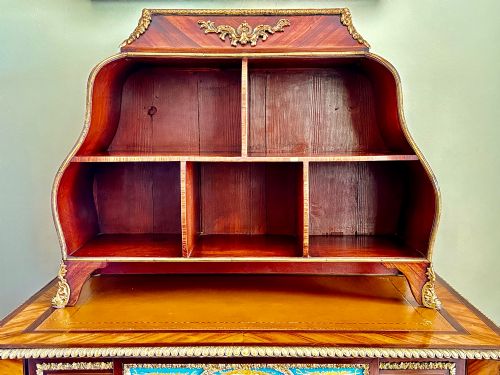
Metalwork plays a substantial structural and decorative role, with brass, copper, ormolu, and iron utilised for frames, mounts, and wall fixtures. Artisans also employed papier-mâché and ceramic elements to shape lighter desktop stationery tidies and wall pockets.
A few clever letter racks manage to conceal a secret drawer for your most private notes.
What varies in quality
Quality in a victorian paper rack rests upon the selection of materials and the ambition of the design rather than sheer scale. Pieces featuring figured burr walnut veneers, intricate marquetry inlay, or substantial brass and ormolu mounts demonstrate a higher standard of workshop production than plain utility items.
The Victorian Paper Rack Glossary
- Canterbury
- A low freestanding stand with partitioned sections, originally built to hold sheet music or newspapers and periodicals.
- Cartonnuer
- A desktop cabinet fitted with stationary compartments or pull-out document boxes, often embellished with ormolu mounts.
- Whatnot
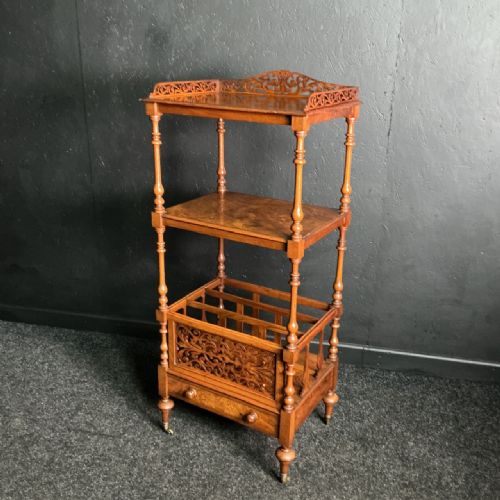
- An open set of multi-tiered shelves used for displaying or storing small household items and reading materials.
- Papier-mâché
- A composite material made of paper pulp reinforced with glue or resin, pressed into moulds and lacquered for wall pockets and document racks.
- Inlaid
- A decorative technique where contrasting woods or metals are fitted into the primary timber surface to form patterns.
Victorian Paper Rack: Frequently Asked Questions
What is a Canterbury?
A Canterbury is a low stand featuring partitioned vertical sections, created to hold newspapers, magazines, or sheet music within reach of a seating area.
Many examples include a small drawer beneath the divisions for storing smaller writing accessories or correspondence.
Where were paper racks used?
These items found placement across domestic and professional interiors, including studies, drawing rooms, and offices.
Desktop tidies sat upon writing tables for active letters, while larger floor stands and wall pockets kept daily periodicals organised.
How do I distinguish periods?
Distinguishing periods relies on observing stylistic markers such as heavy turned legs, carved lyres, or inlaid walnut typical of mid-nineteenth century cabinet work.
Later Victorian pieces often incorporate lighter materials like bamboo or aesthetic movement motifs, reflecting shifting tastes towards the end of the century.
Can I hang them on walls?
Certain designated formats, such as papier-mâché pockets and specific brass-mounted organizers, are constructed with hanging loops or brackets for wall placement.
Freestanding canterburys and heavy desk boxes are designed solely for tabletop or floor use.