
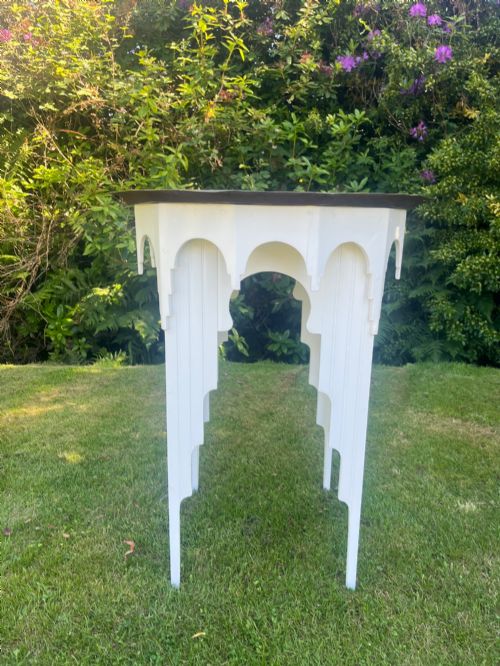
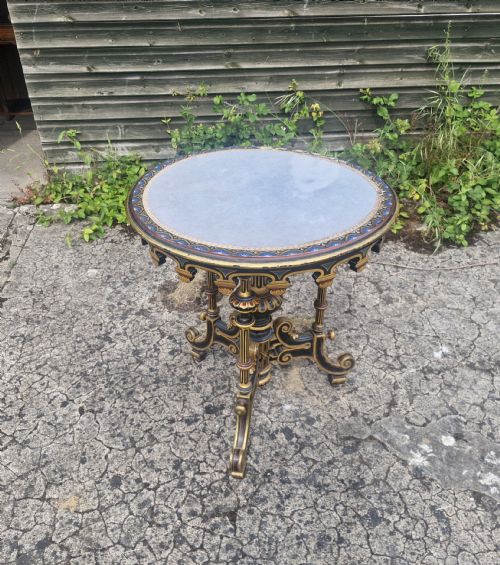
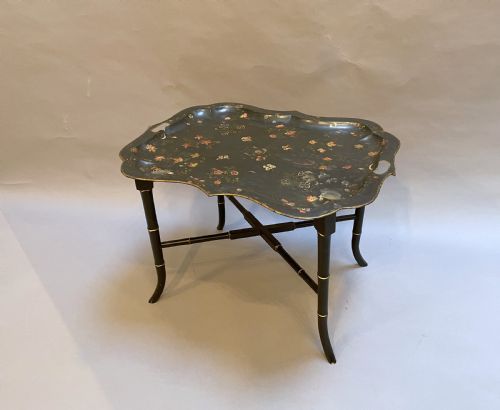

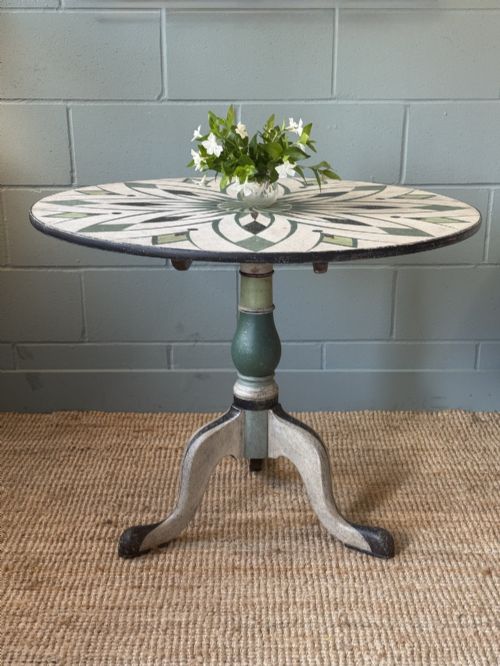


Victorian Painted Tea Table
A victorian painted tea table brings hand-decorated surfaces and rich nineteenth-century ornament into a room.
Victorian Painted Tea Table
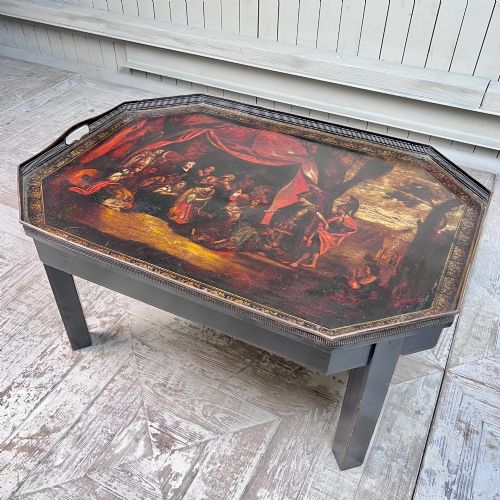
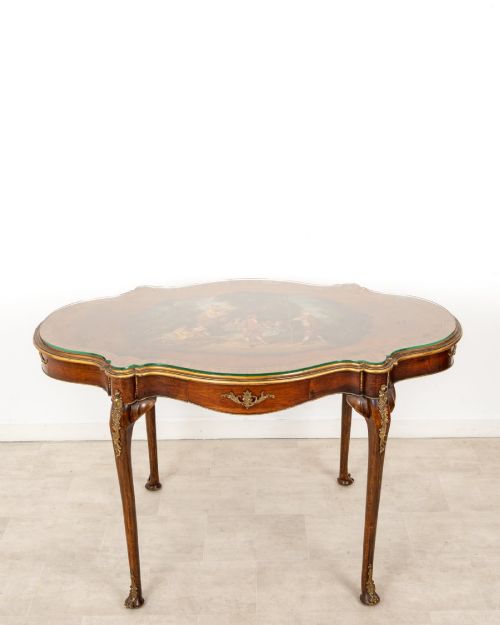
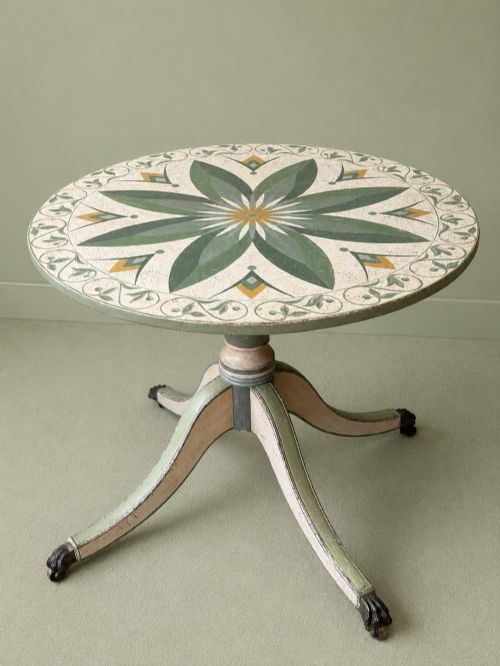
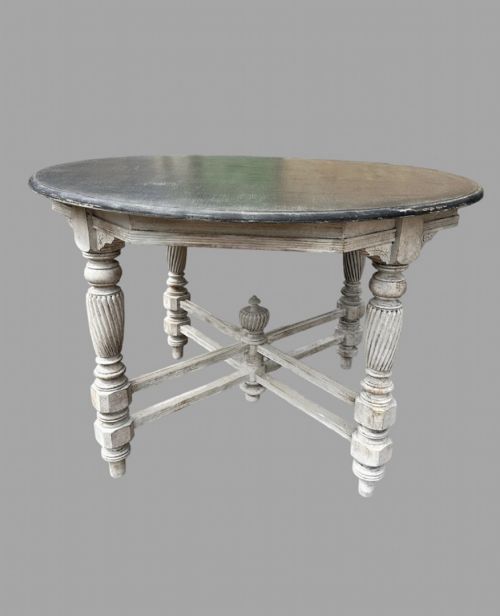
A victorian painted tea table combines functional nineteenth-century surfaces with decorative painted finishes, often taking the form of occasional tables, tilt-top designs, and tray tables set upon custom stands. These pieces emerge from periods spanning the nineteenth century, including Victorian and Regency eras, alongside later revivals.
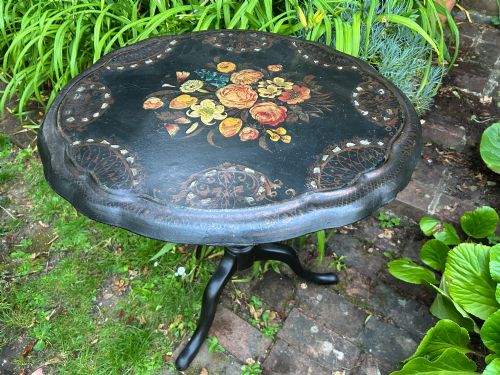
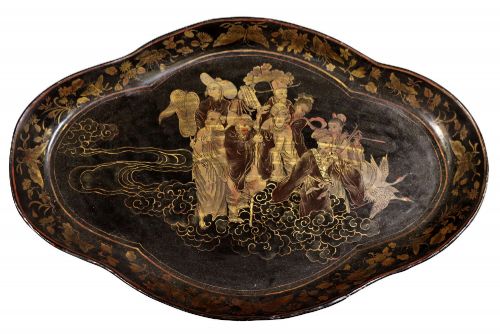
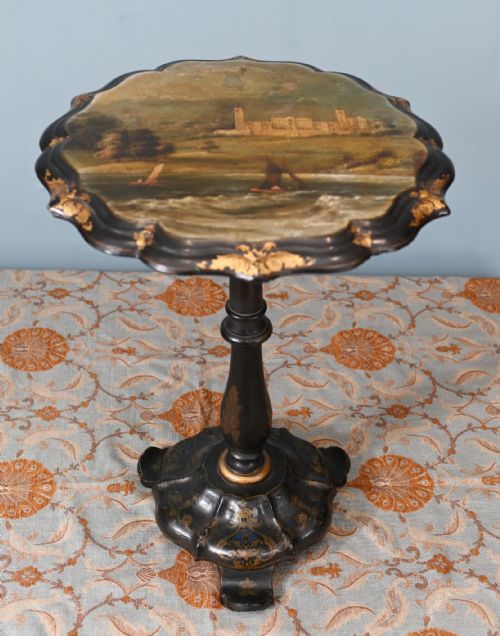
The version most commonly met on this page is the painted or lacquered occasional table, frequently featuring Chinoiserie motifs, floral details, or black lacquer grounds. Alongside these stand tilt-top examples and papier-mâché trays mounted on stands, reflecting diverse domestic uses from tea service to display.
Materials and construction
Many tables utilise wood, papier-mâché, and metal, combined with surface applications of paint, lacquer, gold leaf, and gilt. Papier-mâché surfaces provide smooth grounds for detailed hand-painted scenes, while wooden structures offer sturdy support for frequent daily use.
Makers applied decorative techniques such as japanning and Chinoiserie decoration, layering paint and lacquer to achieve deep, lustrous finishes. Brass fittings and iron stands frequently provide structural stability and contrasting metallic detail.
Object types on this page include occasional tables, side tables, coffee tables, centre tables, table lamps, wine tables, serving trays, and biscuit barrels.
Qualities that separate examples
The finesse of the hand-painted ornament dictates the distinction between standard examples and finer works, particularly in intricate Chinoiserie scenes and floral compositions. Skill in applying lacquer and gold leaf produces a more durable and visually rich surface.
The integrity of the material foundation, whether papier-mâché or timber, influences longevity and form. Tables retaining original stands and untouched decorative schemes demonstrate superior craftsmanship compared to those with later adaptations or repainting.
Jennens & Bettridge
The Victorian Painted Tea Table Glossary
- Chinoiserie
- European artistic interpretation of Chinese and East Asian styles, frequently featuring figures, pagodas, and landscapes rendered in gold and colour upon dark lacquer.
- Japanning
- European imitation of Japanese and Chinese lacquerwork, created by applying layers of varnish and resin heated to produce a hard, glossy finish.
- Papier-mâché
- A composite material made from paper pulp or layers of paper reinforced with glue, moulded and dried to form strong, lightweight table tops and trays.
- Tilt-top
- A table mechanism allowing the surface to pivot into a vertical position when not in use, saving space in smaller rooms.
- Toleware
- Enamelled or lacquered metalware, often used for trays that form the tops of occasional tables.
Victorian Painted Tea Table: Frequently Asked Questions
What was a victorian painted tea table used for?
These tables served primarily for serving tea, holding porcelain, or displaying decorative items within the nineteenth-century parlour. Their portable trays and tilt-top mechanisms offered flexibility in reception rooms.
Over time, many transitioned into static occasional furniture or lamp tables, adapting to changing domestic habits while retaining their ornamental role.
How do I identify a papier-mâché table?
Papier-mâché tables feature smooth, dense surfaces constructed from layered paper and binders rather than natural timber planks. They often exhibit a deep black lacquered ground beneath hand-painted or gilt decoration.
These surfaces feel light yet rigid to the touch, frequently resting on sturdy wooden or metal bases designed to support the composite top.
Are tilt-top tables stable?
Tilt-top tables rely on a pivoting mechanism beneath the surface, allowing the top to lock flat for use or tilt upright for storage. When locked in position, the catch secures the surface firmly to the central pillar.
Occasional movement at the joint is common in older furniture, but a well-adjusted catch ensures the table remains reliable for daily placement of lamps or decorative objects.
How do I care for a lacquered table?
Lacquered and painted surfaces require gentle dusting with a dry, soft cloth to prevent abrasion to the delicate finish. Moisture and direct sunlight should be avoided to protect the underlying paint and gold leaf.
Using coasters and mats prevents heat and liquid marks from damaging the historic varnish, preserving the integrity of the decoration.