


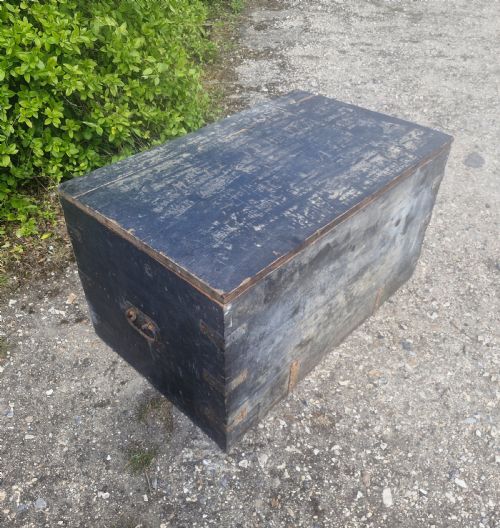


Victorian Painted Pine Trunk
A victorian painted pine trunk offers honest utility and historic character, bringing working-class heritage and regional charm straight into a modern interior.
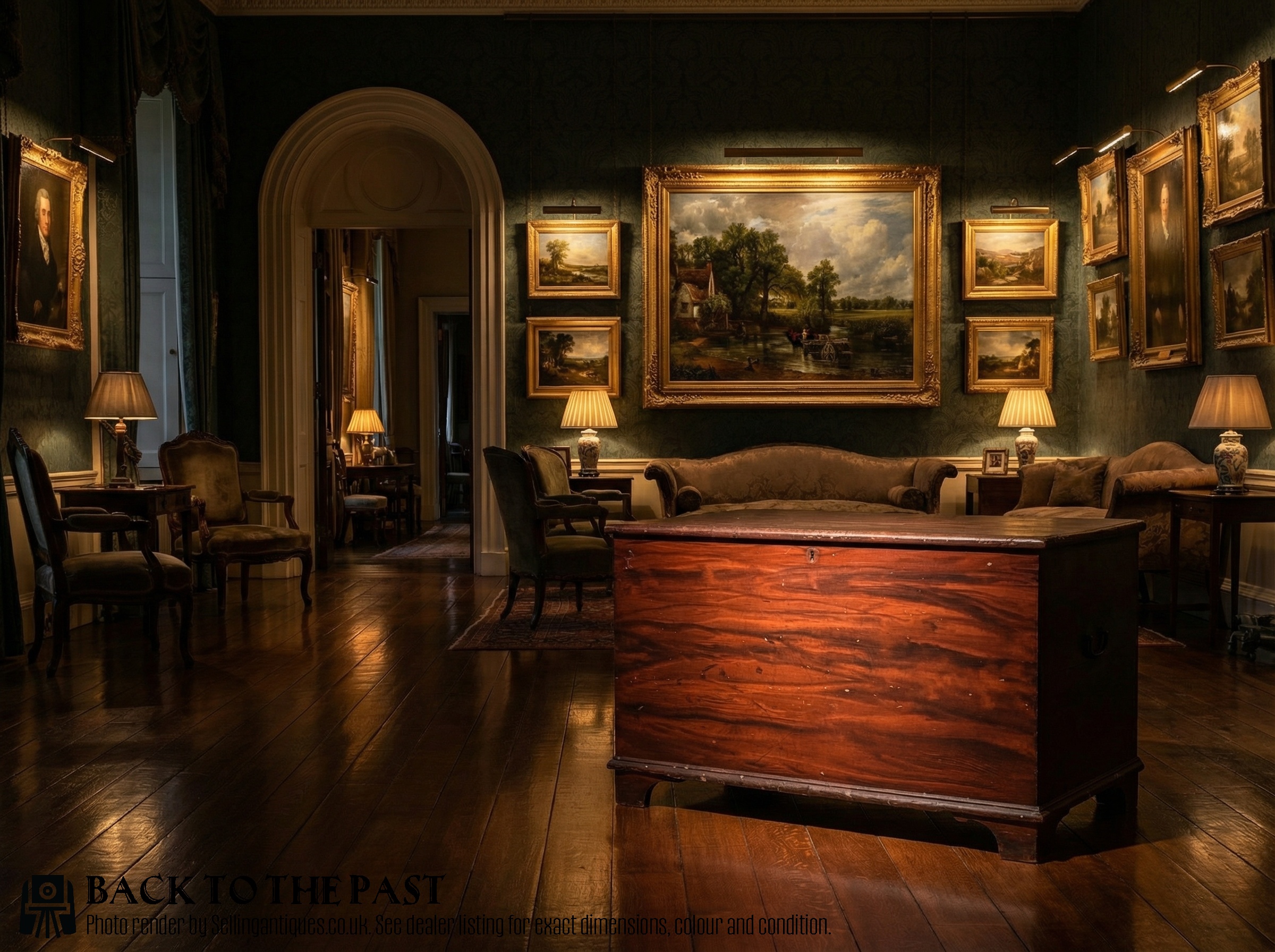
Victorian Painted Pine Trunk
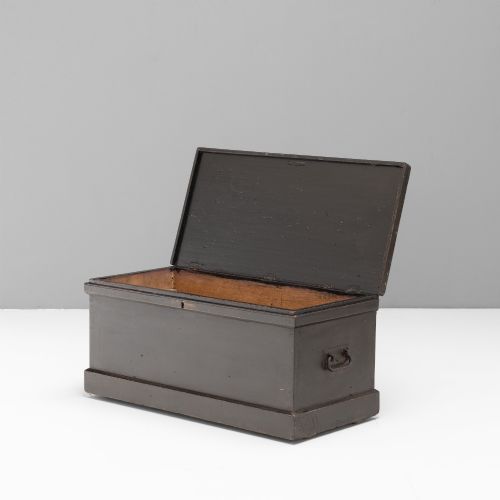
A victorian painted pine trunk is a utilitarian storage container constructed primarily from softwood and finished with decorative or protective surface coatings. These pieces include blanket boxes, mule chests, travel trunks, and artisan storage boxes dating from the nineteenth century.
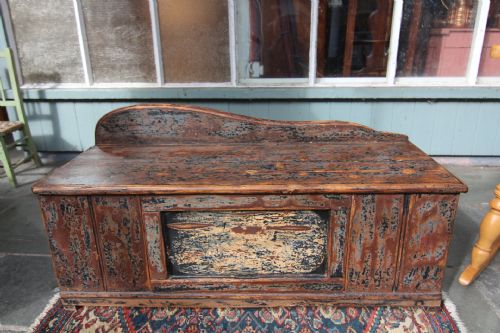
Most examples found on this page display simple dovetail or butt-jointed construction designed for practicality rather than display. Surfaces frequently feature scumble, graining, polychrome decoration, or plain paint finishes applied during the nineteenth century.
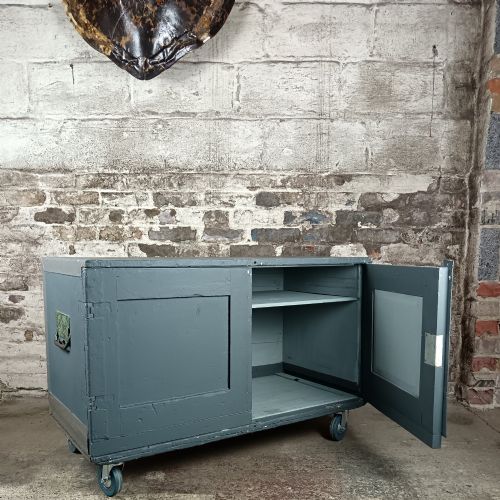
Originating as robust items for travel, estate use, or domestic storage, these trunks survive in various scales from small artisan chests to large transport cases. The domestic blanket box and the travel trunk represent the most common forms encountered within this selection.
Materials and construction methods
Makers utilised straight-grained pine for the main body of each box, joining panels with sturdy corner joints to withstand heavy domestic or transit use. Wrought iron or brass hardware such as carrying handles, hinges, and lock plates reinforced the vulnerable edges.
Surfaces received protective and decorative coats of paint, scumble glaze, or faux bois finishes applied with brushes or combs to imitate more costly timbers. Paper or fabric linings occasionally survive inside the lid, reflecting the secondary materials used by period makers.
Listings feature pine, iron, brass, glass, paper, and fabric across nineteenth-century forms including mule chests, blanket boxes, and military campaign trunks.
Evaluating quality and condition
The degree of original surface preservation separates standard utility boxes from superior examples. Trunks retaining untouched scumble, graining, or polychrome paint demonstrate greater integrity than those stripped or repeatedly painted over generations.
Construction details such as hand-cut dovetailing, original ironwork, functioning locks with keys, and stable bracket feet elevate certain pieces. Proportion and scale also dictate desirability, with exceptionally small artisan chests commanding particular attention.
The Victorian Painted Pine Trunk Glossary
- Scumble
- A translucent dark glaze applied over a lighter painted base coat and manipulated with combs or rags to simulate the grain of expensive hardwoods like oak or walnut. This finish was widely applied to nineteenth-century pine furniture.
- Mule chest
- A storage chest featuring one or more drawers beneath the main internal compartment. They bridge the functional gap between a traditional coffer and a chest of drawers.
- Campaign chest
- A portable piece of furniture designed to dismantle or withstand rigorous transport by military officers or travellers. These items typically feature recessed brass handles and reinforced corners.
- Kist
- A regional term of Scandinavian origin used in Scotland and northern England to describe a heavy wooden storage chest or box. They served as primary storage for household textiles and personal belongings.
- Faux bois
- A decorative painting technique meaning false wood, used by period artisans to make ordinary pine appear like exotic timber. Skilled painters achieved remarkable depth through layered translucent pigments.
Victorian Painted Pine Trunk: Frequently Asked Questions
How were these trunks originally used?
Nineteenth-century households utilised these sturdy wooden boxes for storing blankets, woollens, and personal belongings at the foot of beds or in attics. Many served a dual purpose as travelling luggage or transport cases for military officers and civilian passengers.
Smaller artisan and estate chests kept specialised tools, documents, or household provisions secure. Their robust construction allowed them to withstand heavy handling during transit by rail, carriage, or ship.
How do I clean a painted pine trunk?
Maintain the historic surface by dusting gently with a dry, soft cloth to remove everyday particles. Avoid chemical cleaners, modern detergents, or excessive moisture, which can soften or lift fragile nineteenth-century paint layers.
Wax can be applied sparingly to unpainted interior wood, but consult a professional conservator before treating delicate exterior scumble or polychrome decoration.
How can I tell the age of a pine trunk?
Examine the construction marks, hardware types, and fastener styles used inside and outside the box. Hand-forged iron hinges, hand-cut dovetails, and period lock mechanisms generally point towards nineteenth-century production.
Surface characteristics such as crazed oil paint, scumble glazes, and natural timber oxidation provide additional visual clues to date the piece accurately.
Where should I place a trunk at home?
Position these versatile boxes at the foot of a bed, beneath a window, or against a hallway wall to provide functional hidden storage. Their flat lids allow them to double as occasional coffee tables or seating benches in living spaces.
Keep them away from direct sunlight, radiators, and damp areas to prevent the pine from warping and the historic paint from flaking.