


Victorian Painted Earthenware Dogs
Victorian painted earthenware dogs are characterful ceramic figures that bring traditional domestic charm to a mantelpiece.
Victorian Painted Earthenware Dogs
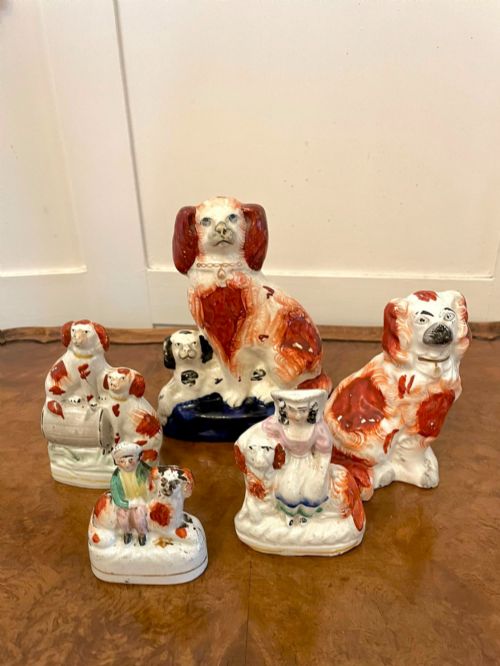
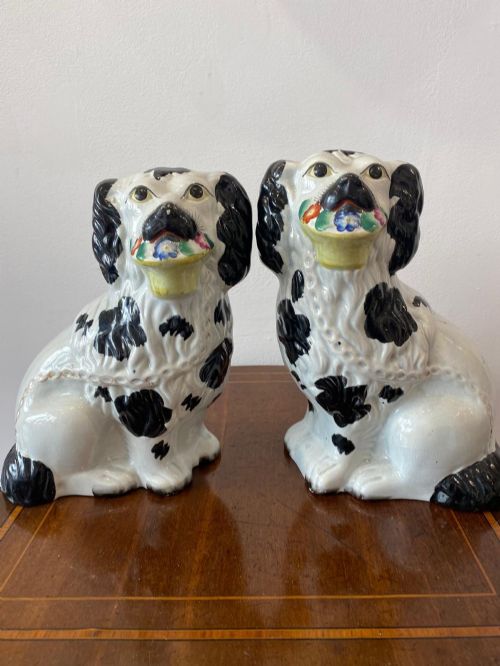
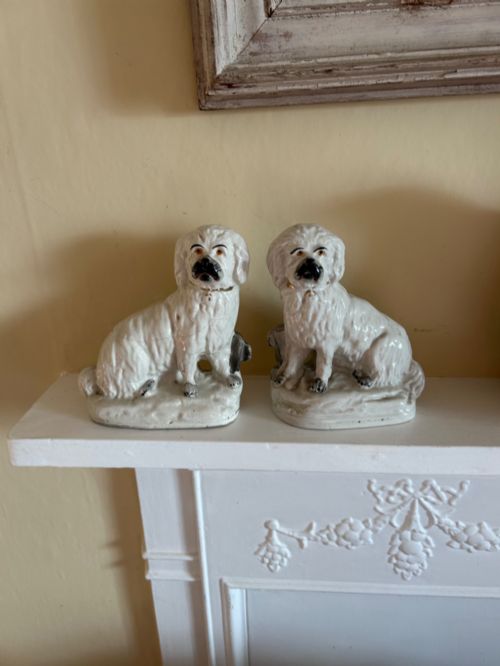
When you search for victorian painted earthenware dogs, you find decorative pottery figurines and figures produced across the nineteenth century. These pieces predominantly take the form of Staffordshire spaniels, dalmatians, maltese terriers, and pugs.
The selections span decades such as the eighteen sixties, seventies, eighties, and nineteen hundreds, often appearing as matched pairs. Collectors encounter seated spaniels and comforter spaniels designed to sit on hearths and mantelpieces.
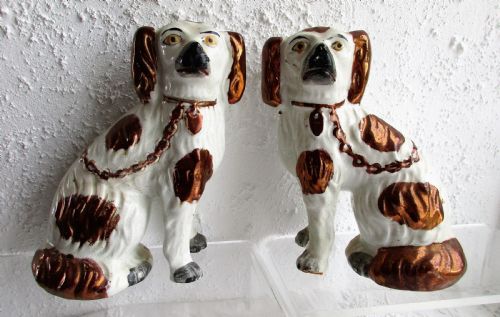
Makers and workshops across the period modelled these dogs in earthenware, applying enamel paint and glaze by hand. Some examples incorporate copper lustre or gilt highlights to accentuate collars and chains.
How they were made
Potters shaped these earthenware figures using ceramic moulding techniques before firing the clay body. Artisans then applied enamel paint over the glaze to render markings, eyes, and facial expressions.
Certain pieces received additional enrichment through copper lustre or gilt details applied to collars, lockets, and chains. The combination of ceramic, glaze, and enamel created the characteristic glossy finish seen on nineteenth century mantel dogs.
Listings feature earthenware dogs spanning the nineteenth century, including dates from eighteen sixty to nineteen hundred.
What varies in quality
The depth of the glaze and the preservation of the enamel surface distinguish superior figures from simpler production pieces. Scale also plays a role, with larger figures commanding attention through their substantial presence.
The Victorian Painted Earthenware Dogs Glossary
- Earthenware
- A porous pottery body fired at lower temperatures, commonly used for nineteenth century figures before being glazed.
- Enamel
- Opaque glass-like paint applied over the fired glaze to add colour and detail to the ceramic surface.
- Copper lustre
- A metallic glaze finish yielding a coppery sheen, frequently utilised on collars and decorative accents.
- Comforter spaniels
- A traditional term for Staffordshire spaniels placed on either side of a fireplace or mantelpiece.
- Figurine
- A small modelled ceramic sculpture representing an animal or human form.
Victorian Painted Earthenware Dogs: Frequently Asked Questions
What are Staffordshire dogs?
Staffordshire dogs are ceramic figures produced in the pottery districts of Staffordshire during the nineteenth century. They most frequently represent spaniels intended for domestic display.
These mantel ornaments served as comforting companions in Victorian homes, often arranged in matching pairs.
How do I date these dogs?
Dating relies on stylistic clues, modelling characteristics, and the nature of the glaze and enamel work. Pieces span the Victorian era, with specific decades recorded in the evidence.
Changes in painting styles and ceramic bodies help differentiate pieces from the eighteen sixties through to nineteen hundred.
Were they made as pairs?
Many of these figures were manufactured as matched pairs to sit facing one another on either end of a mantelpiece. Single figures and larger collections also appear.
Pairs typically mirror each other in pose, facing left and right to frame a fireplace or shelf.
How should I clean them?
Careful dusting with a soft, dry cloth is the safest way to maintain the glazed ceramic and enamel surfaces. Avoid harsh liquids or abrasive cleaning agents.
Gentle maintenance preserves the delicate hand-painted details and the original nineteenth century glaze.