

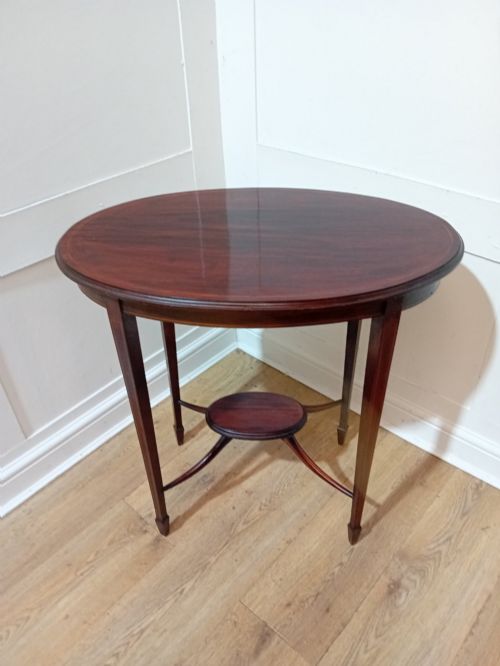



Victorian Oval Stretcher Table
These victorian oval stretcher table pieces combine walnut timbers and robust stretchers, offering both enduring stability and classical nineteenth-century grace for modern rooms.
Victorian Oval Stretcher Table
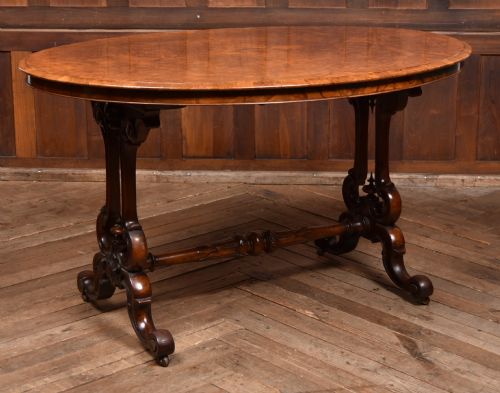
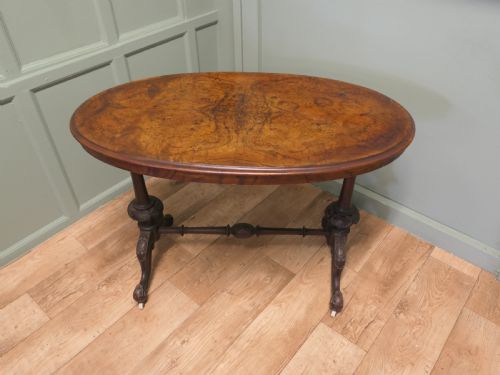
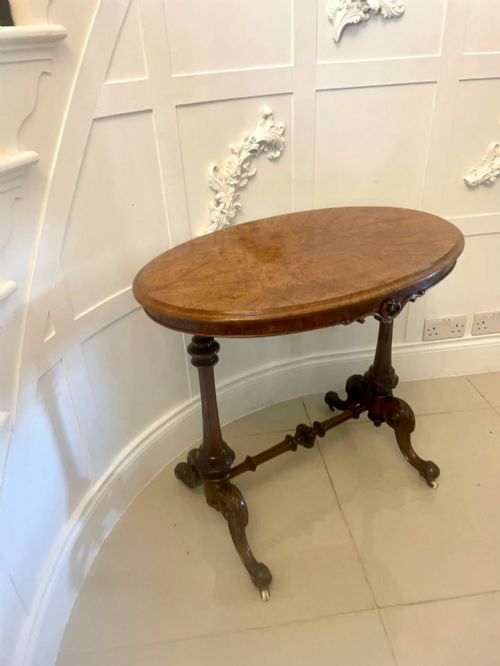
A victorian oval stretcher table is a domestic surface designed during the nineteenth century, most frequently appearing in burr walnut, mahogany, and rosewood. These pieces often serve as centre tables, occasional tables, or side tables within reception rooms and hallways.
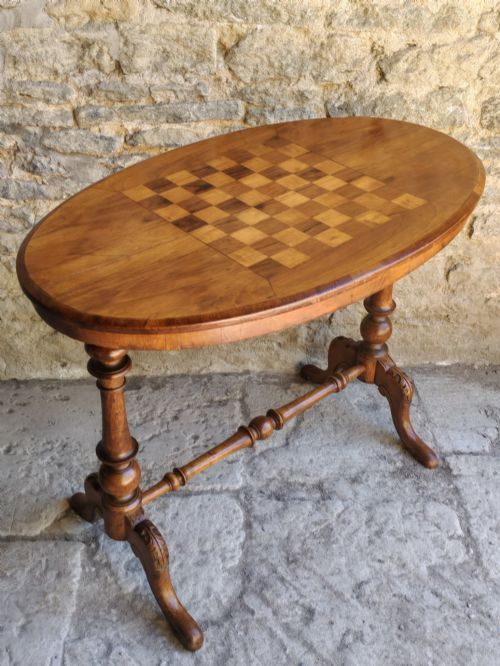
Makers of the period utilised rich timbers like burr walnut and mahogany, frequently enhancing the tops with boxwood inlay. The inclusion of a stretcher provides both structural rigidity and a distinct decorative feature beneath the surface.
How they were made
Cabinet makers constructed these tables using solid hardwoods such as mahogany and oak for the structural frames, often applying burr walnut veneers to the visible surfaces to create striking grain patterns. Boxwood inlay was meticulously hand-cut and fitted into recessed channels on the tabletop to form delicate geometric or floral motifs.
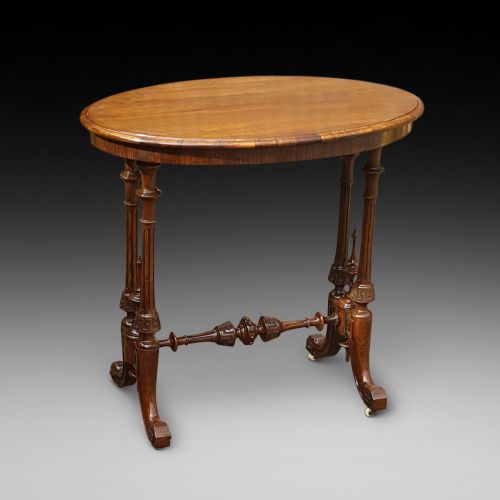
The underframes typically incorporate turned wooden supports secured by a central stretcher, which braces the legs against lateral movement. Brass castors are occasionally fitted to the feet, allowing these substantial pieces to be moved smoothly across floorboards.
Victorian Oval Stretcher Table Retail Price Guide 2026
Typical asking prices for victorian oval stretcher table among the pieces listed under this phrase on Sellingantiques today, from the lower quarter to the upper quarter. They describe what is for sale here now, not the wider market.
Listings on this page span the mid to late nineteenth century, predominantly featuring walnut, burr walnut, and mahogany with occasional boxwood inlay.
What varies in quality
The distinction between standard examples and the finest pieces lies primarily in the selection of veneer and the crispness of the inlaid decoration. Burr walnut with rich, highly figured movement commands attention, especially when matched symmetrically across an oval top.
Joinery execution also dictates the standing of a piece, observable in the snug fit of the stretcher joints and the precision of the turned leg supports. Finer examples maintain their structural integrity without wobble, demonstrating superior timber seasoning and assembly by nineteenth-century artisans.
The Victorian Oval Stretcher Table Glossary
- Burr Walnut
- A specialised wood cut from the burl growth of a walnut tree, highly prized for its swirling, mottled grain patterns. Cabinet makers used it extensively for decorative table surfaces during the nineteenth century.
- Sheraton Revival
- A late nineteenth-century design style inspired by the neoclassical furniture of George Sheraton. It emphasises refined proportions, satinwood banding, and delicate boxwood inlay.
- Occasional Table
- A small, versatile table intended for intermittent use around a sitting room or hallway. Examples range from simple lamp tables to shaped-top display surfaces.
- Centre Table
- A freestanding table finished on all sides, designed to stand in the middle of a room rather than against a wall.
Victorian Oval Stretcher Table: Frequently Asked Questions
What rooms suit these tables?
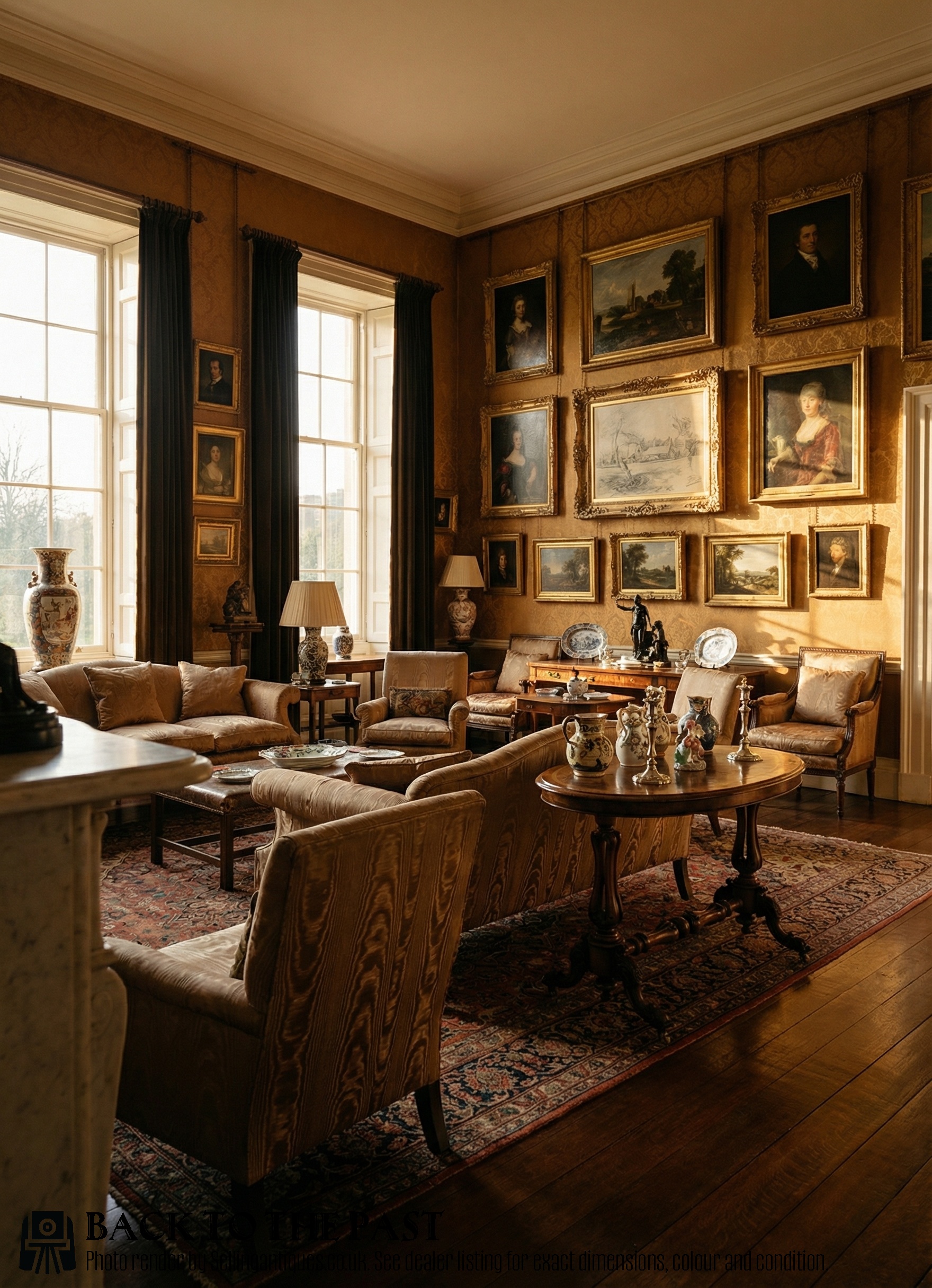
These tables find natural placement in living rooms as central display surfaces or beside seating arrangements. Their compact oval footprint also allows them to function effectively in hallways.
Because many examples feature finished backs and freestanding designs, they do not require placement against a wall. This versatility lets them anchor an interior layout while providing practical surface space.
How do I care for walnut veneer?
Maintaining nineteenth-century walnut and mahogany requires simple dusting with a dry, soft cloth and protection from direct sunlight. Excessive heat and moisture can cause wood to warp or veneers to lift.
Applying a traditional beeswax polish periodically helps nourish the timber and preserve the natural lustre of the grain. Avoid modern silicone sprays, as they can penetrate porous historic finishes.
What is the function of the stretcher?
The stretcher acts as a horizontal brace linking the table legs to prevent lateral movement and twisting. By tying the lower frame together, it distributes weight and adds structural longevity.
Beyond pure utility, makers treated the stretcher as an artistic element, shaping the wooden bars and adding central turnings or finials that matched the legs.