


Victorian Ormolu Candlesticks
Victorian ormolu candlesticks combine gilded metal with rich bronze, marble, and enamel to light fine interiors with nineteenth-century French and English design.
Victorian Ormolu Candlesticks
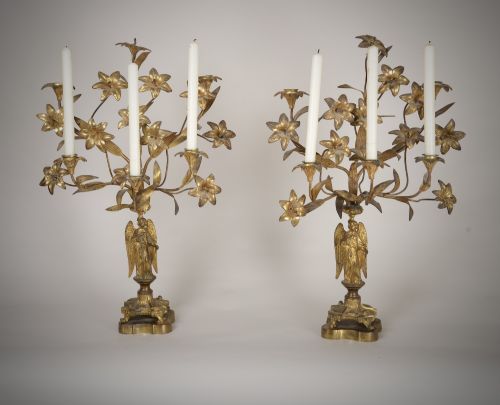
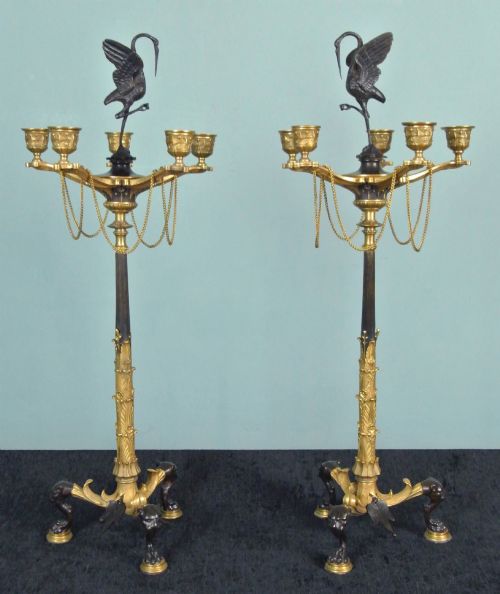
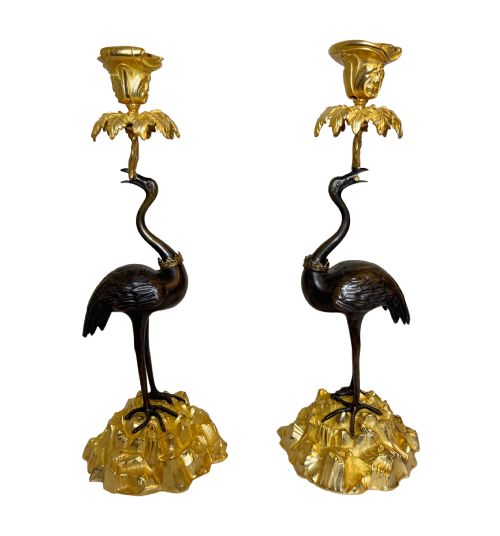
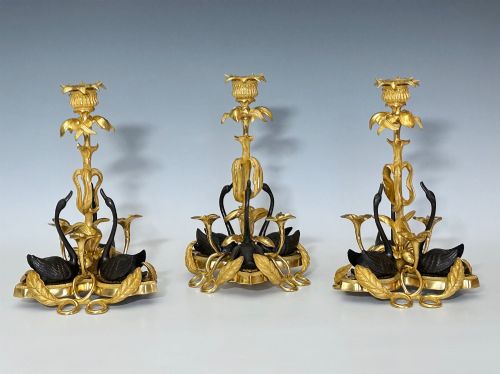
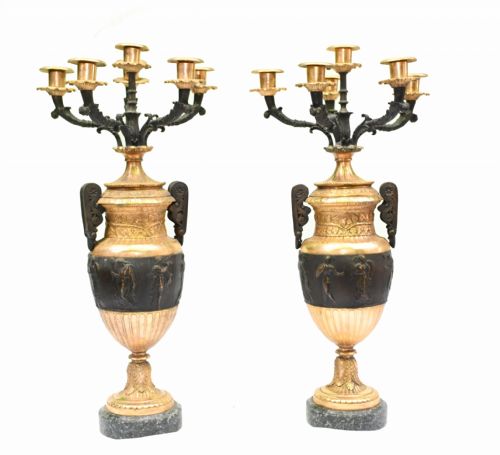
Victorian ormolu candlesticks unite the decorative styles of the nineteenth century, drawing heavily on French Rococo Revival, Empire, and Neoclassical motifs. When exploring this phrase, buyers encounter pairs of weighted candleholders and multi-branch candelabra alongside occasional table lamps and desk sets.
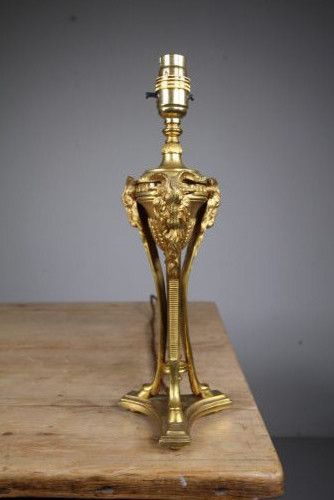
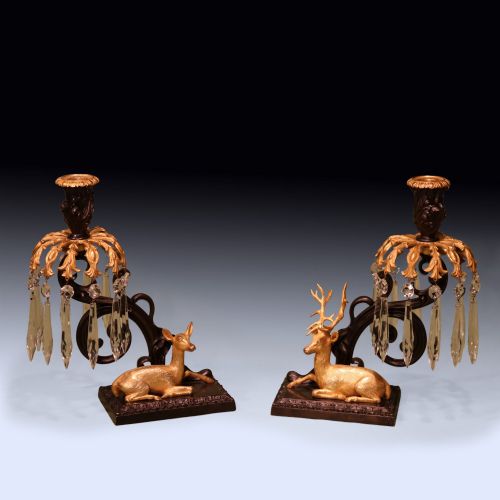
The objects frequently pair gilded bronze with contrasting materials such as white marble, onyx, and patinated bronze. Animal figures like stags, flamingoes, and storks appear alongside cherubs and classical rams' heads.
Most examples originate from the broader nineteenth century, spanning the Victorian era proper as well as Regency and late nineteenth-century French workshops. Pairs dominate the selection, often designed symmetrically for mantelpieces or side tables.
Quality and craftsmanship
The distinction between standard production and superior work lies in the crispness of the bronze chasing and the depth of the gilding. Finer pieces retain sharp feather, fur, and architectural detailing rather than softened, mass-cast surfaces.
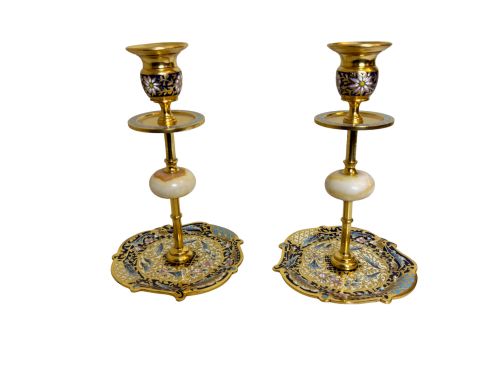
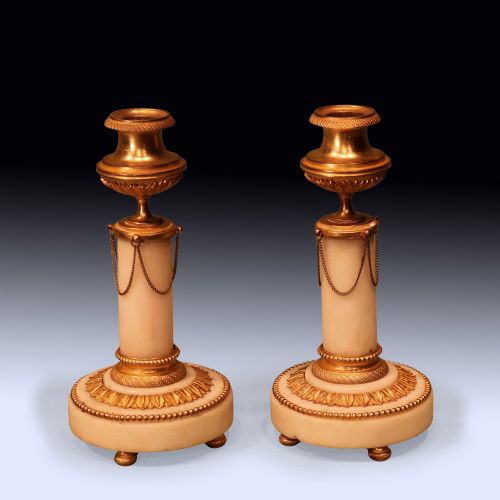
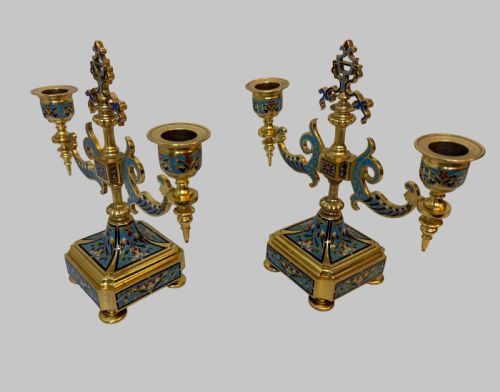
Material selection also dictates value, with solid marble bases, genuine champlevé enamel, and integrated figural bronzes marking out the more ambitious nineteenth-century commissions.
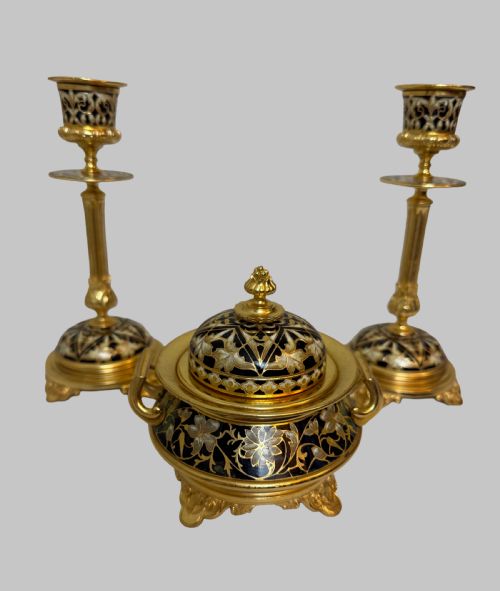
A gilt bronze desk set captures playful cats or kittens alongside inkwells.
Barbedienne·Thomas Hope
The Victorian Ormolu Candlesticks Glossary
- Ormolu
- Gilded bronze, traditionally produced using a mercury amalgamation technique to bond gold to a bronze base. It provides a warm, enduring lustre characteristic of luxury nineteenth-century objects.
- Champlevé
- An enamelling technique where troughs or cells are hollowed out of the metal surface and filled with vitreous enamel before firing. It creates vibrant decorative patterns alongside gilded bronze.
- Lustre
- A candlestick or candelabrum hung with cut glass or crystal pendants designed to refract candlelight. These drops swing from the upper bobeche or arms.
- Candelabra
- A branched candlestick holding multiple candles or lamp fittings on separate arms. Pairs of these large fixtures dominate formal nineteenth-century interior arrangements.
- Patinated Bronze
- Bronze that has been chemically treated to achieve a dark brown or green surface tone. It provides a tonal contrast against bright ormolu gilding.
Victorian Ormolu Candlesticks: Frequently Asked Questions
Were these electrified later?
Many nineteenth-century candelabra and candlesticks were adapted for electricity during the twentieth century to serve as table lamps. Some conversions are reversible, while others involve drilled channels through the original bronze.
Check the base and stem for wiring holes when examining a piece listed as a lamp base.
What is the difference between ormolu and brass?
Ormolu consists of gilded bronze, where a layer of gold is applied to a copper alloy base to give a rich, deep yellow sheen. Brass is an alloy of copper and zinc throughout, offering a brighter, more metallic yellow colour without surface gilding.
Nineteenth-century makers often combined both metals within a single decorative object.
How can I tell French from English pieces?
French nineteenth-century pieces often display heavier Rococo Revival or Empire styling with elaborate figural castings, champlevé enamel, and Sevres style porcelain elements. English equivalents frequently adhere to Neoclassical restraint or incorporate specific regional motifs.
Attribution relies on stylistic markers and occasional maker signatures found on the bronze castings.