




Victorian Orientalist Sculptures
Victorian orientalist sculptures capture distant lands through dramatic figures cast in bronze, carved in wood, and moulded in porcelain.
Victorian Orientalist Sculptures
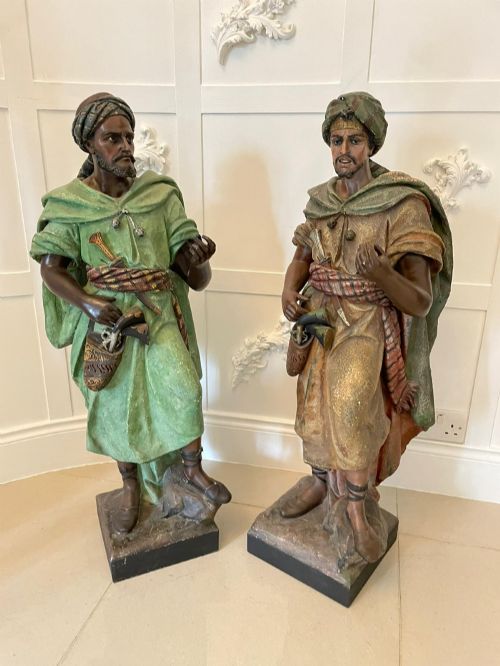
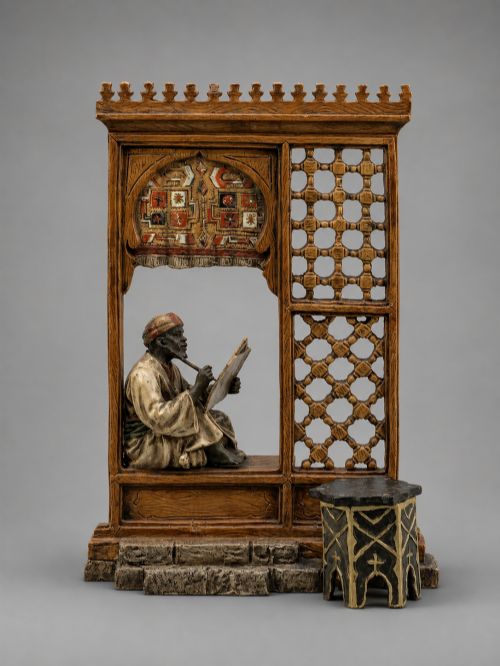
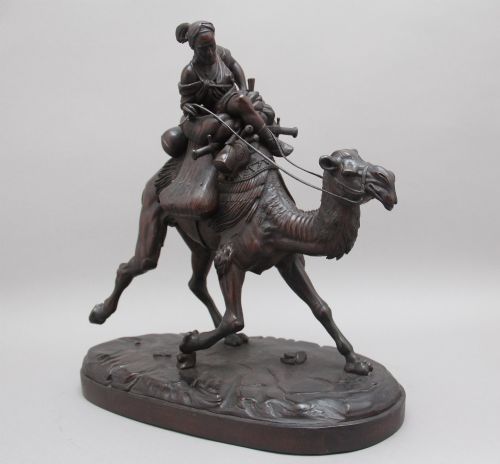
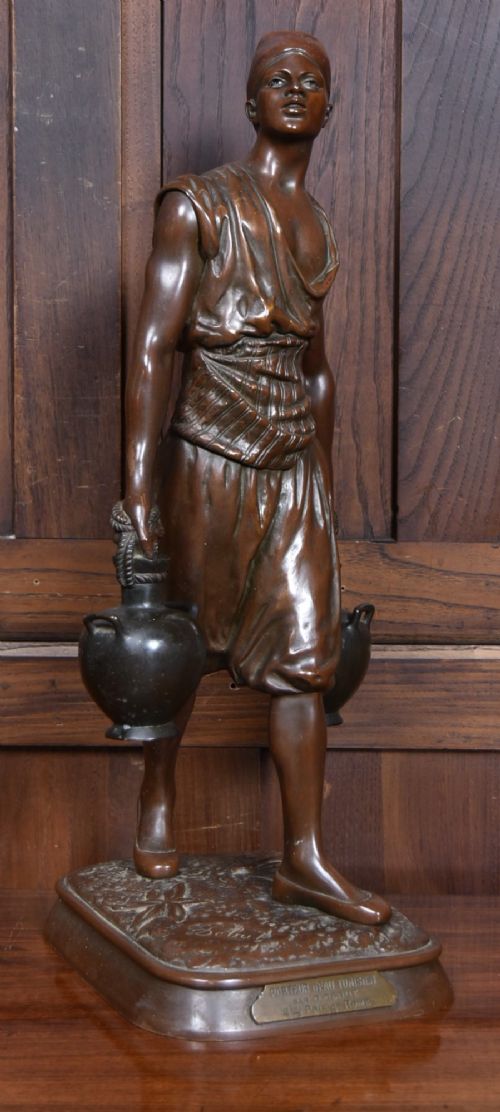
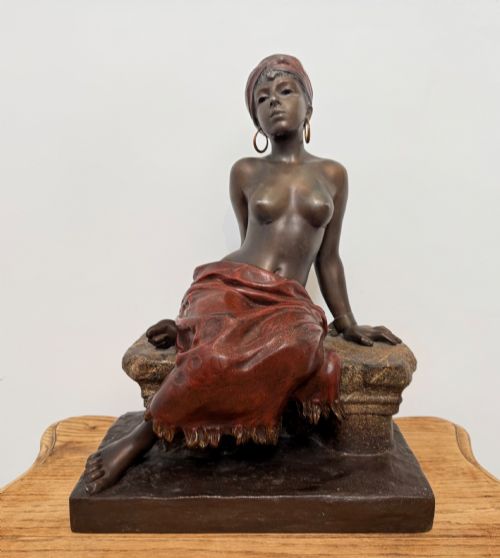
Victorian orientalist sculptures encompass figurative bronzes, painted terracottas, and glazed porcelain figures created during the nineteenth century. These works depict water carriers, snake charmers, musicians, and regional leaders from North Africa and the Middle East.
The objects on this page range from cabinet-sized porcelain figurines to large bronze statues and figural lamps. Makers of the period drew inspiration from travel narratives and international exhibitions to shape these romanticised subjects.
Materials and methods
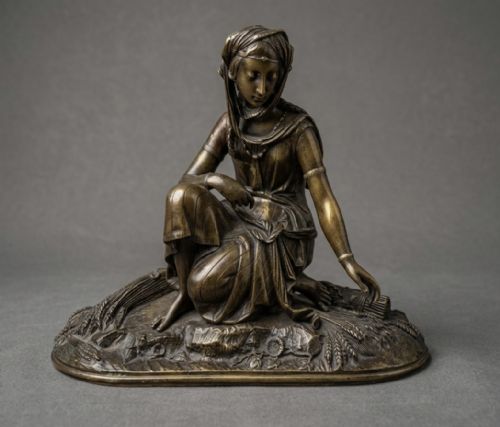
Foundry workers cast metals using the lost-wax method before applying cold-painted polychrome finishes or rich patinas. Bronze pieces often show minute chasing to define robes, turbans, and decorative harnesses.
Ceramic manufactories utilised fine porcelain and terracotta, sometimes combining glazed surfaces with gilt and enamel highlights. Wood carvers shaped contrasting details in Black Forest pieces, while plaster and spelter served as alternatives for large figures.
Victorian Orientalist Sculptures Retail Price Guide 2026
Typical asking prices for victorian orientalist sculptures among the pieces listed under this phrase on Sellingantiques today, from the lower quarter to the upper quarter. They describe what is for sale here now, not the wider market.
Saladin and Sardanapalus rub shoulders with humble water carriers and snake charmers in this diverse assembly of nineteenth-century characters.
Judging the work
Ceramic examples achieve distinction through complex glaze formulas, such as patent metallic finishes, and careful hand-painting on figures like water carriers and musicians. Signatures from established modellers and prominent foundries elevate the standing of individual pieces.
Franz Bergman·Royal Worcester·Royal Dux·Pierre Jules Mène·Frederic Goldscheider
The Victorian Orientalist Sculptures Glossary
- Cold-painted bronze
- A technique where bronze sculptures are painted with oil or enamel paints and left unheated. This method produces vibrant surface colours on garments and accessories.
- Patinated bronze
- Metal treated with chemical solutions to produce a specific surface tone. This process protects the bronze while giving depth to shadows in drapery and skin.
- Polychromed
- Decorated in several colours. This term applies to painted plaster, terracotta, and porcelain figures.
- Spelter
- A zinc alloy used as a substitute for bronze. It takes fine detail well but is softer and lighter than copper-based metals.
Victorian Orientalist Sculptures: Frequently Asked Questions
What materials were used?
Makers employed cast bronze, cold-painted metal, glazed porcelain, terracotta, and carved wood to build these figures. Combinations of enamel, paint, and gold leaf frequently highlight regional costume details.
Larger decorative works also utilise plaster and spelter, while marble appears in sculptural busts.
How do I identify the period?
Nineteenth-century pieces often bear foundry stamps, artist signatures, or registration dates impressed into the base or ceramic body. Stylistic markers include romanticised regional dress and theatrical poses typical of Victorian taste.
Material ageing, such as natural bronze patina and wear on cold-painted surfaces, assists in confirming nineteenth-century origin.
Where were they displayed?
Victorian households placed these figures on mantelpieces, pedestals, and library tables as conversation pieces. Figural lamps and larger statues also stood in entrance halls and drawing rooms.
Their presence reflected nineteenth-century interest in travel and foreign cultures.
Who created these figures?
European sculptors and major ceramic manufactories produced these works, drawing inspiration from travels abroad. Notable designers and foundries in Austria, France, and England shaped the market.
Factory modellers like James Hadley created specific series for commercial production.