



Victorian Optical Instrument
A victorian optical instrument brings scientific precision and elegant craftsmanship together through brass telescopes, mahogany microscopes, and delicate opera glasses.

Victorian Optical Instrument
A victorian optical instrument encompasses a diverse range of scientific and viewing apparatuses spanning the nineteenth century. Buyers examine everything from pocket lenses and stereoscopes to substantial brass telescopes and complex laboratory microscopes.
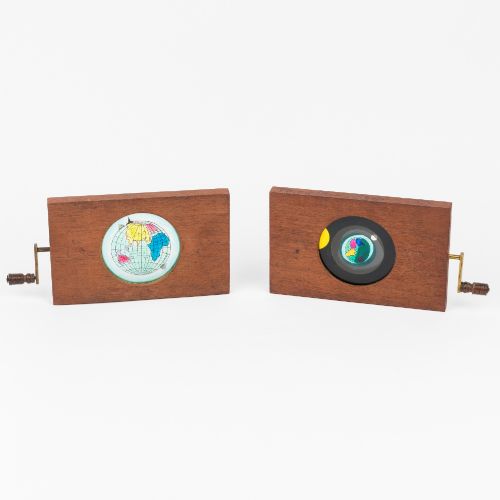
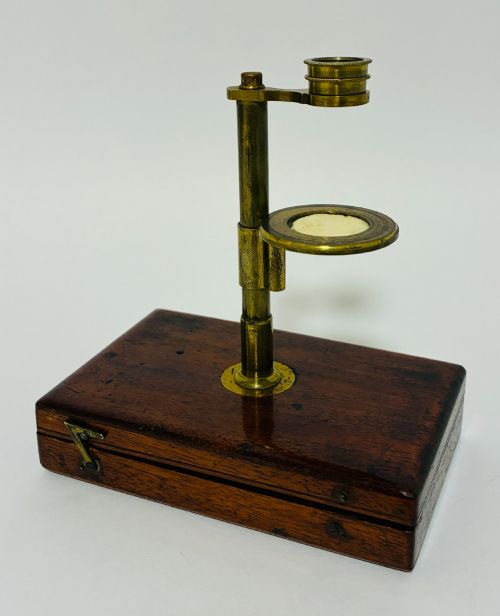
The versions most frequently encountered on this page include mahogany cased microscopes, brass telescopes with leather grips, and opera glasses finished in mother of pearl or sterling silver. These pieces served practical roles in navigation, science, and leisure.
Origins stretch across English and continental workshops, reflecting the rapid industrial and scientific advancement of the period. Each object demonstrates a specific application, whether for viewing distant horizons or examining microscopic botanical specimens.
Materials and Construction
Makers relied heavily on turned brass and polished mahogany, combining metalwork with dense hardwoods for structural durability and precision. Glass lenses provide the optical function, while secondary materials like leather, mother of pearl, and sterling silver add decorative appeal.
Construction involved precise machining of metal tubes, hand-fitted wooden cases, and careful mounting of glass optics. Joints, threads, and focal adjustments required exacting hand labour to ensure optical alignment.
Victorian Optical Instrument Retail Price Guide 2026
Typical asking prices for victorian optical instrument among the pieces listed under this phrase on Sellingantiques today, from the lower quarter to the upper quarter. They describe what is for sale here now, not the wider market.
Listings feature scientific instruments, opera glasses, telescopes, and desk accessories constructed from brass, glass, mahogany, and mother of pearl.
Assessing Quality and Execution
Quality rests in the precision of the mechanical movement, the clarity and integrity of the glass lenses, and the retention of original fitted cabinetry. Superior examples demonstrate smooth focusing action and robust construction without excessive wear.
The presence of maker signatures, original fitted cases, and specialist materials like burr yew wood or sterling silver elevates an example above standard utility pieces. Finer instruments maintain their original patination and operational capability.
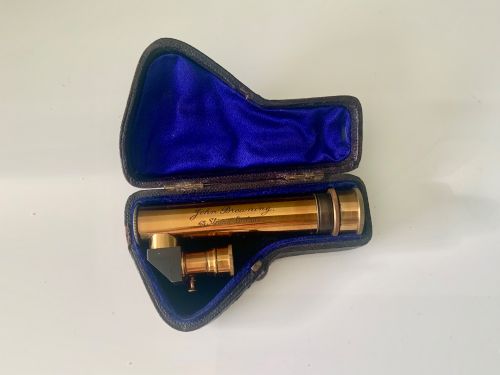
John Browning Strand London·R. and J. Beck London·Thomas Rubergall of London·H Hughes and Son London·Chadburn Brothers of Sheffield·Francis West·CW Dixey London·WF STANLEY
The Victorian Optical Instrument Glossary
- Spectroscope
- An optical instrument used to measure properties of light over a specific portion of the electromagnetic spectrum. It assists in scientific analysis by splitting light into component wavelengths.
- Stereoscope
- A device for viewing a stereoscopic pair of photographs, creating a three-dimensional illusion of depth. These wooden handheld or table devices were popular Victorian parlor amusements.
- Stanhope Lens
- A tiny cylindrical optical lens that produces a high magnification image of a microscopic photograph placed at one end. Francis West produced notable examples.
- Binocular Microscope
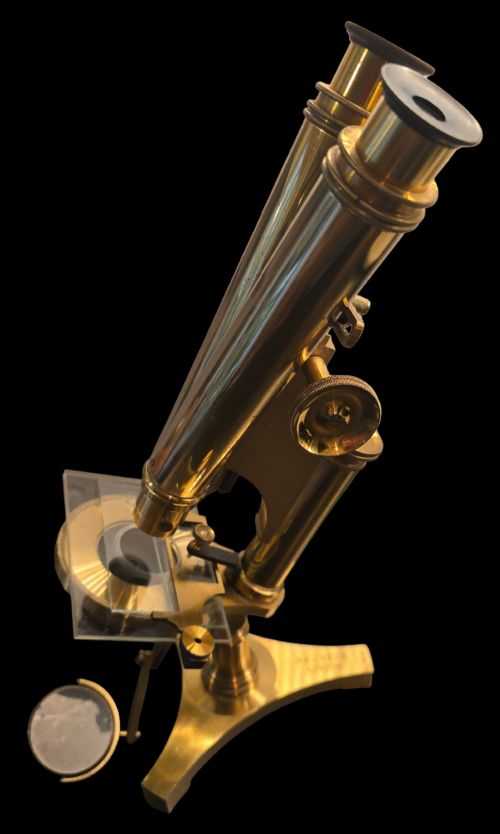
- A microscope featuring two eyepieces for simultaneous viewing with both eyes, reducing eye strain during extended observation. Makers such as R. & J. Beck produced celebrated versions.
- Draw Telescope
- A portable telescope constructed from multiple sliding tapered tubes that collapse into a compact housing. They were widely used by naval officers and travellers.
Victorian Optical Instrument: Frequently Asked Questions
What is a victorian optical instrument used for?
These instruments served varied practical functions including navigation, astronomy, scientific research, and theatrical entertainment during the nineteenth century.
Owners utilised them for tasks ranging from inspecting botanical slides and reading maps to scanning coastlines and viewing stage performances.
How do I identify a nineteenth century telescope?
Examine the materials and construction methods, typically noting turned brass barrels, leather body wraps, and hardwood storage cases. Signatures or maker names engraved on the draw tubes often provide direct attribution.
Look for multi-draw configurations and the specific patination of nineteenth century brass surfaces to confirm the period.
Are these instruments still fully functional?
Many of these pieces retain their operational capability, allowing users to focus lenses, adjust telescopes, and view slides through original glass optics.
Performance depends on the preservation of the glass and internal alignment, though some collectors acquire them primarily for display and study.
What materials were used in opera glasses?
Makers constructed opera glasses using brass frames often wrapped in leather or embellished with mother of pearl panels and sterling silver.
These decorative finishes turned a functional viewing aid into a fashionable accessory for the theatre and concert hall.