



Vintage Opera Glass
These vintage opera glass pieces bring theatre-going heritage to your hands, offering a tactile connection to historic performances.
Vintage Opera Glass
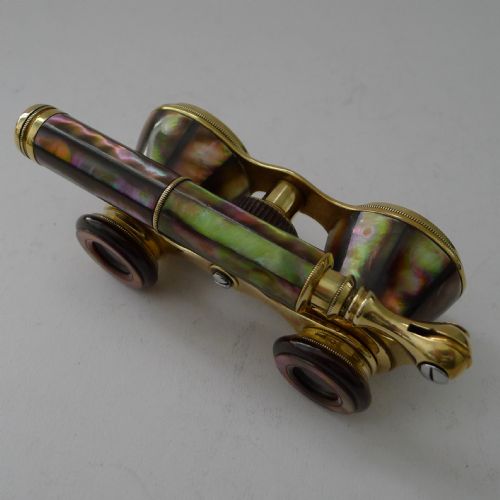
A vintage opera glass is a compact optical instrument designed for close viewing in theatres, concert halls, and drawing rooms. The selection includes traditional binoculars, single-barrel opera monoculars, spyglasses, folding lorgnettes, and optical instruments.
The pieces span multiple periods from the eighteenth century through the Victorian, Edwardian, Belle Epoque, and Art Deco eras. French and English makers dominate the origins, alongside German optical workshops.
Most examples rely on materials such as brass, mother-of-pearl, leather, and enamel, occasionally accented with precious stones like platinum and diamond or sterling silver.
How They Were Made
Metalwork forms the core structure of these instruments, utilising solid brass and lacquered brass alongside precious metals like sterling silver and platinum. Workshops combined these metals with turned leather casings or delicate mother-of-pearl thumb-pieces and barrels.
Decorative finishes often involved colourful enamel work, such as golden guilloche enamel applied to metal bodies. Lorgnettes and folding mechanisms incorporated hinged joints and tortoiseshell-style elements, paired with protective leather cases and neck lanyards.
Vintage Opera Glass Retail Price Guide 2026
Typical asking prices for vintage opera glass among the pieces listed under this phrase on Sellingantiques today, from the lower quarter to the upper quarter. They describe what is for sale here now, not the wider market.
Some folding lorgnettes come complete with their original box, neck lanyard, and a tortoiseshell finish to keep your theatre visits properly coordinated.
What Varies in Quality
The standard of materials used for the barrels and central focusing wheels distinguishes simpler viewing scopes from luxury items. Mother-of-pearl panels matched for colour and grain sit above plain brass cylinders, while platinum and diamond mountings represent the peak of craftsmanship.
Signed French and English pieces bearing workshop names such as Ross London or Iris Paris demonstrate superior optical and mechanical execution compared to unmarked generic items.
Ross London·Iris Paris
The Vintage Opera Glass Glossary
- Opera Glasses
- Low-power binocular optical instruments used for viewing theatrical performances. They typically feature a central adjustment screw to focus both barrels simultaneously.
- Lorgnettes
- Spectacles held with a handle rather than fitting over the ears. They often fold into a protective case when not in use.
- Guilloche Enamel
- A decorative technique where a precise geometric pattern is engraved beneath a translucent layer of enamel. This creates a shimmering effect under stage or room lighting.
- Monocular
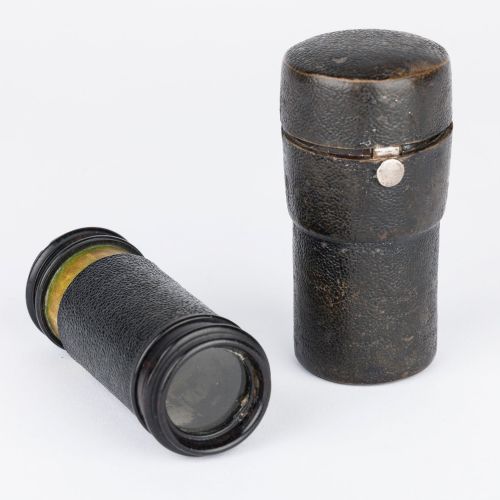
- A single optical telescope or viewing scope designed for one eye. These compact instruments often feature leather-wrapped brass bodies.
Vintage Opera Glass: Frequently Asked Questions
How do you focus vintage opera glasses?
Most pairs use a central knurled thumb screw located between the two barrels. Turning this screw adjusts the focal length for both lenses at the same time.
Older or simpler monocular versions might feature a push-pull draw tube mechanism instead of a central wheel.
What materials are common in these glasses?
Brass forms the structural chassis of nearly every piece, frequently paired with mother-of-pearl panels on the barrels. Leather wrapping and colourful enamel finishes also appear regularly.
High-end examples incorporate sterling silver, platinum, and diamonds.
Are these glasses still usable for theatre?
Yes, many optical instruments remain functional for modern use. The magnification is typically low, around two to three times, which suits indoor performance viewing.
Care should be taken with historical glass lenses and mechanical focusing screws during adjustment.