
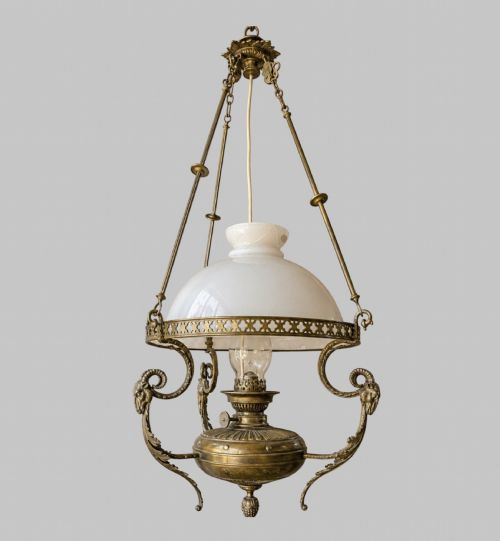


Victorian Opaline Glass Lamp
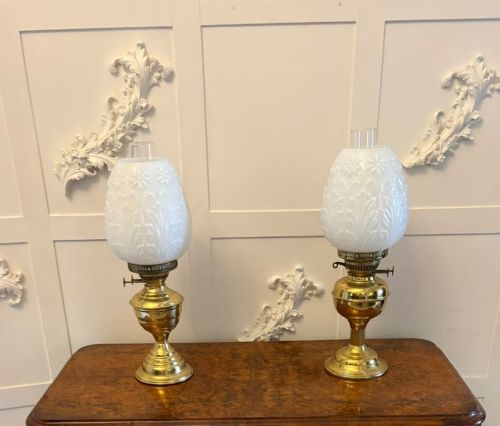
A victorian opaline glass lamp brings a soft, diffused glow and sculptural presence to a room, combining milky translucent glass with substantial metal mounts.
Victorian Opaline Glass Lamp
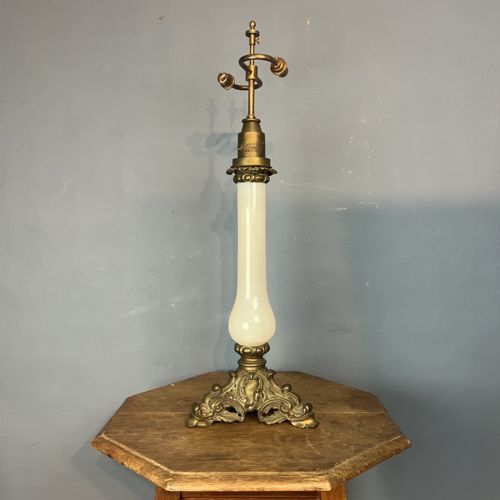
A victorian opaline glass lamp typically combines a milky or coloured translucent body with brass, bronze, or gilt metal mountings, designed originally for oil, paraffin, or gas and frequently converted to electricity.
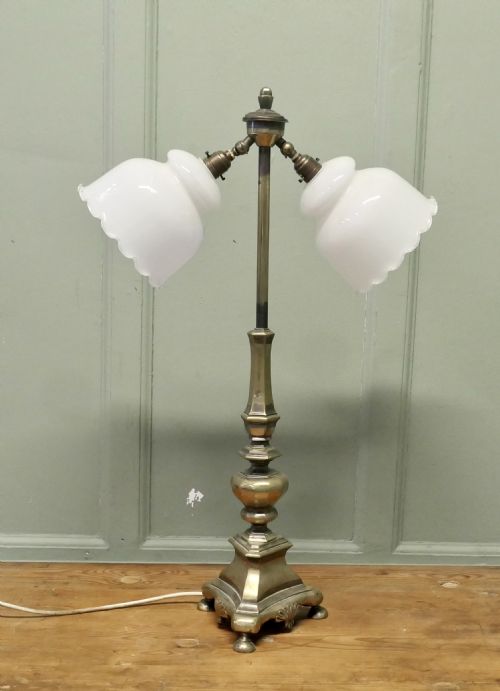
The selection ranges from tall column table lights and desk lamps with adjustable shades to hanging pendant lanterns and ceiling lighting originating from the nineteenth century into the Edwardian era.
You will encounter pieces reflecting stylistic revivals such as Rococo and Neoclassical alongside utilitarian reading lamps and decorative mantel pieces.
Materials and Techniques
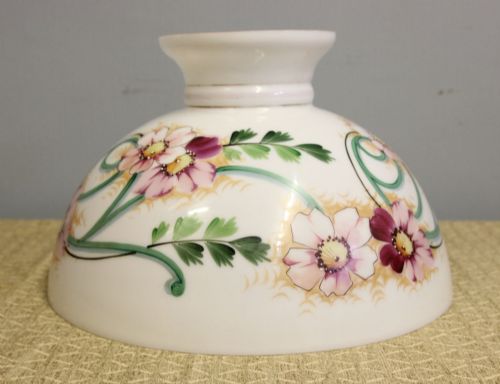
Opaline glass is formed by adding bone ash or metal oxides to the molten batch to achieve its characteristic opaque, porcelain-like appearance in white, blue, or green.
Mounts and burners utilise cast brass and bronze, often combined with gilt highlights, cut glass, and occasionally hand-painted enamel details applied directly to the glass surface.
Listings feature brass, bronze, and gilt metal paired with opaline glass across table, desk, and hanging configurations.
Determining Quality
Quality rests in the weight and crispness of the metal casting, where makers such as Perry and Co or Joseph Hinks employed finely chased brass and bronze rather than thin, pressed sheet metal.
The refinement of the opaline glass itself dictates value, distinguished by an even density of tone, smooth surface finish, and integration with specialised burners like those by Hinks or Wild and Wessel.
Mc Gary·Joseph Hinks·Perry and Co·Wild and Wessel
The Victorian Opaline Glass Lamp Glossary
- Opaline glass
- A translucent, milky glass developed in France and England during the nineteenth century to imitate porcelain. It takes its name from its resemblance to the opalescent shimmer of an opal.
- Paraffin lamp
- A lighting device designed to burn kerosene or paraffin oil via a flat wick raised through a metal burner. These were widely adapted into electric table lights during the twentieth century.
- Burner
- The mechanical assembly mounted atop the oil reservoir that controls the flame and airflow. Names like Hinks or Wild and Wessel signify patented mechanisms of high mechanical standard.
- Column lamp
- A lighting form featuring a central architectural shaft, often styled after classical orders like Doric or Corinthian. They elevate the opaline reservoir above the base for greater presence.
Victorian Opaline Glass Lamp: Frequently Asked Questions
How do I convert an old oil lamp?
Conversion typically involves running a discreet electrical flex through the existing burner path without drilling the antique body.
Professionals retain original components so the alteration remains completely reversible.
Were these always electrified?
These pieces burned paraffin, oil, or gas during the nineteenth century before electricity reached domestic interiors.
Most surviving examples were adapted for modern wiring during the twentieth century.
How do I clean opaline glass?
Wash the glass gently in lukewarm water using a mild, non-abrasive soap and a soft cloth.
Avoid soaking metal mounts or submerging vintage parts that retain old adhesives or painted decoration.
What is a duplex burner?
A duplex burner uses two parallel flat wicks to produce a wider flame and brighter light output than single-wick designs.
This mechanism was patented in the Victorian period to improve indoor illumination.