
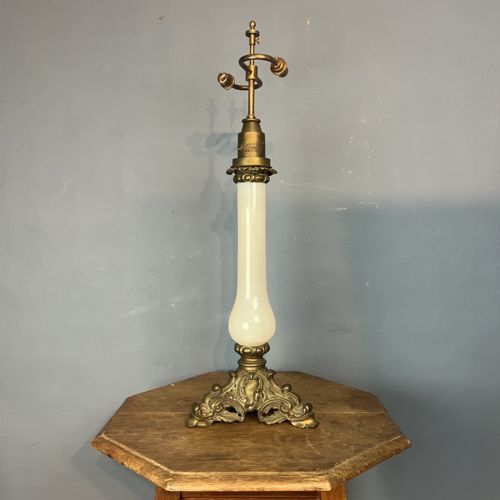


Opaline Desk Lamp
An opaline desk lamp brings a soft, diffused glow to a workspace through its distinctive milk-white glass shade.
Opaline Desk Lamp
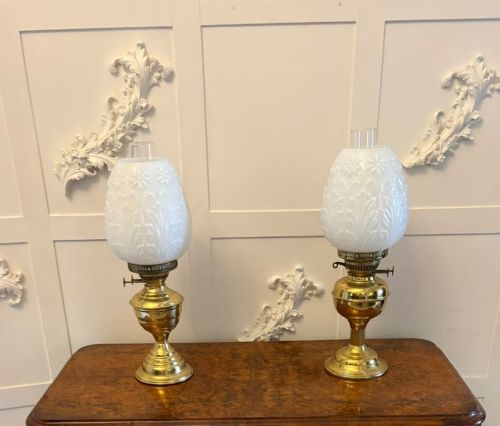
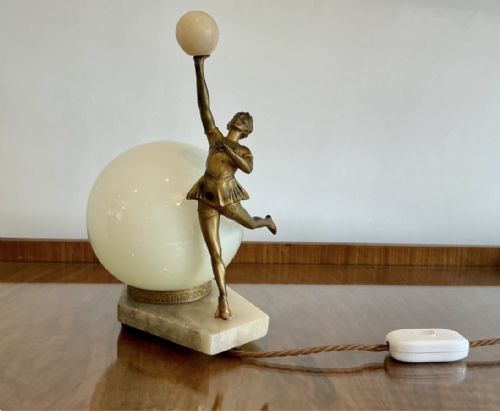
When you search for an opaline desk lamp, you encounter task lighting that pairs an opaque glass shade with a sturdy metal stand. The pieces listed here span the Victorian, Edwardian, and Art Deco periods, showing how working illumination evolved from paraffin burning to electricity.
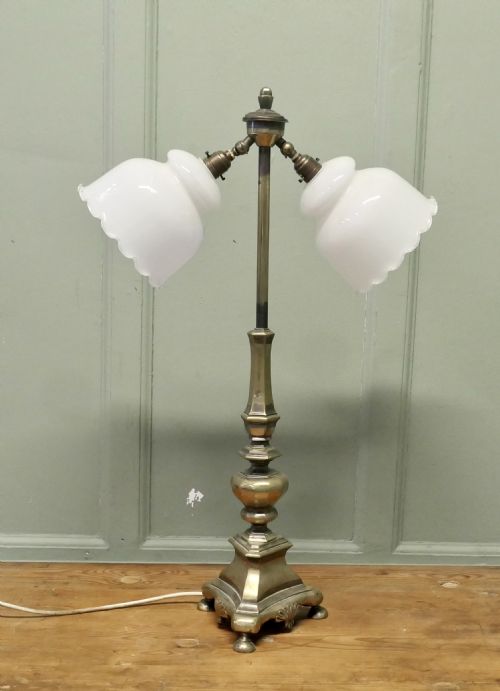
You are most likely to meet brass and bronze stands fitted with white or green opaline shades, often taking the form of adjustable reading lamps or converted oil lamps. These items bridge decorative arts and practical function, originating from British, French, and continental workshops during the nineteenth and early twentieth centuries.
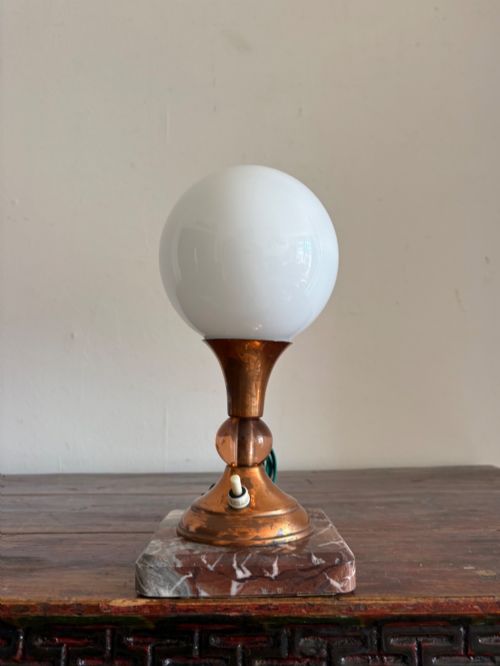
The forms range from heavy column lamps and twin-angled reading lights to slender modernist chrome structures on marble bases. Each style reflects the interior lighting needs of its decade, from nineteenth-century libraries to interwar offices.
Materials and Construction
Makers combined brass, bronze, copper, and chrome with blown opaline glass to create durable desk illumination. Metal components were cast, turned, or plated, whilst the glass achieved its characteristic milky opacity through the addition of bone ash or metal oxides during melting.
Structural stability required heavy bases in marble, granite, or weighted brass to balance the reach of adjustable arms and shades. Joints, screws, and mounts were engineered to allow directional adjustment without tipping the lamp.
Table lamps and converted oil lamps dominate the forms, reflecting a shift from liquid paraffin fuels to electric illumination.
Judgments of Quality
Quality rests in the substance of the metalwork and the purity of the glass. Heavier gauges of brass or bronze and substantial marble plinths indicate superior manufacturing, whereas lighter plated metals belong to mass-produced output.
The refinement of the opaline glass itself determines distinction, seen in even density, smooth interior casing, and subtle colour saturation rather than cloudy streaks or surface bubbles. Original fittings, such as stamped makers' marks or specialised switches, elevate a piece further.
JOSEPH HINKS·Wild and Wessel
The Opaline Desk Lamp Glossary
- Opaline glass
- A semi-opaque white or tinted glass popular for diffusing light without glare. It gained widespread use in nineteenth-century lighting for its clean appearance.
- Ormolu
- Gilded bronze, produced by applying a mercury-gold amalgam to cast bronze. This technique creates a rich golden finish found on decorative French pieces.
- Pricket lamp
- A form of lamp or candlestick featuring an upward-pointing metal spike to secure the candle or fitting. It appears in heavier table lighting formats.
- Spelter
- An alloy of zinc and lead used as a cheaper substitute for bronze. It was cast into decorative bases and figures before being painted or bronzed.
Opaline Desk Lamp: Frequently Asked Questions
How do I clean an opaline shade?
Wash the glass gently in warm, soapy water using a soft cloth, avoiding abrasive pads that can scratch the surface. Dry thoroughly before reattaching it to the metal fitting.
Keep metal components polished with a dry cloth rather than harsh chemical cleaners to preserve any patination or original plating.
Are these lamps safe for modern use?
Many older lamps arrive with historical wiring or converted oil burner mechanisms that require updating for modern electrical standards. A qualified electrician can rewire the internal cord safely while retaining the exterior components.
Ensure that the bulb wattage matches the tolerance of the original socket and shade to prevent excessive heat buildup inside the glass.
How do I date a brass and glass lamp?
Examine the construction methods, switch types, and fastener designs, as Victorian and Edwardian examples often feature hand-threaded screws and heavy cast brass components. Art Deco pieces introduce chrome plating, geometric bases, and simpler lines.
Patent stamps or manufacturer marks on the metal collar or base provide precise chronological anchors when present.
Why is the glass different colors?
Opaline glass could be tinted during production by adding specific minerals to the molten batch, resulting in green, blue, or mottled finishes alongside the standard milky white. These variations suited different decorative schemes from the Victorian parlor to the Art Deco desk.
The density of the colour depends on the thickness of the glass layers and the specific chemical recipe used by the glasshouse.