

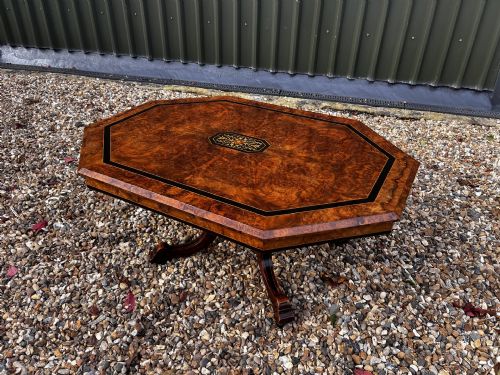
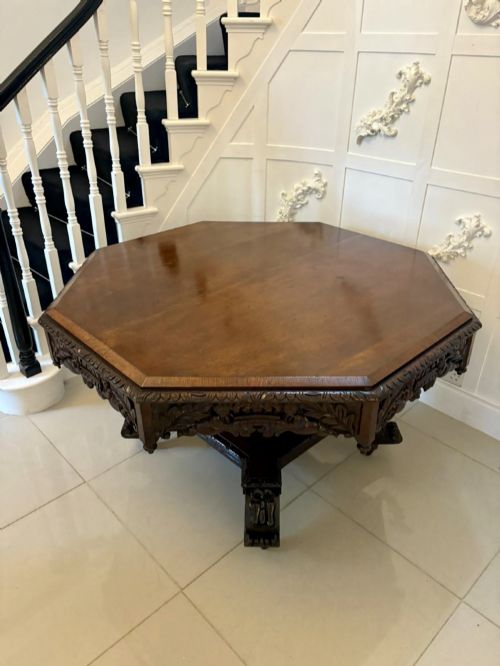
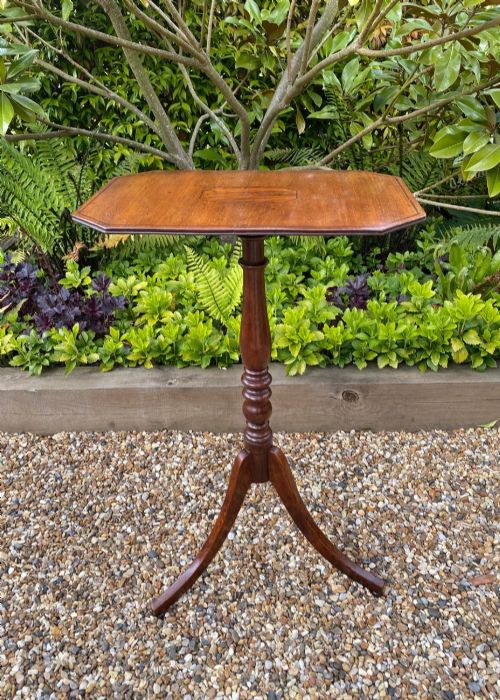
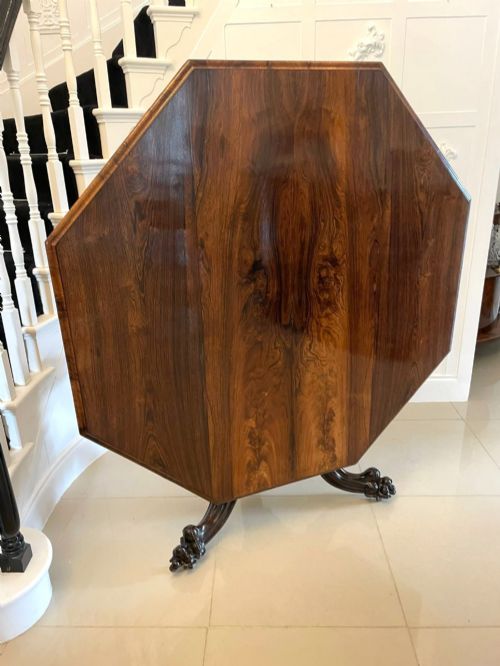
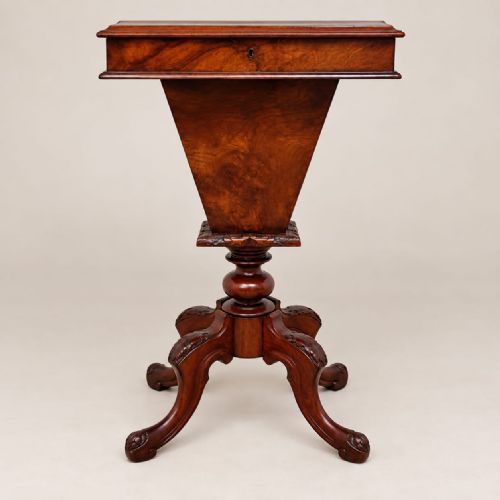
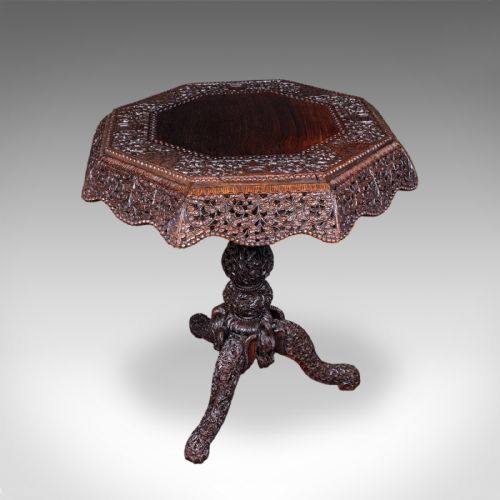
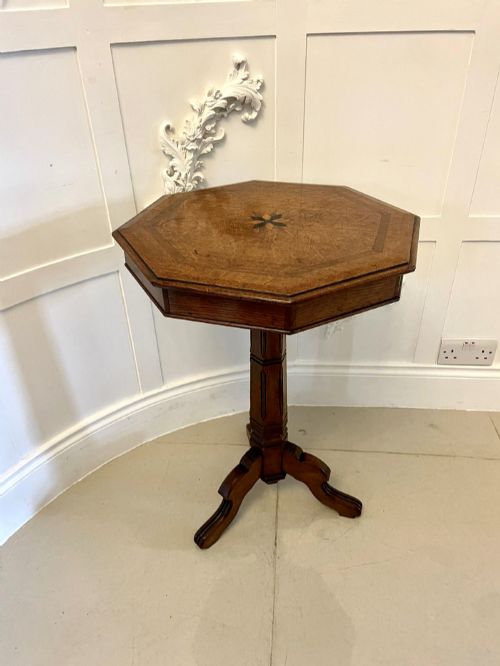
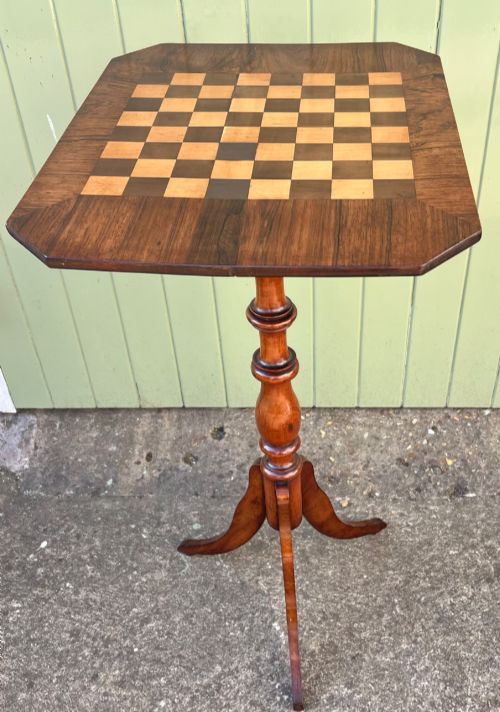

Victorian Octagonal Pedestal Table
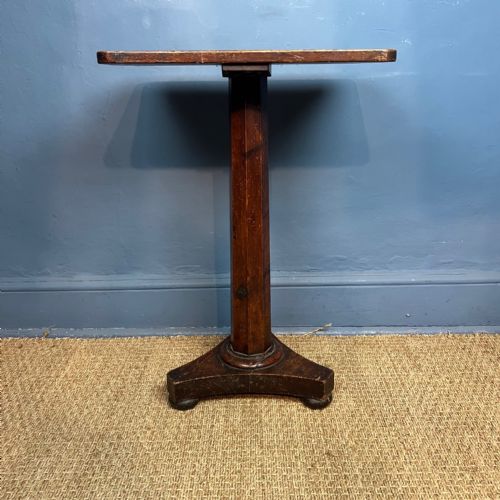
These Victorian octagonal pedestal table examples are sturdy multi-sided timber stands designed to anchor a room or hold lamps.
Victorian Octagonal Pedestal Table
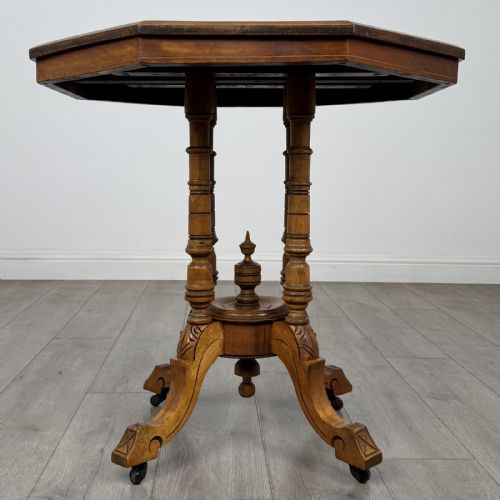
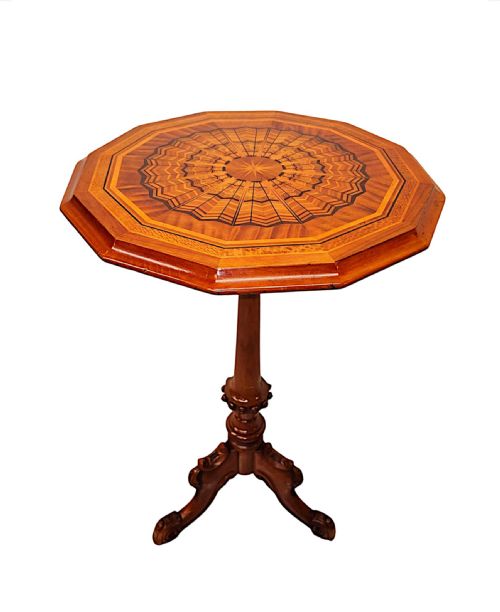
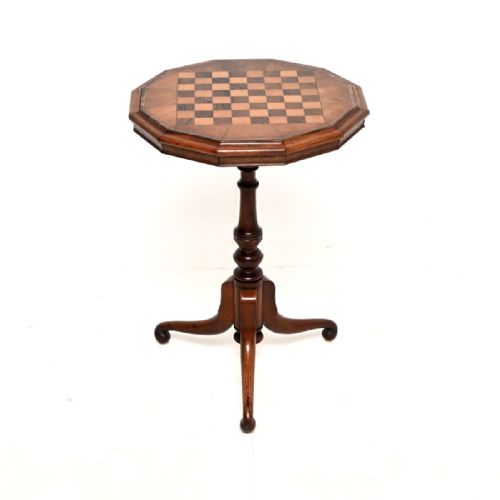
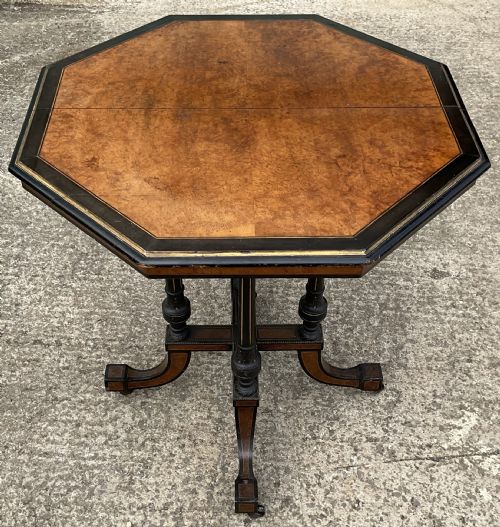
A Victorian octagonal pedestal table brings a distinctive multi-sided geometric top supported by a central column or pillar, distinguishing it from standard four-legged designs. You will encounter these pieces most frequently configured as centre tables, occasional tables, side tables, or specialised games and chess tables.
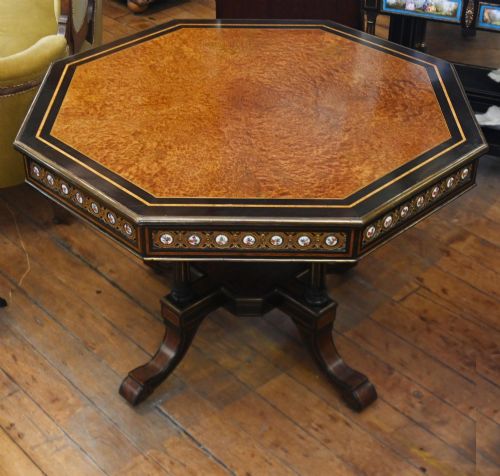
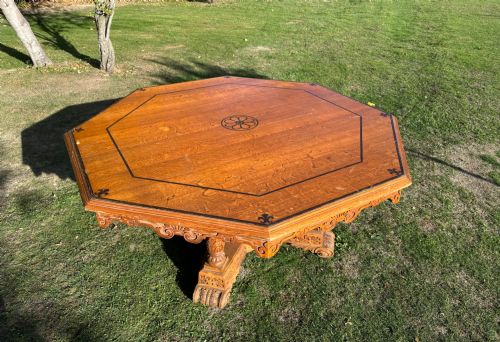
The materials span native and exotic timbers including walnut, mahogany, oak, rosewood, and burr walnut, often enriched with marquetry, wood inlay, or marble inserts. Production stretches across the nineteenth century, taking on diverse stylistic idioms from Gothic Revival and Arts and Crafts to Sorrento and Anglo-Indian work.
How They Were Made
Cabinetmakers constructed these tables using solid hardwoods alongside dense veneers of burr walnut, rosewood, or satinwood applied over stable secondary timbers. Geometric tops and pedestals required precise joinery to ensure the central pillar bore the weight of the multi-sided surface evenly.
Decorative enrichment relied on intricate marquetry, wood inlay, and specimen wood mosaics, alongside ebonising and carved oak detailing. Tilt-top mechanisms utilised clever wooden catches and brass hinges to allow the octagonal surface to store flat against the pedestal when not in use.
Victorian Octagonal Pedestal Table Retail Price Guide 2026
Typical asking prices for victorian octagonal pedestal table among the pieces listed under this phrase on Sellingantiques today, from the lower quarter to the upper quarter. They describe what is for sale here now, not the wider market.
Listings feature walnut, mahogany, oak, rosewood, burr walnut, and ebony across nineteenth-century styles.
What Varies in Quality
The distinction between standard commercial output and superior craftsmanship rests upon the choice of timber and the precision of the veneer work. Selected burr walnut or figured rosewood matched symmetrically across an eight-sided top indicates a workshop of higher ambition.
Structural integrity within the central pedestal and its supporting feet dictates daily utility, as heavy timber tops demand robust internal bracing. Finely executed marquetry or specialised inlays like Killarney arbutus wood or Sorrento panels separate ambitious artisan pieces from plain utilitarian items.
Gillows·Shoolbred
The Victorian Octagonal Pedestal Table Glossary
- Pedestal table
- A standalone table supported by a central upright column rather than four corner legs. This central post often terminates in tripod or quadruped carved feet.
- Marquetry
- The art of applying decorative pieces of veneer to a structure to form intricate pictorial or geometric patterns. Makers used contrasting timber tones to create elaborate borders and central motifs.
- Tilt-top
- A hinged table top that can be swung from a horizontal use position to a vertical storage position. This mechanism saved valuable floor space in nineteenth-century interiors.
- Specimen wood
- Furniture constructed from or inlaid with a wide variety of different native and exotic timbers. Each distinct wood species displays its natural colour and grain without artificial stain.
Victorian Octagonal Pedestal Table: Frequently Asked Questions
What is a Victorian octagonal pedestal table used for?
These tables served various domestic functions depending on their top configuration, acting as central display surfaces in parlours, designated chess boards, or reading tables in libraries.
Their sturdy central pedestals allowed occupants to walk around the multi-sided top easily without catching their legs on corner posts.
How do I identify a tilt-top mechanism?
Look beneath the octagonal surface for a wooden or brass catch that releases the table top from its horizontal locked position.
Original nineteenth-century mechanisms move smoothly on a pivot block attached directly to the top of the central pillar.
Are these tables suitable for daily use?
Solid hardwood construction and heavy pedestal bases provide substantial weight and stability for holding lamps, books, or decorative objects.
Care should be taken with veneered and polished surfaces to avoid moisture damage or direct heat from placing hot cups directly onto the timber.
How do I tell different nineteenth-century styles apart?
Gothic Revival examples display heavy carved oak, pointed arches, and architectural mouldings, while Arts and Crafts or Aesthetic movement pieces favour ebonised finishes and simpler geometric lines.
Inlaid Sorrento, Killarney, or specimen wood tops reveal regional decorative traditions through complex botanical and architectural mosaic patterns.