




Victorian Oak Wall Cabinet
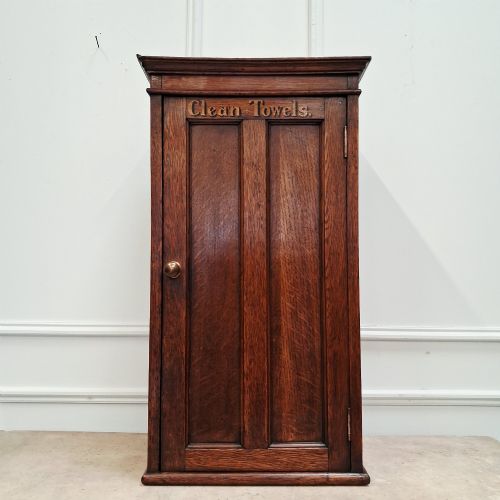
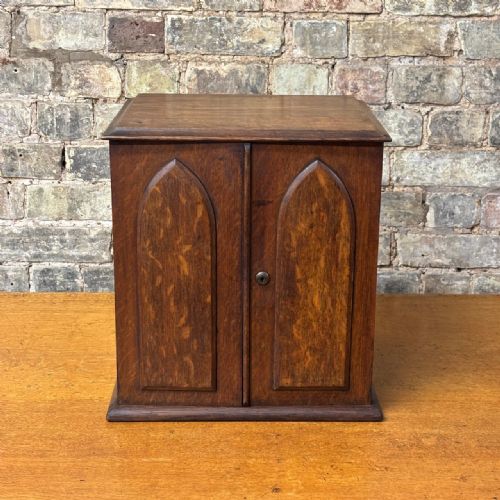
These Victorian oak wall cabinets bring timber storage and display directly to the room.
Victorian Oak Wall Cabinet
A Victorian oak wall cabinet is a timber storage piece designed to mount directly onto domestic walls rather than stand upon the floor. These pieces appear in solid oak, golden oak, and pale oak, spanning standard rectangular wall cupboards, corner cabinets, and glazed display variations.
Most examples originate from the nineteenth century, including periods labelled explicitly as Victorian, late Victorian, and early Victorian country styles. Buyers also encounter related forms such as hanging shelves, spice boxes, and corner cupboards sharing the same timber vocabulary.
Materials and construction
Makers utilised solid oak alongside supporting secondary timbers such as pine and beech in concealed structural areas. Brass hinges, latches, and occasional glass panels complete the primary assemblies.
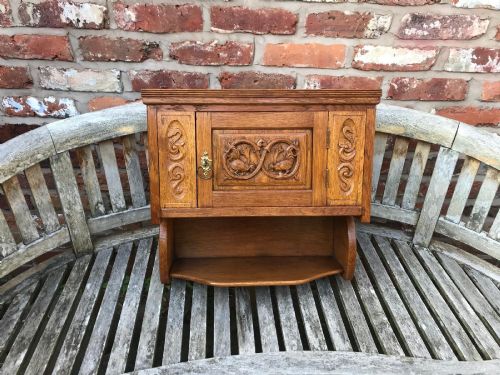
Joinery methods rely on traditional pegged joints, panelled doors featuring linenfold or carved motifs, and applied mouldings typical of nineteenth-century workshop practices.
Victorian Oak Wall Cabinet Retail Price Guide 2026
Typical asking prices for victorian oak wall cabinet among the pieces listed under this phrase on Sellingantiques today, from the lower quarter to the upper quarter. They describe what is for sale here now, not the wider market.
Listings demonstrate that oak wall cabinets frequently integrate glazed doors, carved panels, or corner-specific configurations.
Assessment of quality
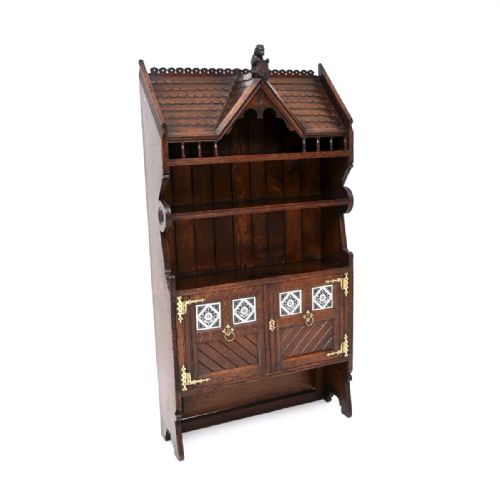
Quality rests upon the selection of the timber grain, the depth and crispness of hand-carved panels, and the structural integrity of the hanging mounts. Solid oak assemblies with cleanly fitted panel doors demonstrate higher workshop standards than simpler estate-made variations.
The sophistication of the secondary details, such as brass hardware, glazed door framing, and internal shelving arrangement, distinguishes standard utility pieces from more ambitious decorative examples.
John Moyr Smith·Thurston and Co
The Victorian Oak Wall Cabinet Glossary
- Golden Oak
- A rich, warm hue developed in nineteenth-century timber finishes. This tone appears frequently across Victorian wall storage furniture.
- Linenfold
- A carved wooden panel motif imitating folded vertical parchment linen. It decorates cabinet doors and architectural panels from this era.
- Gothic Revival
- An architectural and decorative style drawing on medieval forms. Pieces often incorporate pointed arch panels and heavy carved mouldings.
- Aesthetic Movement
- A late nineteenth-century design current emphasising artistic craftsmanship. Cabinets from this circle display refined proportions and specific stylistic detailing.
- Corner Cupboard
- A storage cabinet specifically angled to fit room corners. These forms were produced for both wall hanging and floor standing placement.
Victorian Oak Wall Cabinet: Frequently Asked Questions
How do I hang a heavy oak wall cabinet safely?
Wall-mounted timber cabinets require secure fixing directly into masonry or structural timber studs using appropriate heavy-duty brackets.
Because nineteenth-century oak furniture carries considerable weight, professional installation ensures the piece remains stable against the wall surface.
Were these cabinets meant for kitchens or living rooms?
These cabinets served multiple domestic functions across nineteenth-century interiors, appearing in kitchens as spice or utensil storage and in reception rooms for display.
Their adaptable scale allowed them to function wherever compact wall storage was required.
How do I tell early Victorian from late Victorian pieces?
Early pieces often reflect simpler country workshop traditions with straightforward plank construction and minimal ornamentation. Later nineteenth-century examples frequently incorporate heavier machine-assisted mouldings, elaborate carving, or glazed display doors.
Examining the interior secondary timbers and hardware helps confirm the specific manufacturing period.
How do I care for nineteenth-century oak furniture?
Maintain the timber by avoiding direct sunlight and excessive humidity fluctuations that can cause oak panels to split. Regular dusting with a dry cloth preserves the natural surface patina without requiring heavy polishes.
Condition the wood periodically using traditional beeswax to keep the grain nourished.