


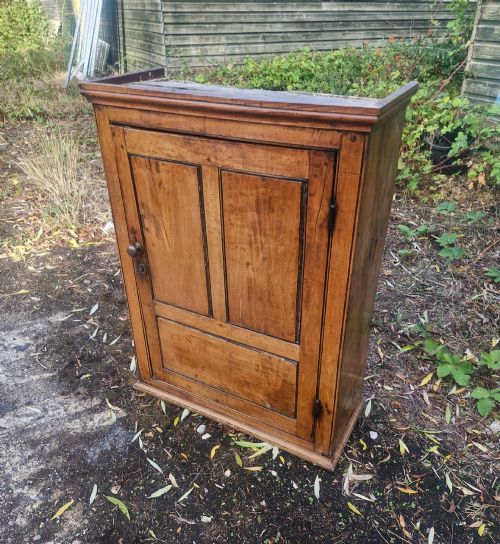
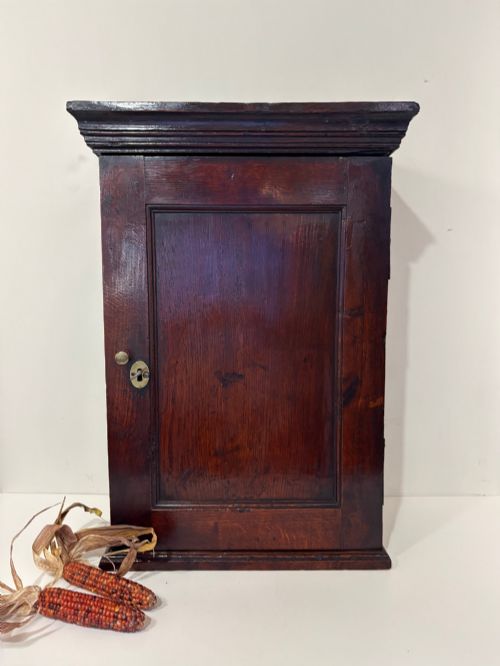
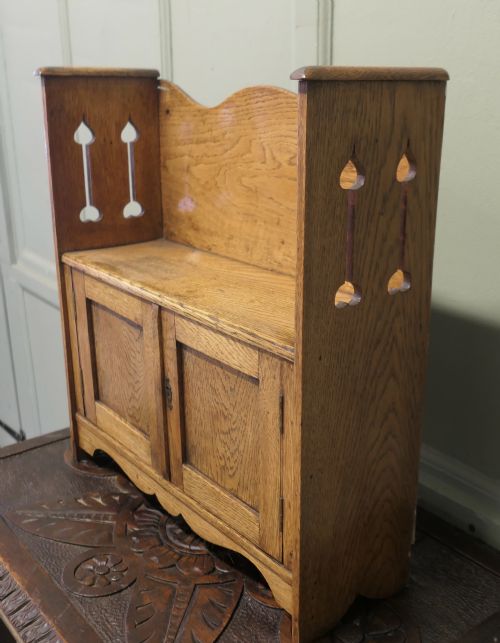
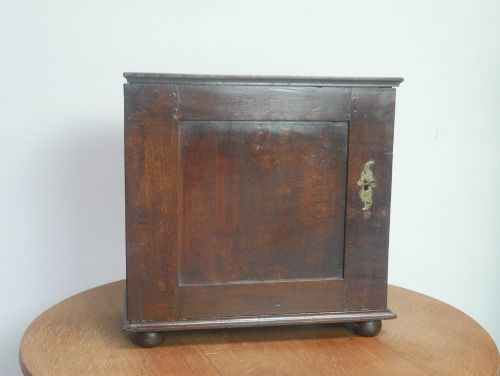
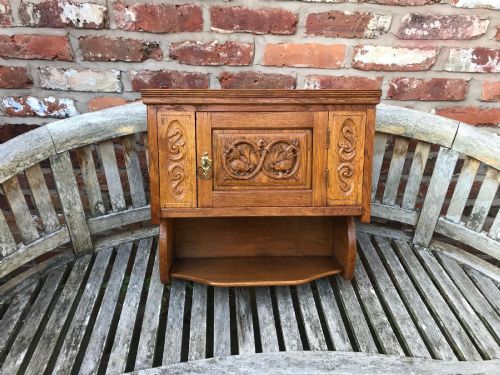
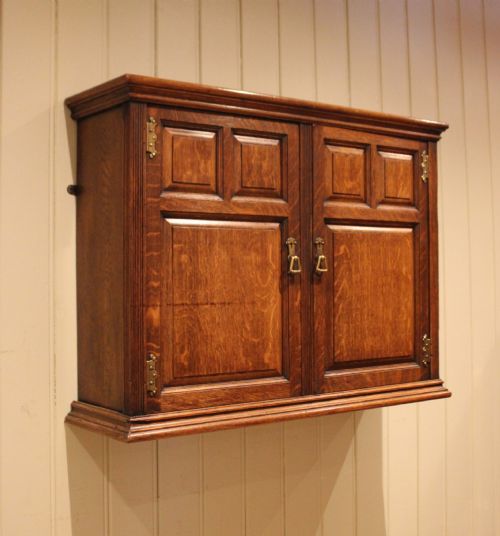
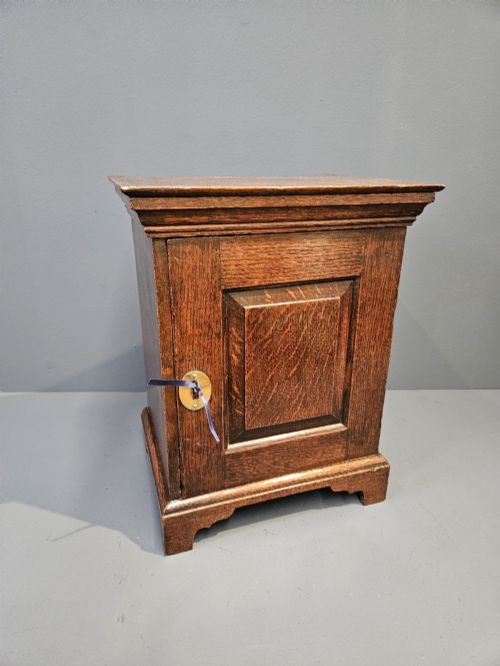
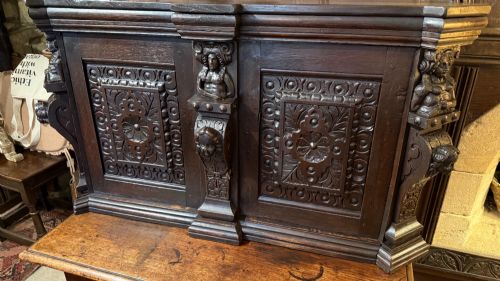



Oak Spice Cabinet Hanging
An oak spice cabinet hanging upon a wall is a compact domestic container designed to secure precious provisions within reach.
Oak Spice Cabinet Hanging
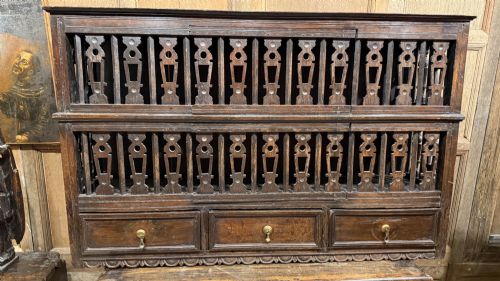
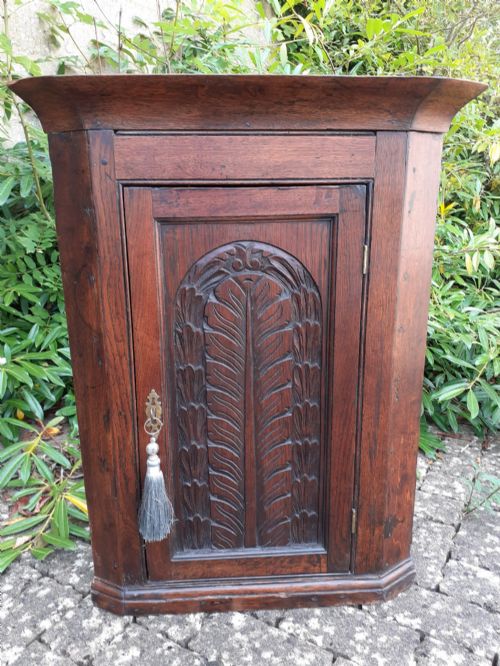
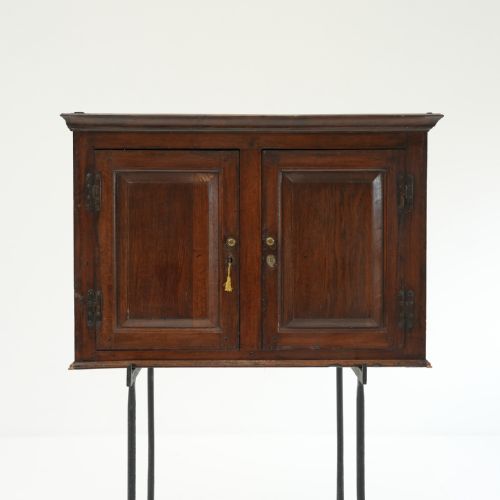
When you search for an oak spice cabinet hanging, you encounter small wall-mounted storage forms designed to keep valuable commodities secure and accessible. The pieces span from the seventeenth century through the Victorian era, encompassing Georgian examples alongside provincial English, Welsh, and continental pieces.
The selections on this page most commonly appear as wall cupboards, spice cupboards, and hanging corner cupboards. These containers reflect domestic organisation across centuries, serving as functional units built to hold provisions or small valuables in kitchens and parlours.
How they were made
Construction relies primarily upon solid oak, frequently paired with secondary timbers such as pine for internal elements like backboards or shelving. Cabinetmakers utilised traditional joinery techniques, combining pegged frames with panelled doors to accommodate the natural movement of timber.
Surface detailing incorporates hand carving, wood inlay, and fruitwood inlay to ornament the exterior façades. Hardware such as brass hinges, iron latches, and wrought iron fastenings secure the doors and provide structural reinforcement.
The site's listings feature oak predominantly, supported by pine, brass, iron, and occasional fruitwood inlay across 17th, 18th, and 19th-century periods.
What varies in quality
The standard of an oak spice cabinet hanging rests upon the crispness of its timber selection and the refinement of its joinery. Superior examples display tightly fitted panels and balanced proportions that demonstrate the maker's competency.
Decorative execution further distinguishes the range, where deliberate carving and careful integration of inlay work elevate the piece above utilitarian boxes. The integrity of original brass or iron hardware and uncompromised structural timber define the upper tier.
The Oak Spice Cabinet Hanging Glossary
- Hanging cupboard
- A wall-mounted storage unit designed to be secured through brackets or backboards. These pieces save floor space while keeping contents at eye level.
- Spice cupboard
- A small internal compartmented cabinet traditionally used for storing expensive flavorings and dry goods. They often feature multiple tiny drawers concealed behind a primary door.
- Corner cupboard
- A triangular cabinet engineered to fit precisely into the corner of a room. This form maximises spatial efficiency in smaller domestic interiors.
- Fruitwood inlay
- Decorative woodwork technique employing contrasting lighter woods set into an oak surface. This method creates geometric patterns or pictorial motifs.
- Vernacular
- Regional style reflecting local building traditions and available materials rather than formal metropolitan design fashions. These objects carry distinct geographic characteristics.
Oak Spice Cabinet Hanging: Frequently Asked Questions
How were oak spice cabinets used?
These cabinets served as secure repositories for expensive culinary ingredients like imported spices, medicinal herbs, and sugar rations. Households kept them locked to protect valuable provisions from domestic staff or damp conditions.
Beyond the kitchen, some functioned as small storage units for letters, keys, and personal valuables kept within private chambers.
Where should I hang a wall cabinet?
Select a wall space away from direct heat sources and strong sunlight to protect the aged oak timber from splitting. Kitchens, dining rooms, and hallways offer suitable environments where the compact depth will not obstruct movement.
Ensure the mounting wall can support the combined weight of the solid timber construction and its contents by anchoring directly into studs or masonry.
How do I distinguish Georgian from Victorian pieces?
Georgian pieces generally exhibit simpler, robust proportions with understated fielded panels and architectural mouldings. Eighteenth-century examples often rely on clean geometric lines and patinated surfaces developed through generations of use.
Victorian cabinets tend to display heavier ornamentation, including deeper relief carving, applied decorative turnings, and more eclectic stylistic revivals.
What is provincial furniture?
Provincial pieces are domestic objects made outside major metropolitan centres by local joiners using regional design traditions. They demonstrate practical craftsmanship adapted to local material availability.
These cabinets often possess distinct character through idiosyncratic construction methods and regional timber choices that differ from London workshop standards.