



Victorian Oak Tilt Top Table
These victorian oak tilt top table examples combine folding mechanisms with solid timber construction, offering a practical space-saving surface.
Victorian Oak Tilt Top Table
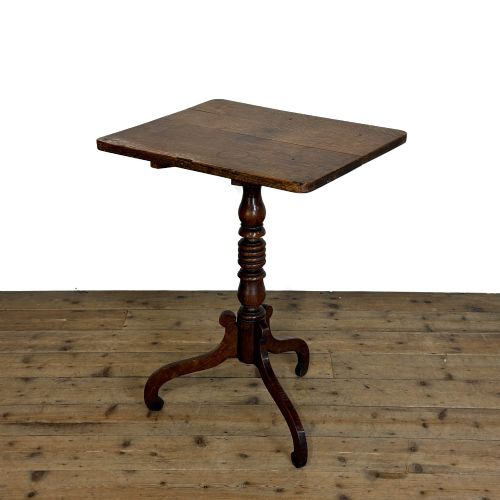
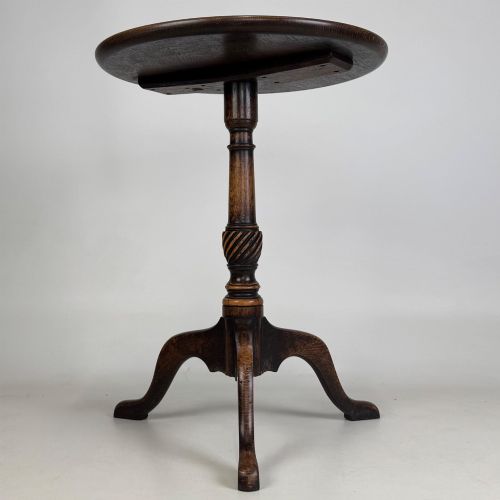
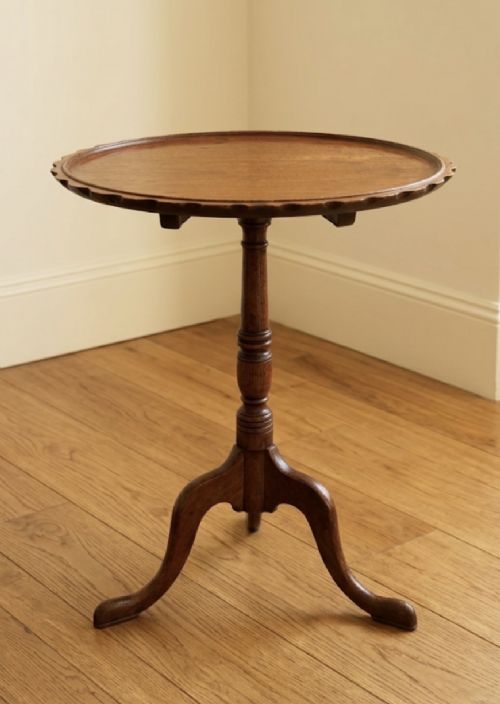
A victorian oak tilt top table serves as a flexible surface designed to pivot vertically when not in use, saving floor space in period interiors. You encounter various forms here, ranging from compact wine tables and tripod pedestals to larger breakfast and dining tables.
The selection includes pieces spanning the nineteenth century alongside later variations from nineteen thirty. Makers utilised different timbers, employing pollard oak, burr oak, and standard oak across occasional tables, centre tables, and side tables.
Regional and stylistic influences introduce further variety, with pieces reflecting William IV, Edwardian, Jacobean Revival, and Aesthetic Movement design. Certain examples incorporate specific functions, functioning as tarot parlour tables, coaching tables, or metamorphic fire screens.
What varies in quality
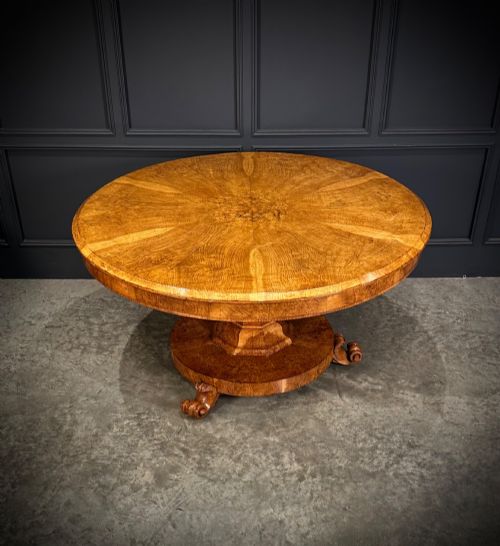
The selection of timber grain largely dictates the visual appeal, with figured burr and pollard oak surfaces sitting at the higher end of the scale. Plain timber variants offer utility, whereas highly figured or parquetry-inlaid tops demonstrate superior material selection.
The stability of the tilt mechanism and the precision of the turned column and tripod feet determine structural integrity. Tables featuring carved ornamentation or specialised functions like zodiac carvings and metamorphic frames show greater complexity in execution.
Listings feature nineteenth-century and Victorian pieces alongside nineteen thirty examples, constructed in oak, pollard oak, burr oak, and mahogany.
The Victorian Oak Tilt Top Table Glossary
- Tilt top
- A tabletop mounted on a pivoting mechanism that allows the surface to rotate vertically for storage against a wall.
- Tripod base
- A pedestal support featuring three individual feet radiating from a central turned column.
- Pollard oak
- Oak timber harvested from trees that have been pollarded, producing a heavily knotted and textured grain pattern favoured for decorative veneers.
- Parquetry
- Geometric patterns formed by fitting small wooden tiles together, often seen on tabletop surfaces.
- Metamorphic
- Furniture designed to transform into an alternative object, such as a fire screen that converts into an occasional table.
Victorian Oak Tilt Top Table: Frequently Asked Questions
What is a tilt top table used for?
These tables served as flexible surfaces in nineteenth-century homes, functioning as breakfast tables, wine tables, or card tables depending on their scale. The pivoting mechanism allowed households to tilt the surface upright and store the piece against the wall when floor space was required for other activities.
Over time, smaller tripod versions found placement beside seating areas for lamps or drinks. Larger iterations functioned centrally in rooms for dining or parlour gatherings.
How do I identify a Victorian oak table?
Victorian oak pieces typically display the dense grain and rich brown tones characteristic of native and continental oak used during the nineteenth century. Stylistic markers include turned columns, tripod pedestal bases, and occasional revival details influenced by Jacobean or Aesthetic Movement tastes.
Construction methods involve traditional joinery and sturdy pedestals built to support pivoting mechanisms. Dating relies on stylistic cues, hardware types, and associated regional cabinet-making practices.
Where should I place a tilt top table?
These tables suit corners, hallways, or beside seating where a compact surface is useful for lamps or display. Their pivoting mechanism also allows them to stand flat against a wall as a decorative panel when not actively holding items.
Matching the scale of the pedestal to the room ensures the tripod feet do not obstruct walkways. They integrate effectively into traditional and mixed interior settings.
What is pollard oak?
Pollard oak is a decorative timber derived from trees that were cut back near the trunk to encourage dense branch growth, resulting in a tightly patterned, knotted grain. Cabinet makers utilised this figured wood for veneering prominent surfaces like table tops to create visual contrast.
This timber type appears on select nineteenth-century breakfast and centre tables within the evidence. Its distinct markings separate it from standard plain oak boards.