

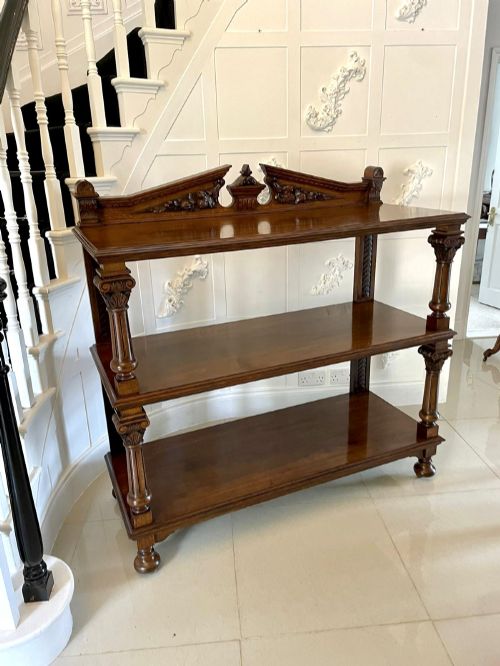



Victorian Oak Tier Stand
These Victorian oak tier stand pieces combine practical display surfaces with sturdy timber construction, offering a smart multi-level option for any room.
Victorian Oak Tier Stand
The periods represented stretch from mid-nineteenth century examples through Victorian and Edwardian eras up to the nineteen-thirties. Makers such as Edwards & Roberts and Liberty & Co produced notable variations within these styles, alongside regional pieces like Welsh country cupboards and rustic pedestal stands.
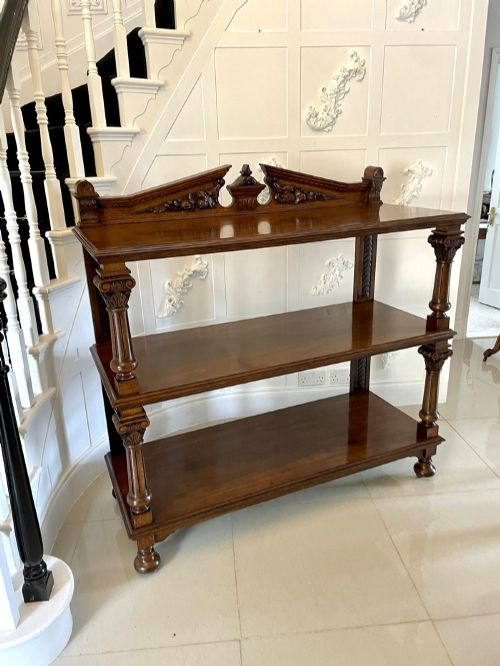
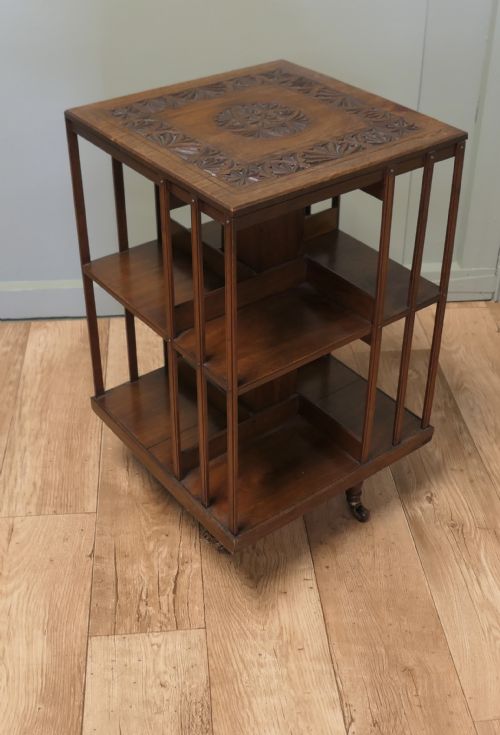
Forms vary significantly, from rotating desk-height book holders to tall tiered etageres and corner units with multiple shelves. Buyers encounter dark oak, stained hardwood, and mixed timber constructions featuring carved details or fret-cut panels.
Materials and construction
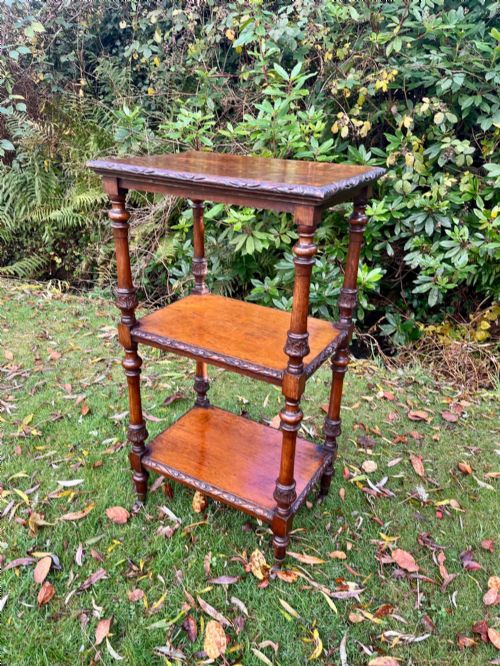
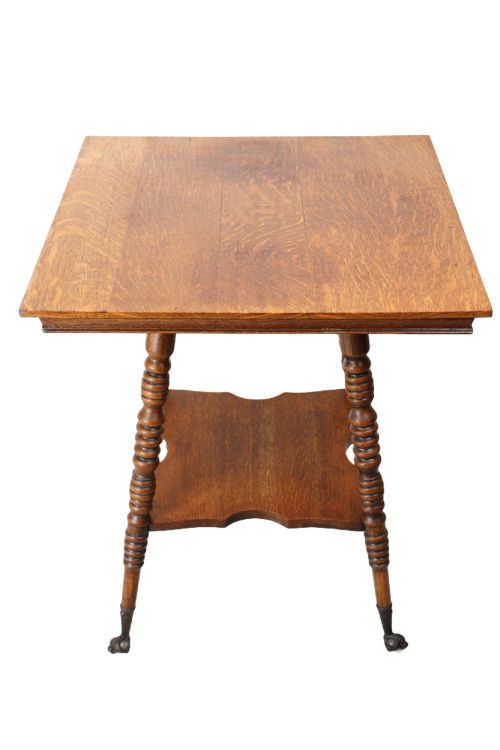
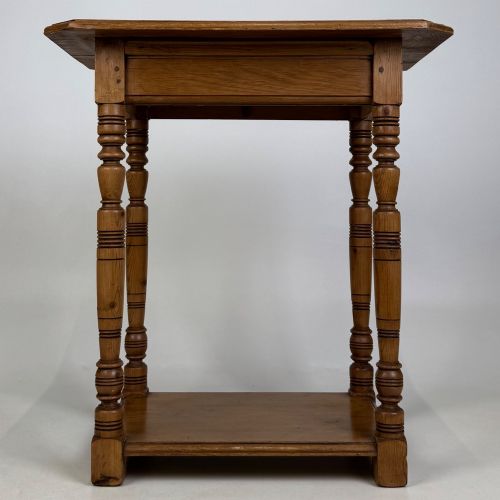
Timbers are predominantly oak, sometimes paired with mahogany, brass, iron, or glass components to support the multi-tiered structures. Workshops utilised solid oak boards alongside turned elements, such as bobbin-turned supports on various etageres and bookcases.
Surface treatments include carved details, fret-cut panels, and dark finishes that emphasise the grain of the wood. Metal mechanisms appear in revolving bookcase designs, while corner cabinets rely on traditional joinery for stability across multiple shelves.
Victorian Oak Tier Stand Retail Price Guide 2026
Typical asking prices for victorian oak tier stand among the pieces listed under this phrase on Sellingantiques today, from the lower quarter to the upper quarter. They describe what is for sale here now, not the wider market.
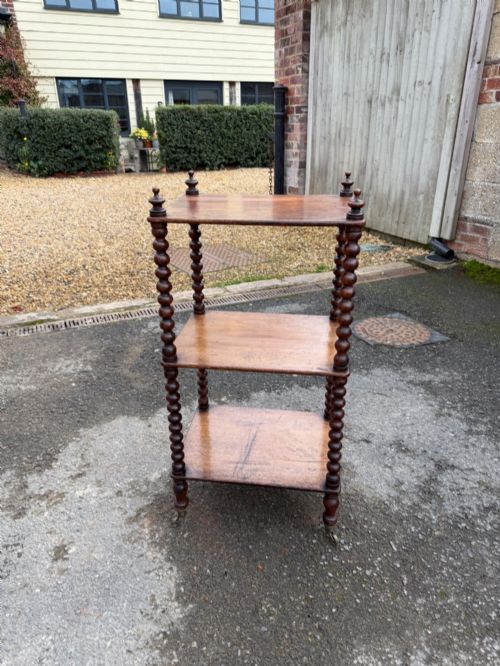
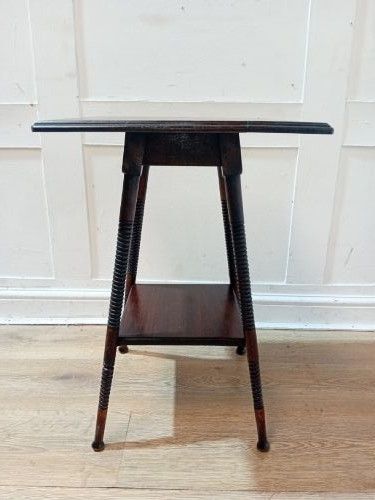
Bobbin-turned supports give nineteenth-century whatnots a cheerful, spool-like rhythm that lifts a corner.
Assessing quality in tier stands
The standard of carving and joinery separates standard production items from finer pieces attributed to notable workshops. Crisp detailing on carved mouldings and well-executed fret-cutting indicate superior craftsmanship.
The integrity of the revolving mechanism in bookcases or the structural soundness of multi-tiered etageres determines practical durability. Selection of timber figure and the unified ageing of hardware like brass or iron elements contribute to overall merit.
Edwards & Roberts·Liberty of London·William Birch·Leonard Wyburd
The Victorian Oak Tier Stand Glossary
- Tier stand
- A piece of furniture featuring multiple horizontal surfaces arranged vertically for display or storage. These stands appear in various forms including etageres and dumbwaiters.
- Etagere
- A piece of furniture consisting of a set of open shelves for displaying small objects or ornaments. They are frequently supported by turned uprights.
- Dumbwaiter
- A multi-tiered piece traditionally used for serving food or holding books and tableware. In the evidence, these frequently feature carved oak construction.
- Revolving bookcase
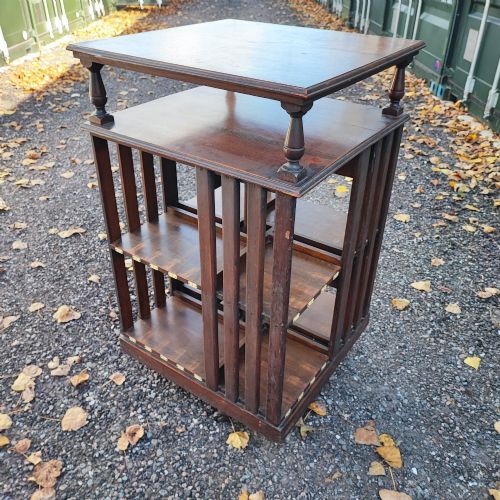
- A freestanding bookcase designed to rotate on a central pivot for easy access to volumes from all sides. These typically utilise a circular tier formation.
- Bobbin turned
- Furniture legs or supports shaped on a lathe to resemble a series of bobbins or spools. This decorative turning technique appears on nineteenth-century whatnots.
- Fret-cut
- Woodwork pierced or perforated with a fret saw to create ornamental patterns. This technique decorates the panels of waterfall bookcases.
Victorian Oak Tier Stand: Frequently Asked Questions
What is a Victorian oak tier stand?
A Victorian oak tier stand encompasses multi-level wooden furniture pieces designed to hold books, display items, or serve objects across several horizontal surfaces. They span various forms including revolving bookcases, etageres, and waterfall shelves.
These items date from the mid-nineteenth century through the Edwardian period and into the nineteen-thirties. They reflect stylistic shifts from heavy Victorian revivalism to Arts and Crafts simplicity.
How do revolving bookcases function?
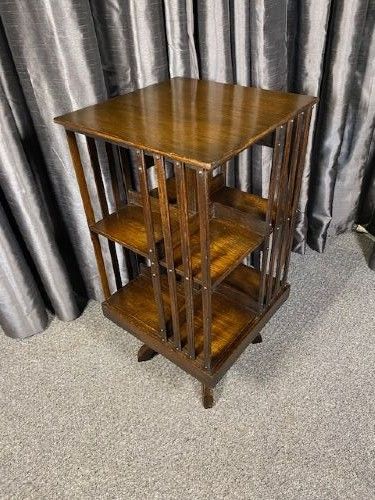
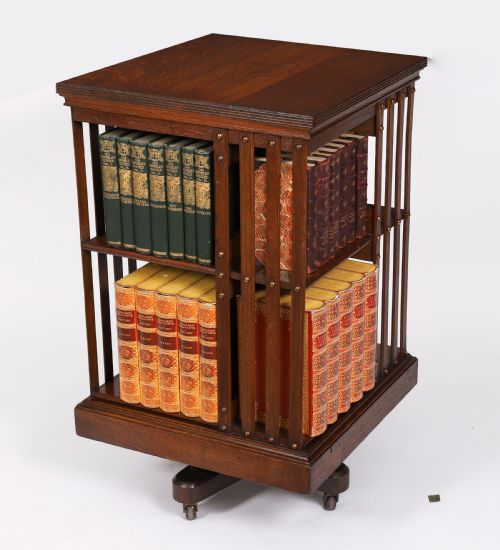
Revolving bookcases sit upon a concealed central pivot mechanism that allows the entire tier of shelves to turn smoothly in either direction. This design provides easy access to books from a seated position.
Most examples are constructed from solid oak with slatted or panelled sides to secure the volumes while permitting visibility of the book spines.
Where were these stands used?
Tiered stands served multiple functions in domestic spaces, acting as bedside tables, library book holders, corner display cabinets, and serving furniture in dining rooms. Their multi-level design maximised floor space for storage.
Smaller side tables and lamp tables found places beside seating areas, while taller etageres and corner cupboards utilised neglected room corners.
How do I care for antique oak furniture?
Maintaining antique oak involves keeping the timber away from direct heat sources and extreme humidity fluctuations to prevent wood splitting. Regular dusting with a dry cloth preserves the finish.
Occasional application of appropriate wax feeds the wood and maintains the lustre of dark oak and stained hardwood surfaces without building up heavy residues.