



Victorian Oak Tambour Desk
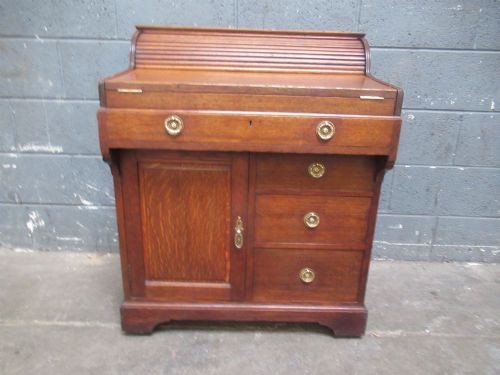
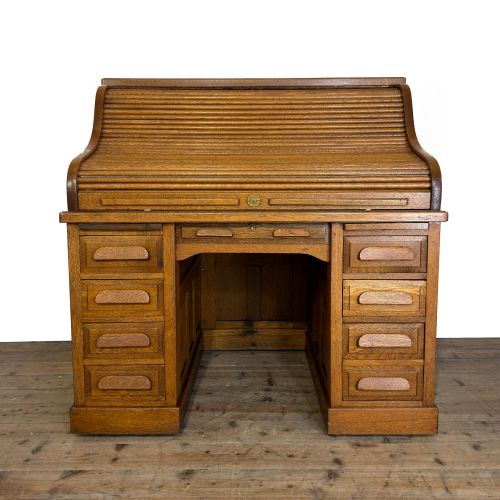
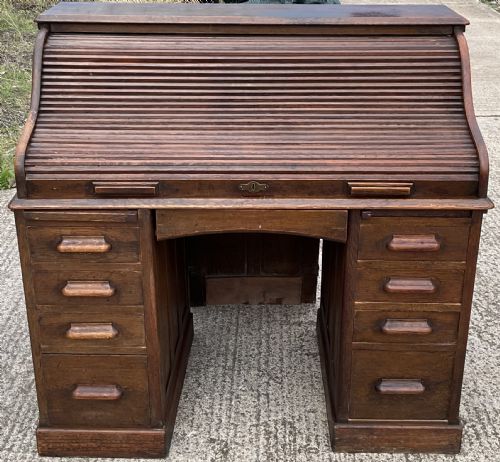
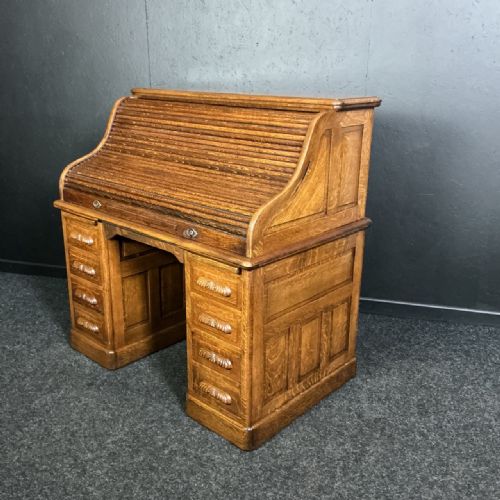
These pieces are a Victorian oak tambour desk, offering clever slatted wooden shutters that glide smoothly to conceal a working surface and pigeonholes.
Victorian Oak Tambour Desk
A victorian oak tambour desk is a practical working surface enclosed by a slatted wooden shutter, known as a tambour, which slides down in tracks to secure the interior. These pieces range from compact stationary cabinets and writing bureaus to large pedestal desks built for heavy office use.
The versions most commonly met on this page date from the Victorian and Edwardian eras, alongside pieces from 1860, 1880, 1890, 1900, and 1930. They utilise oak as the primary timber, sometimes paired with brass and metal hardware or paper components.
Buyers encounter various formats including roll top desks, cylinder desks, and panelled pedestal models. Each variation provides enclosed storage compartments and pigeonholes behind the sliding shutter for organising correspondence and documents.
How they were made
The construction relies heavily on solid oak and panelled timber techniques to build sturdy pedestals and writing bodies. Individual wooden slats are attached to a fabric or leather backing to form the flexible tambour shutter that bends around curves.
Makers integrated brass and metal fittings such as hinges, handles, and adjustable date mechanisms into the cabinetry. The interior compartments feature precise joinery for small drawers and pigeonholes designed to hold paper stationery.
Victorian Oak Tambour Desk Retail Price Guide 2026
Typical asking prices for victorian oak tambour desk among the pieces listed under this phrase on Sellingantiques today, from the lower quarter to the upper quarter. They describe what is for sale here now, not the wider market.
Listings span periods from 1860 through 1930, featuring oak timber alongside brass and metal hardware.
What varies in quality
The smoothness of the sliding tambour action distinguishes a superior desk from an inferior one. High quality examples feature tracks that guide the wooden slats silently without sticking or binding.
The choice of timber grain and the complexity of the interior joinery separate utilitarian office furniture from finer pieces. Panel construction and the solidity of the oak carcass determine the enduring structure of the desk.
The Victorian Oak Tambour Desk Glossary
- Tambour
- A flexible shutter made of narrow wooden strips glued to canvas or leather, allowing it to slide along a curved track. This mechanism conceals the desk surface and pigeonholes when closed.
- Roll top desk
- A form of writing desk featuring a slatted tambour closure that pulls down from the top to cover the work area. It provides secure storage for papers without requiring separate cabinet doors.
- Pedestal desk
- A heavy freestanding desk supported by two vertical columns of drawers or cupboards. These often incorporate panelled oak construction and a tambour top.
- Stationery cabinet
- A small desktop storage piece designed to hold writing paper, envelopes, and inkwells. Some examples include adjustable date mechanisms.
- Cylinder desk
- A writing desk with a curved solid wooden cylinder that rolls back rather than flexible slats. It serves a similar function to the tambour version in concealing the interior.
Victorian Oak Tambour Desk: Frequently Asked Questions
How do I maintain the tambour tracks?
Keep the wooden grooves clean of dust and debris to ensure the slats glide freely. Avoid using heavy oils that might attract grime.
Regular gentle movement prevents the backing material from stiffening over time.
Were these desks used in homes?
While originally designed for commercial offices and administrative spaces, smaller versions found a place in domestic studies.
They provided a tidy way to lock away correspondence at the end of the day.
What is the difference between a cylinder desk and a tambour desk?
A cylinder desk uses a solid curved piece of wood that rotates on a pivot. A tambour desk uses many small slats joined together to bend around a track.
Both serve to hide the writing surface, but the construction of the sliding cover differs entirely.
How do I date an oak tambour desk?
Look at the overall style, hardware materials, and secondary woods used in the interior drawers. Pieces from the Victorian period often show heavier panel construction compared to later Edwardian examples.
Inscribed dates on mechanical accessories like calendars also offer a direct guide.