

Victorian Oak Study Desk
When you search for a victorian oak study desk, you meet substantial timber furniture built for serious nineteenth-century work.
Victorian Oak Study Desk
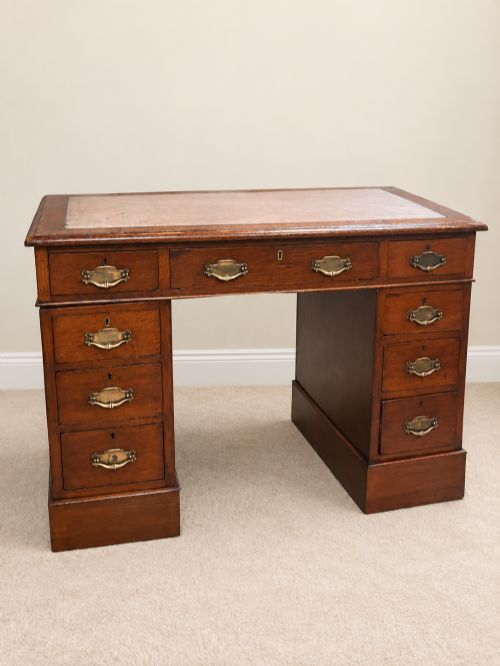
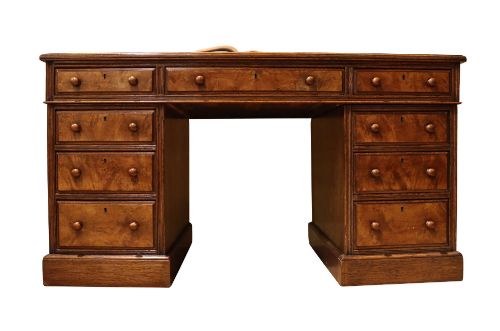
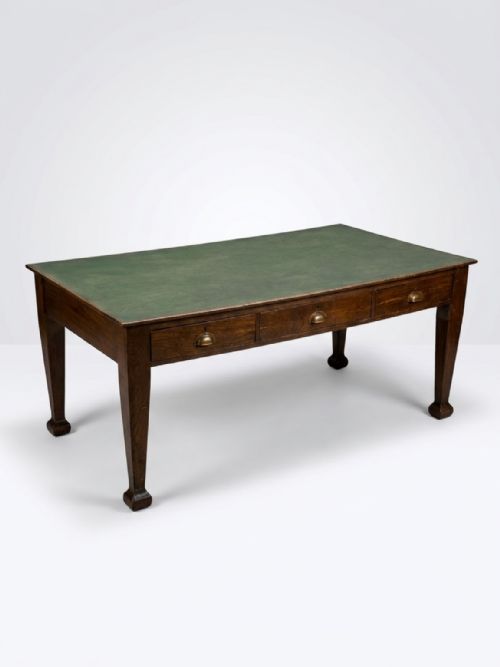
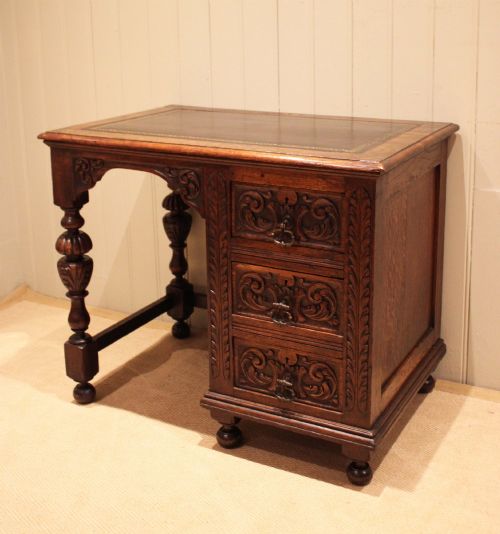
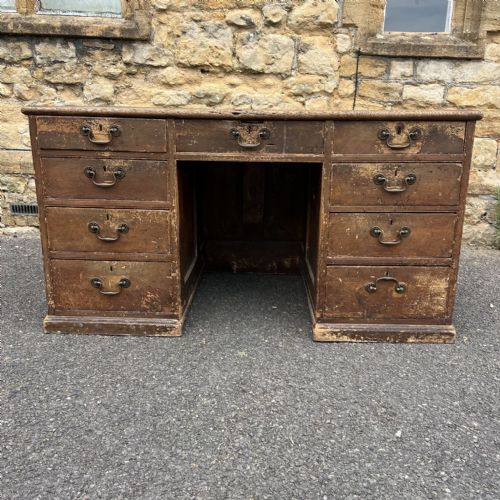
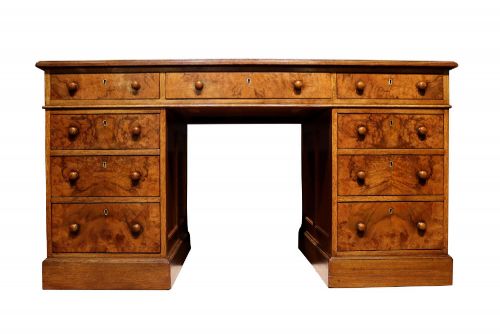
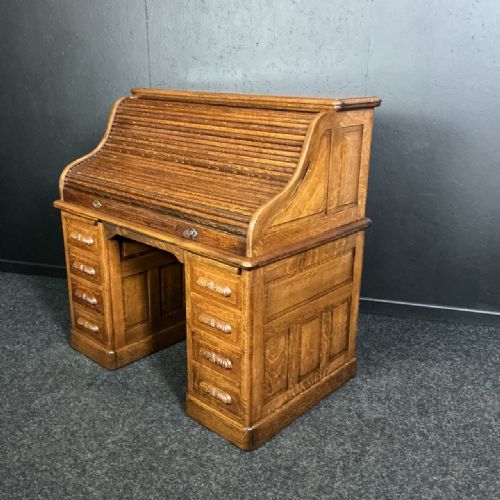
A victorian oak study desk typically manifests as a sturdy kneehole pedestal table or a twin pedestal partners desk designed for heavy paperwork. These pieces originate across the nineteenth century, with many examples emerging from the eighteen-eighties and eighteen-nineties in professional libraries and country house studies.
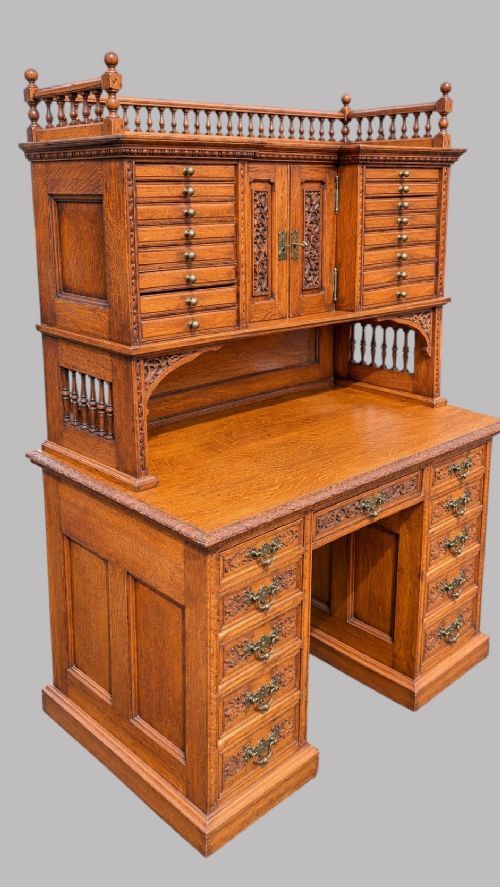
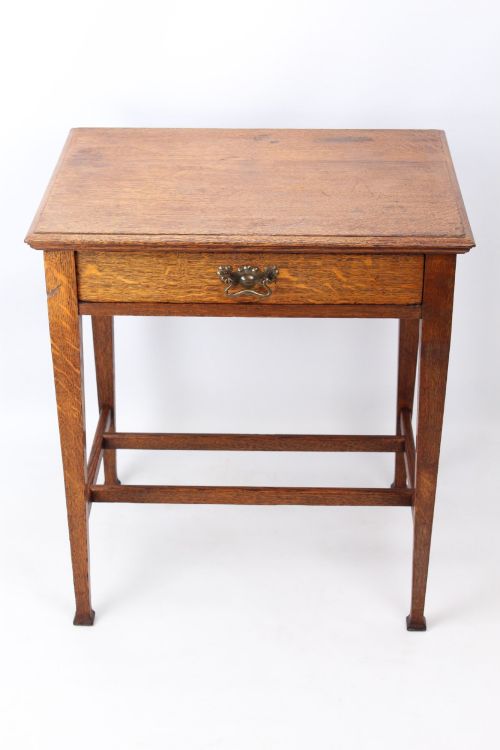
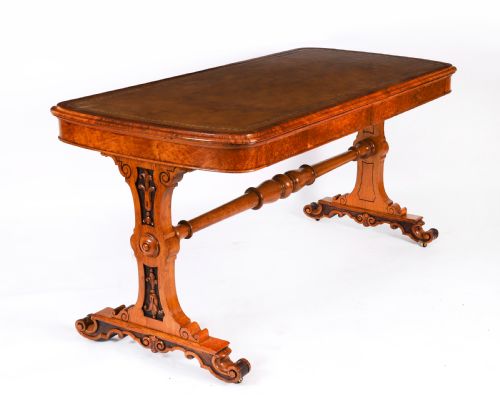
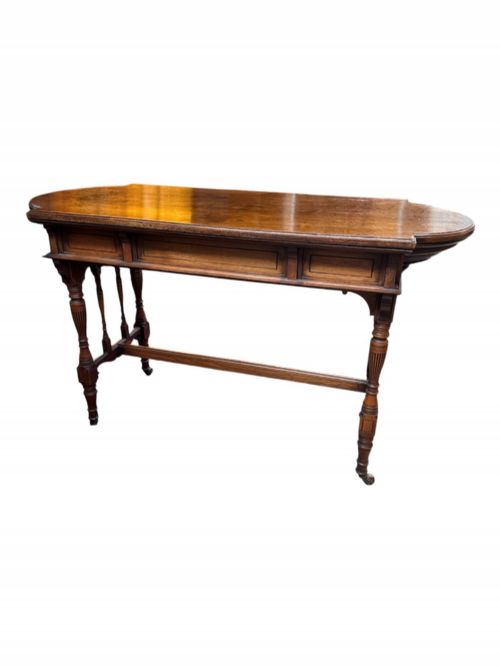
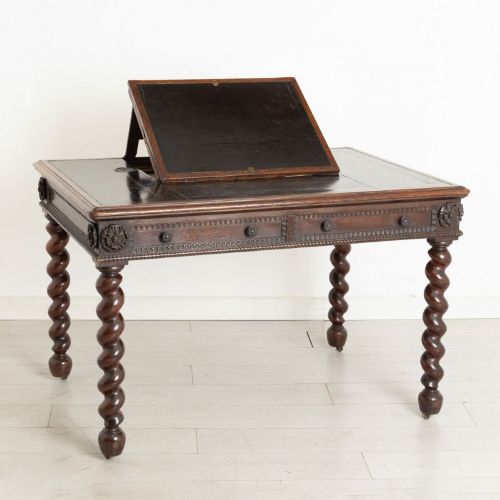
Writing tables and smaller kneehole formats appear alongside larger partners desks meant for shared use. Makers also produced specialised forms like the Dickens desk, featuring raised stationery compartments and multiple drawers.
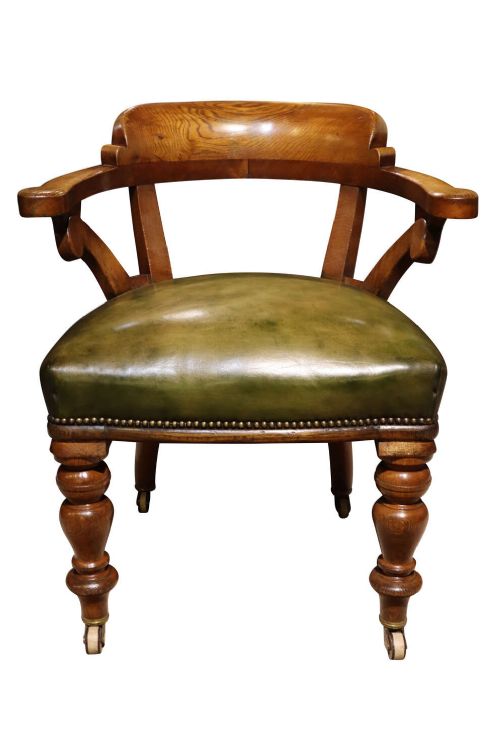
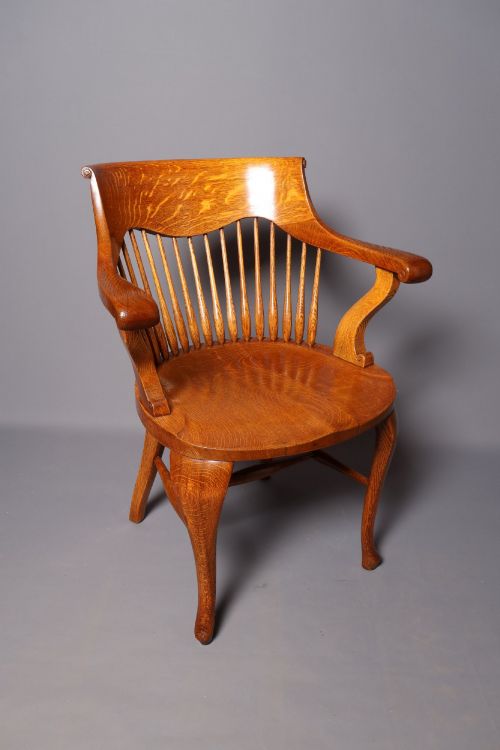
Accompanying library armchairs and swivel desk chairs in matching oak and leather frequently complete the setup.
Materials and Construction
Solid oak and pollard oak provide the heavy structural framework, often complemented by burr walnut veneers on drawer fronts and panels. Brass hardware supports drawer pulls and handles, while inset writing surfaces utilise tooled leather.
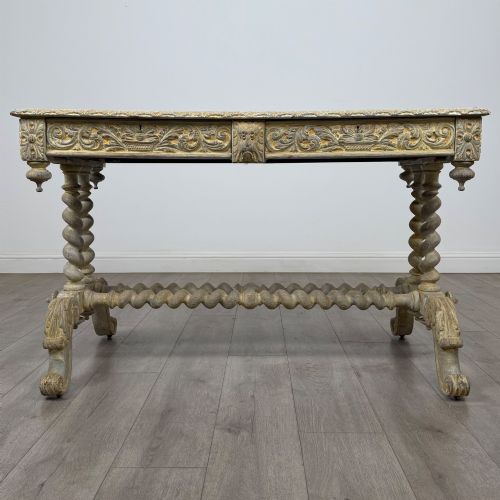
Joinery methods rely on traditional cabinet-making techniques, integrating hand-carved decorative motifs associated with Gothic Revival, Arts and Crafts, and Aesthetic Movement styles.
Many Victorian swivel chairs still squeak with the exact rhythm of a nineteenth-century clerk rushing to finish afternoon correspondence.
Craftsmanship and Proportion
Superior examples demonstrate meticulous timber selection, utilising figured oak or burr walnut with matching grain across secondary surfaces. Fine hand-carving and well-executed joinery distinguish exhibition-grade pieces from standard commercial office furniture.
The integration of secondary timbers, original leather inserts, and properly fitted internal drawer dividers also separates exceptional library tables and pedestals from simpler estate variants.
Gillows·Bruce James Talbert·Blyth & Son
The Victorian Oak Study Desk Glossary
- Kneehole desk
- A compact writing table featuring a central recess for the user's legs, flanked by pedestals of stacked drawers. This configuration became standard in nineteenth-century studies.
- Partners desk
- A large double-sided writing table designed for two people to work opposite one another simultaneously. These pieces include drawers and cupboards on both faces.
- Burr walnut
- A highly figured wood veneer derived from walnut tree growths, utilised on drawer fronts to create swirling patterns. Cabinet-makers paired this with oak frames for decorative contrast.
- Dickens desk
- A pedestal writing desk incorporating a raised superstructure with pigeonholes and small drawers above the main writing surface. It takes its name from traditional associations with Victorian clerical work.
- Pollard oak
- Oak timber harvested by cutting back the tree trunk to promote dense, gnarled branching. The resulting wood displays a distinctive speckled grain pattern.
Victorian Oak Study Desk: Frequently Asked Questions
What is a partners desk?
A partners desk is a large double-sided writing table designed with drawer and cupboard storage accessible from both front and back. This allowed two professionals to sit opposite one another in a shared library or study.
Such pieces represent the heavier end of nineteenth-century office furniture, constructed in solid oak to withstand daily commercial or domestic administrative use.
How do I care for leather desk tops?
Leather writing surfaces require gentle cleaning with a slightly damp cloth followed by specialised leather balms to maintain flexibility. Avoid using harsh chemical detergents or excess water that might stain the surrounding timber.
Keeping the room at a stable humidity prevents the inset leather from drying out and cracking around the brass-tooled edges.
How do I identify a Victorian oak desk?
Victorian oak desks are identified by their heavy timber construction, hand-cut dovetail joints in the drawer construction, and period design details. Styles range from plain utilitarian office pieces to heavily carved Gothic Revival or Aesthetic Movement examples.
Materials typically include solid oak frames combined with brass hardware and inset leather writing panels.
Were these desks used in homes?
These desks served in both domestic country house libraries and professional administrative offices during the nineteenth century. Estate managers, architects, and private individuals utilised them for correspondence and record-keeping.
Smaller kneehole formats suited private home studies, while larger pedestal and partners variants occupied substantial institutional rooms.