


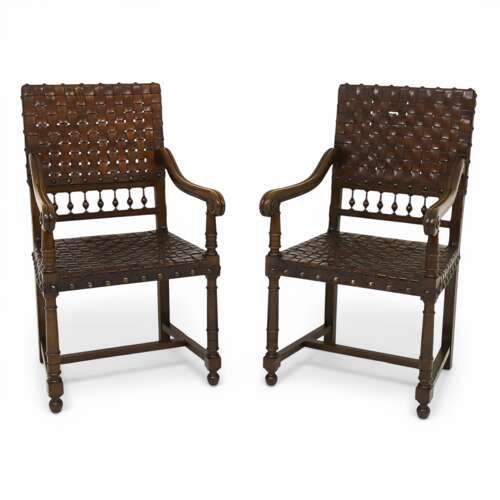


Victorian Oak Open Armchair
A victorian oak open armchair brings solid nineteenth-century character to a room, offering sturdy timber framing and open sides for everyday seating.
Victorian Oak Open Armchair
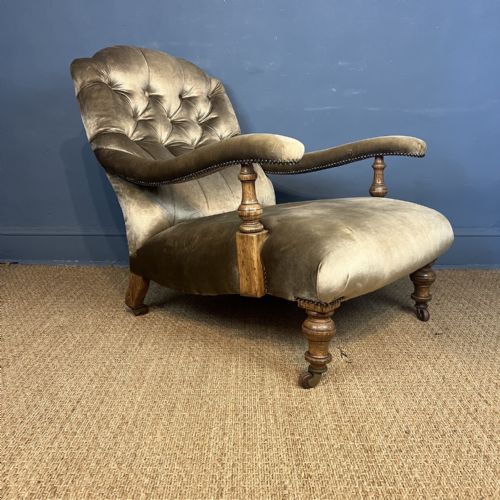
A victorian oak open armchair is a sturdy timber seat featuring unconstrained sides and a nineteenth-century provenance. These chairs appear in various revival styles, including Gothic, Jacobean, and Carolean influences, alongside simpler vernacular country designs.
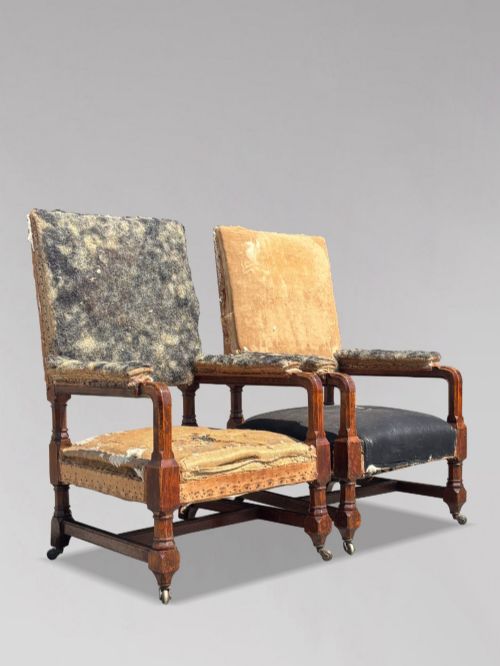
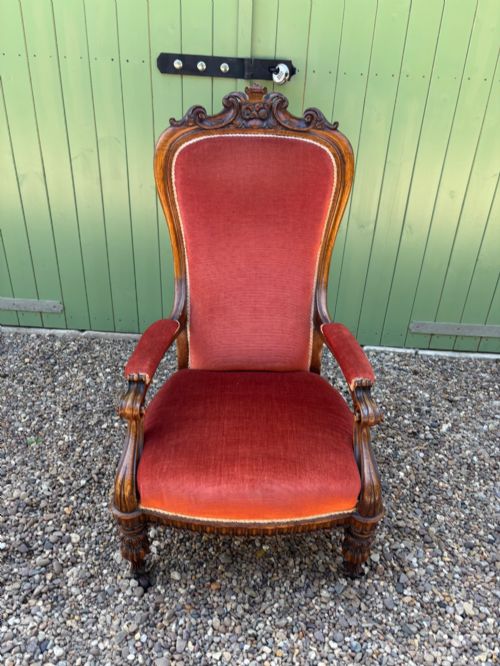
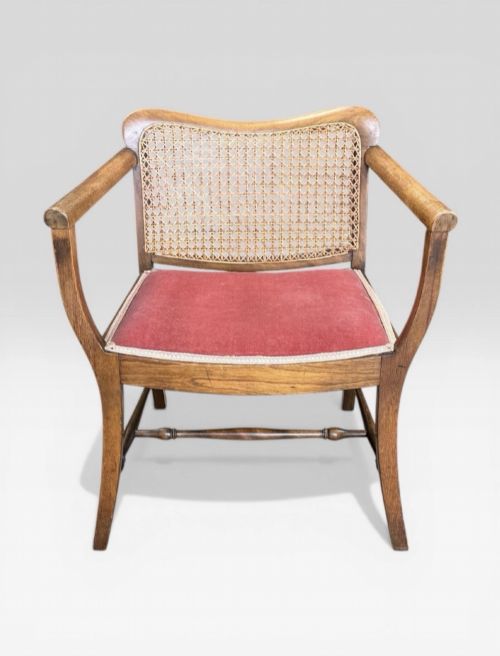
Buyers most frequently encounter examples fashioned from solid oak with carved details, cane panels, or upholstered pads in leather and velvet. The forms range from library armchairs and desk chairs to pairs of larger throne or dining carvers.
Origins trace across the nineteenth century, with dates clustering around the middle and later decades. Workshops produced both utilitarian seating and heavily carved statement pieces intended for principal rooms.
Materials and construction methods
Makers utilised solid oak for the primary frame, often selecting timber with pronounced grain or golden tones. Construction relied on traditional joinery techniques, reinforced by turned elements like bobbin or barley twist supports.
Seating areas incorporated cane, hessian foundations, or woven leather secured with brass studs. Upholstered versions utilised materials such as velvet and various fabrics over internal padding.
Materials recorded across current inventory include solid oak, leather, velvet, cane, hessian, and brass.
Distinguishing quality across examples
Quality shows in the crispness of the hand-carving and the thickness of the timber used for the frame. Better workshops employed select oak with consistent grain and executed joinery that remains rigid over time.
The sophistication of the design dictates the tier, moving from plain vernacular spindlebacks to elaborate revival armchairs with detailed turnings and fitted leather or cane.
James Shoolbred·Gillows·Bruce James Talbert
The Victorian Oak Open Armchair Glossary
- Open armchair
- A chair design featuring arms without upholstered side panels. This construction keeps the profile light and the sides unobstructed.
- Bergere
- A closed or open armchair with a wooden frame and cane panels forming the back and sides. It typically accommodates a loose seat cushion.
- Barley twist
- A turning technique resembling a twisted rope. This decorative profile appears frequently on nineteenth-century chair legs and stretchers.
Victorian Oak Open Armchair: Frequently Asked Questions
How do I identify a Victorian oak open armchair?
Look for nineteenth-century construction traits, solid oak framing, and characteristic revival motifs such as Gothic tracery or barley twist turnings. The timber often shows deeper patination acquired through decades of use.
Examine the underside and joints for period manufacturing marks, hand-cut fixings, and traditional joinery methods that distinguish nineteenth-century production from later reproductions.
Were these chairs used at desks or in libraries?
These armchairs served multiple domestic functions, frequently appearing in libraries, studies, and principal reception rooms. Their open sides provided comfort and freedom of movement for reading and writing.
Larger scaled examples functioned as occasional seating or desk chairs, while pairs often flanked fireplaces or large tables in nineteenth-century interiors.
How should I care for leather and cane seats?
Leather upholstery benefits from occasional conditioning to maintain suppleness and prevent the material from drying out. Avoid placing these chairs in direct sunlight or near heat sources.
Cane seating requires gentle dusting and occasional light moisture on the underside to keep the natural fibres resilient. Avoid placing excessive localized weight on cane panels.