




Victorian Oak Office Chair
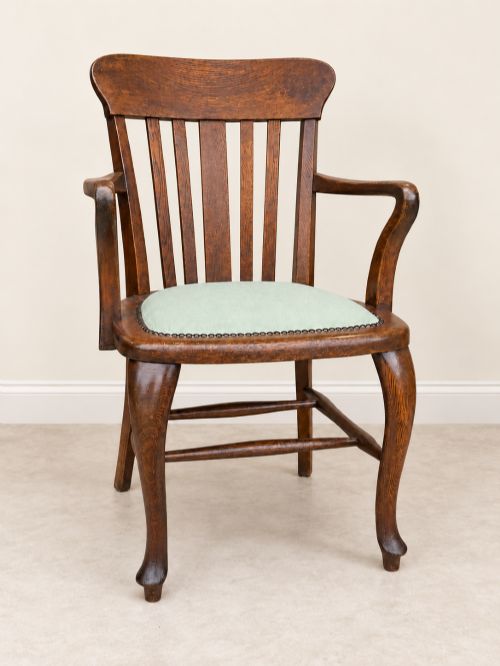
A victorian oak office chair brings solid timber construction and functional swivel mechanics into a workspace.
Victorian Oak Office Chair
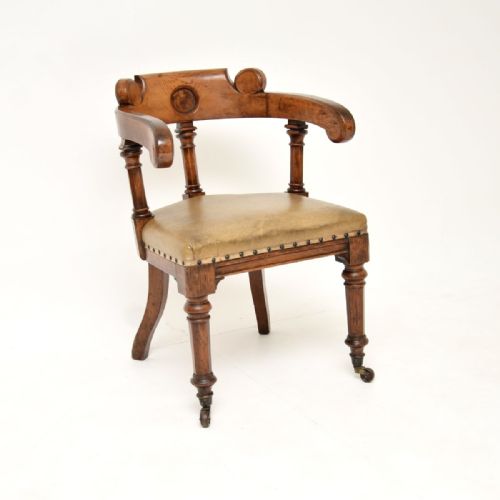
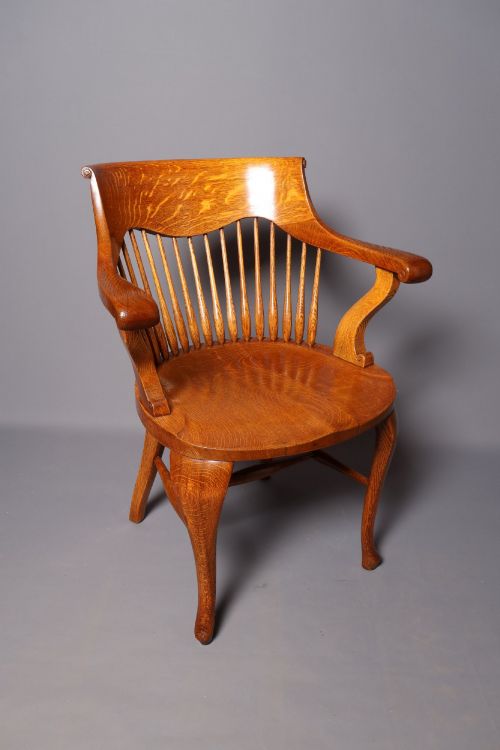
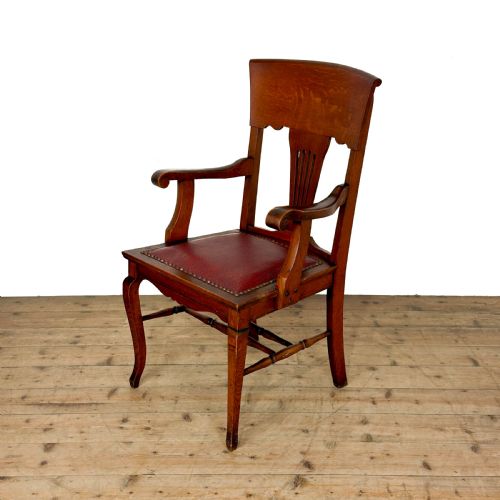
A victorian oak office chair encompasses heavy desk armchairs, swivel library seats, and sturdy captain's chairs designed for nineteenth and early twentieth-century workspaces.
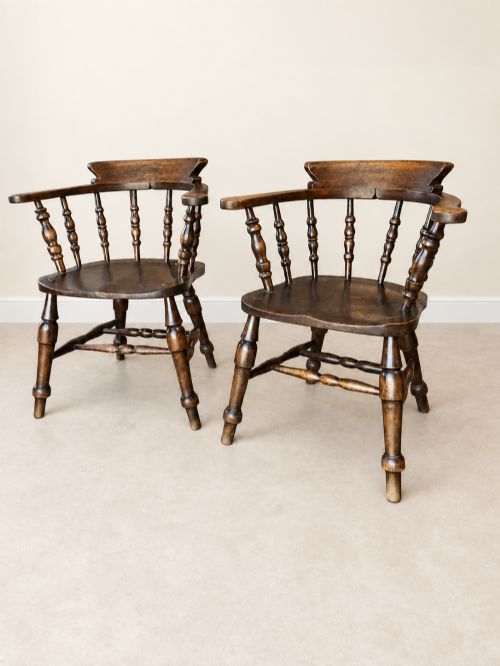
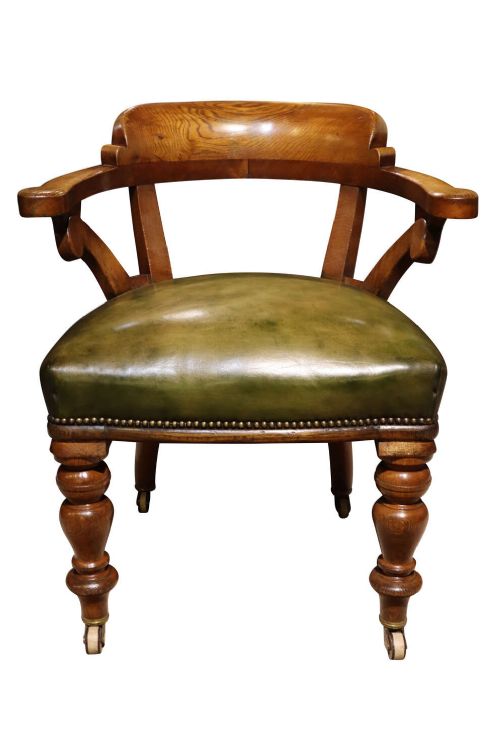
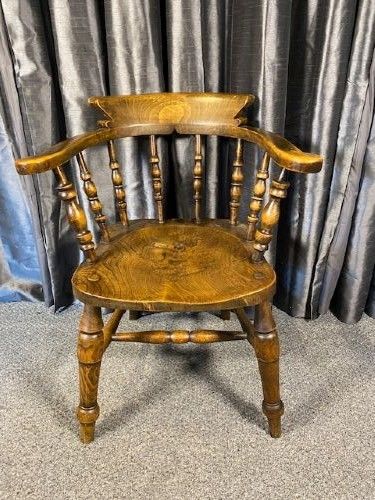
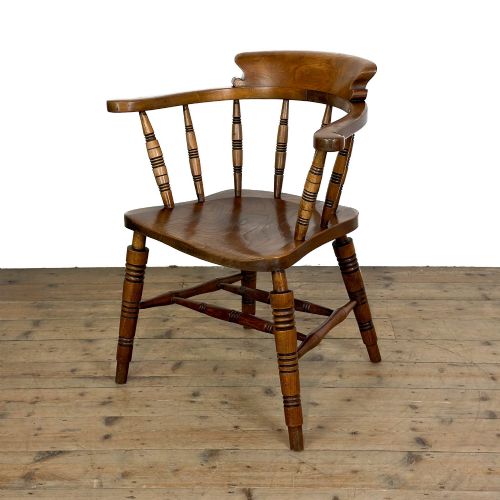
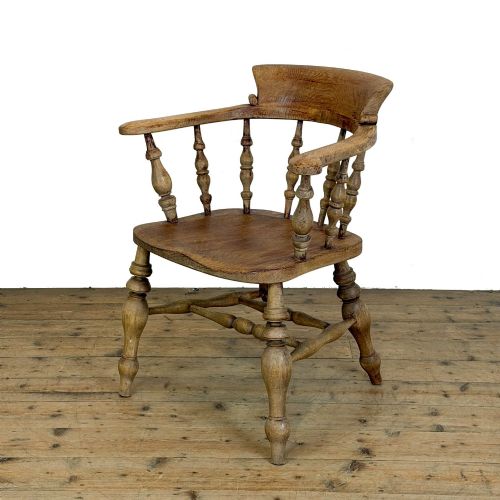
The selections available range from simple smoker's bows with solid wooden seats to elaborate revolving armchairs fitted with original leather upholstery.
Many examples originate from British workshops and cabinet makers, while others reflect specialised maritime or institutional commissions.
Materials and Construction
Makers utilised dense timbers such as oak, elm, and ash for the primary frames, frequently combining bentwood components with carved structural elements.
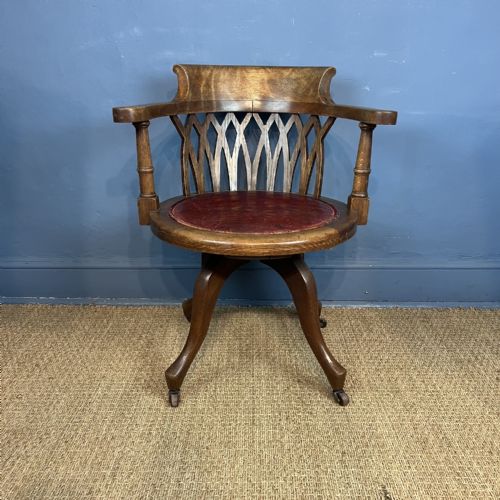
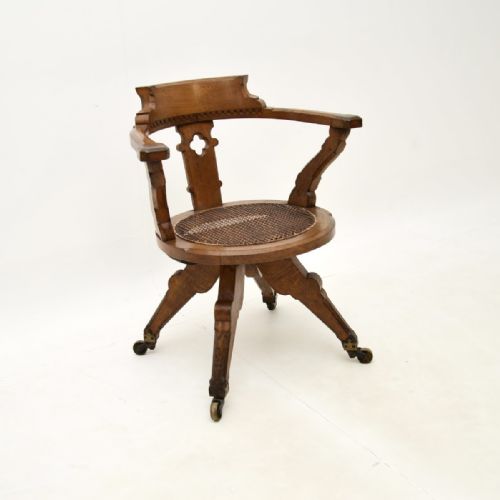
Revolving mechanisms rely on cast iron and brass spindles, while seats frequently feature button-tufted leather secured with brass studding.
Several heavy ship chairs were built to swivel through gales without spilling the captain.
Gradations of Make
Superior examples display crisp hand-carving in the Gothic Revival or Jacobean styles alongside robust, complex swivel and tilting iron mechanisms.
Lower tiers typically feature plain turned spindles, simpler box constructions, or replacement upholstery that lacks the depth of the original hide.
Gillows·Edward William Godwin·Hampton and Sons of London·Alfred Allen
The Victorian Oak Office Chair Glossary
- Smoker's bow
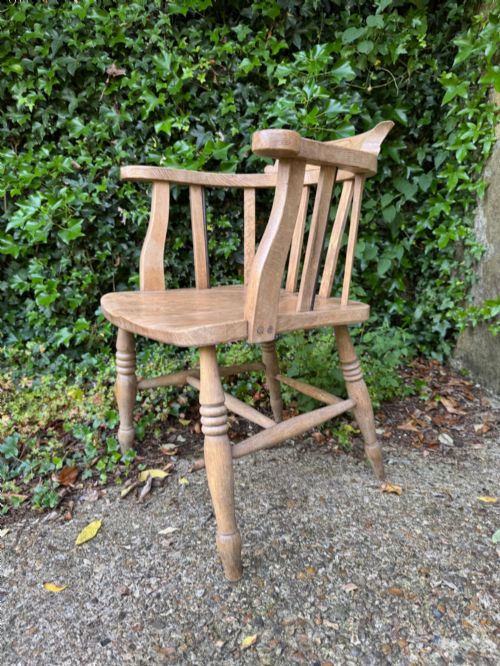
- A low-backed Windsor-style armchair with a continuous curved armrail, commonly utilised as a desk or office seat.
- Revolving chair
- A seat mounted on a central threaded spindle or iron pivot that allows the user to turn fully around.
- Gothic Revival
- An architectural and decorative style prominent in the nineteenth century characterised by pointed arches and heavy carved detail.
- Elbow chair
- An armchair featuring lower arms designed to fit neatly beneath the writing surface of a desk.
Victorian Oak Office Chair: Frequently Asked Questions
How do I identify a genuine period swivel mechanism?
Authentic nineteenth-century revolving mechanisms generally utilise heavy cast iron and brass spindles showing manual lathe marks and wear.
Modern replacements often feature machine-threaded steel or welded joints that contrast sharply with the patinated timber framework.
Were these chairs used exclusively in offices?
While frequently designed for commercial counting houses and legal chambers, many examples served in private domestic libraries and studies.
Shipboard variants were also manufactured with weighted bases or revolving seats to accommodate movement at sea.
What is the difference between a captain's chair and a desk chair?
Traditional captain's chairs usually feature a low rounded wooden backrest and a solid timber saddle seat built for stationary seating.
Desk chairs from the late nineteenth century increasingly adopted swivel bases, tilt actions, and upholstered leather pads for prolonged daily labour.
How should I care for the leather upholstery?
Original leather benefits from periodic application of traditional wax or neutral conditioning balms to maintain flexibility and prevent cracking.
Avoid modern chemical cleaning agents that can strip the historic dye and damage the surrounding oak frame.