
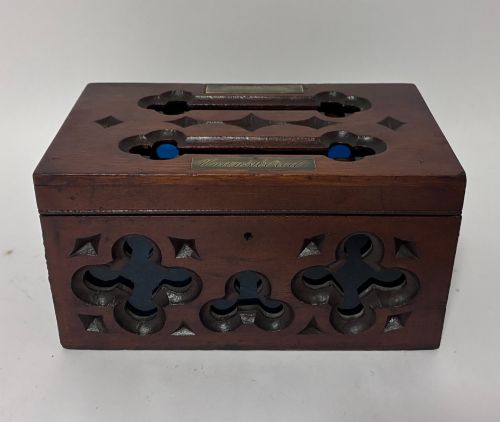
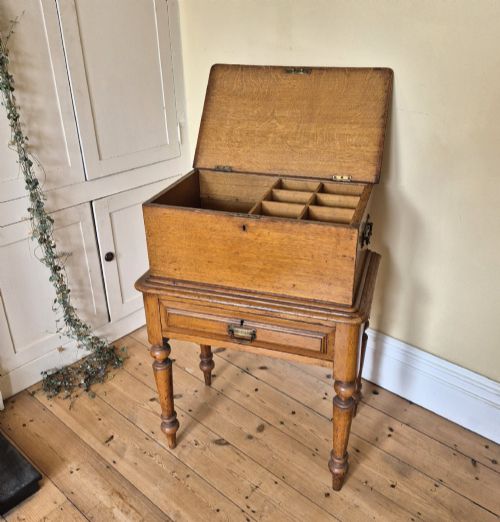
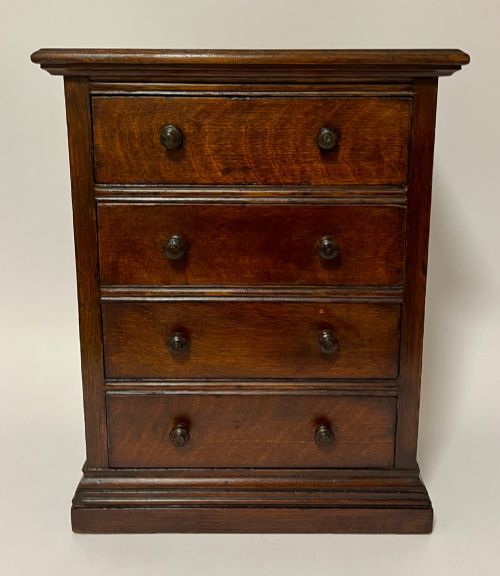
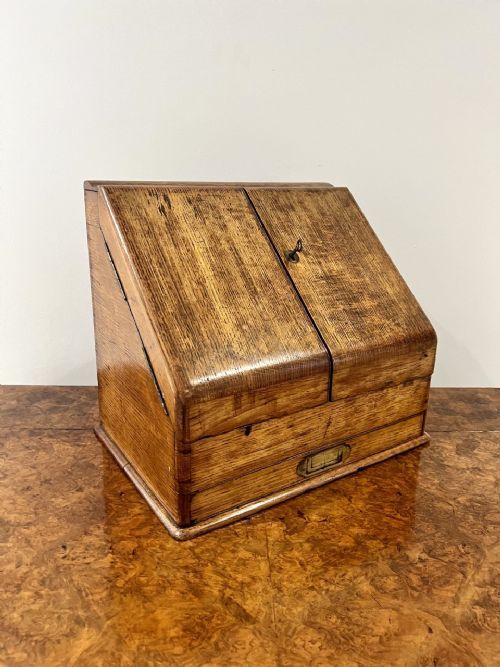
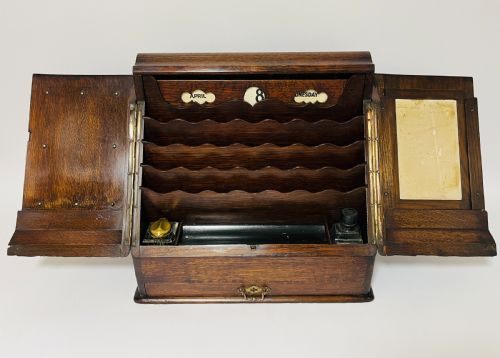


Victorian Oak Desk Box
A victorian oak desk box brings domestic order to correspondence, housing stationery, pens and letters in solid timber.
Victorian Oak Desk Box
A victorian oak desk box provides compact tabletop storage for writing materials, letters and small documents. These pieces range from simple lidded boxes to elaborate stationery cabinets and writing slopes.
The pieces appearing here belong primarily to the nineteenth century, including Victorian, Edwardian and Arts and Crafts examples. They take forms such as correspondence boxes, letter racks and miniature chests of drawers.
Makers utilised oak alongside pollard oak for domestic workspaces, railway offices and country houses. Brass mounts and glass ink bottles frequently accompany the woodwork.
What varies in quality
The standard of execution lies in the selection of timber and the precision of the joinery. Figured pollard oak and heavy brass hardware distinguish finer pieces from simpler utilitarian boxes.
Interior fittings reveal the original ambition of the piece, with integrated secret drawers, adjustable dates and complete inkstands demonstrating superior design.
One unusual survivor is a railway coal wagon humidor, proving that nineteenth-century desk accessories did not take themselves too seriously.
The Victorian Oak Desk Box Glossary
- Stationery cabinet
- A desktop box designed to hold writing paper, envelopes and correspondence upright in tiered compartments. These often feature sloping lids or drop-front doors.
- Writing slope
- A portable box that opens to form an angled writing surface lined with fabric or leather. Inside, compartments store inkwells, pens and paper.
- Pollard oak
- Timber taken from trees that have been pollarded, producing a highly figured, mottled grain pattern prized by cabinetmakers. It appears on decorative nineteenth-century boxes.
- Campaign style
- Furniture and accessories built for travel, characterised by brass corners, flush handles and robust construction. Pieces in this style were designed for portability.
- Gothic Revival
- An architectural and decorative style drawing inspiration from medieval design, featuring pointed arches, tracery and heavy carved ornament. This aesthetic appears on Victorian ecclesiastical and domestic boxes.
Victorian Oak Desk Box: Frequently Asked Questions
What is a victorian oak desk box used for?
These boxes served to organise correspondence, writing paper and small desk accessories in nineteenth-century homes and offices.
Today, they function well on modern desks for storing letters, notebooks and modern stationery supplies.
How do I date a wooden desk box?
Dating relies on combining stylistic clues such as Gothic Revival or Arts and Crafts motifs with construction methods and materials.
Hardware styles, timber choices like pollard oak and any accompanying makers' marks or patents also help narrow the period.
Are desk boxes and writing slopes different?
A standard desk box or stationery cabinet stores papers upright or in flat tiers, remaining closed during use.
A writing slope hinges open to reveal an inclined writing pad and deeper storage wells for ink and pens beneath the surface.
How do I care for antique oak furniture?
Keep wooden boxes away from direct sunlight and radiators to prevent the oak from drying out and splitting.
Apply a traditional beeswax polish occasionally to nourish the timber and maintain a soft, protective sheen on the surface.