

Victorian Needlework
Victorian needlework brings together domestic craft and utility through elaborately stitched panels, framed textile pictures and fitted sewing furniture.
Victorian Needlework
When you search for victorian needlework, you encounter a diverse range of items spanning framed textile panels, samplers, fireside screens and specialised sewing tables. The pieces on this page reflect both utilitarian sewing storage and decorative woolwork art.
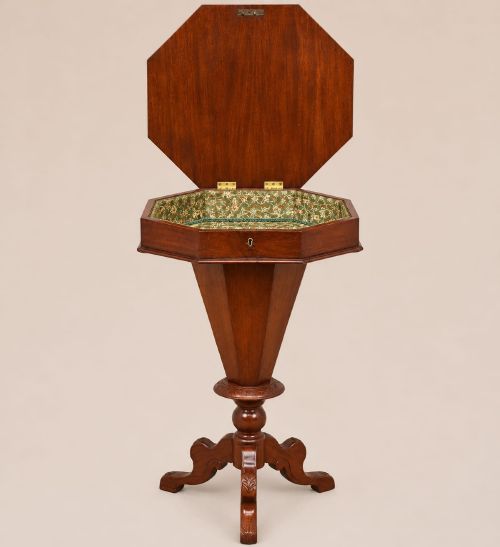
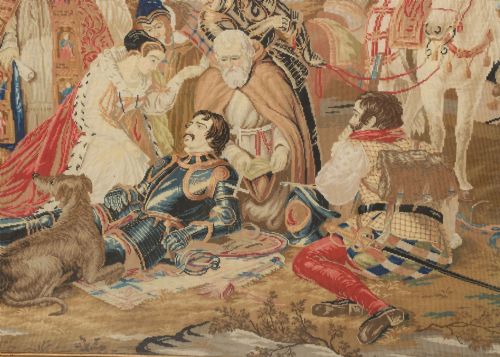
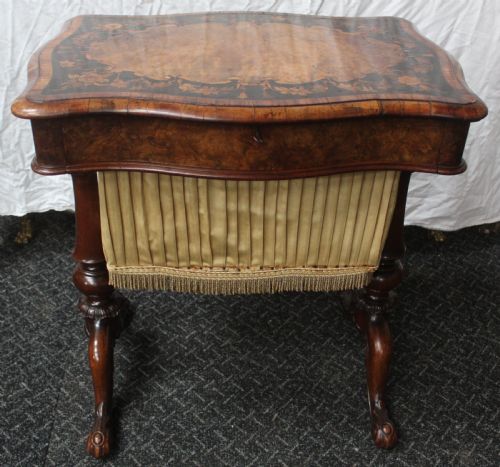
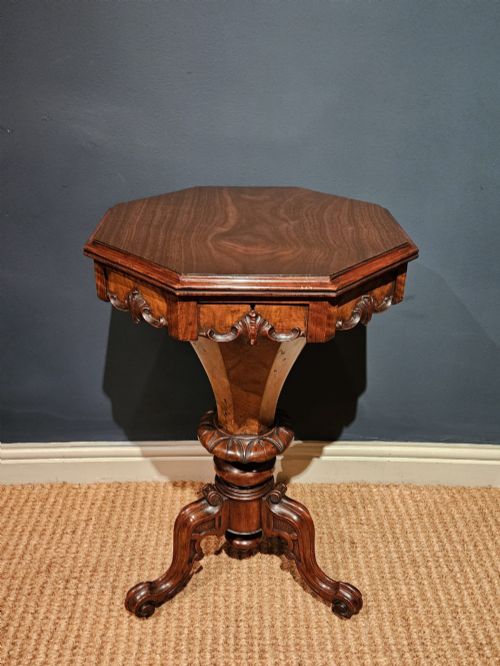
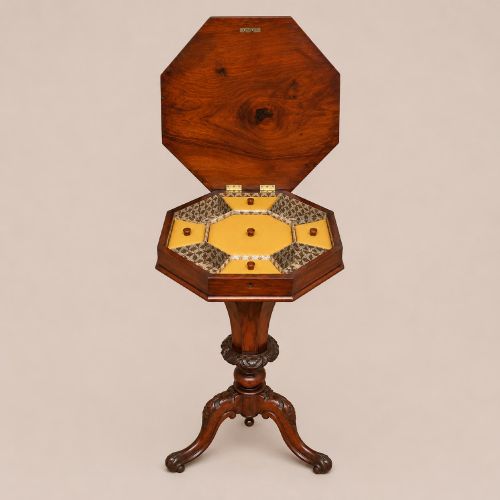
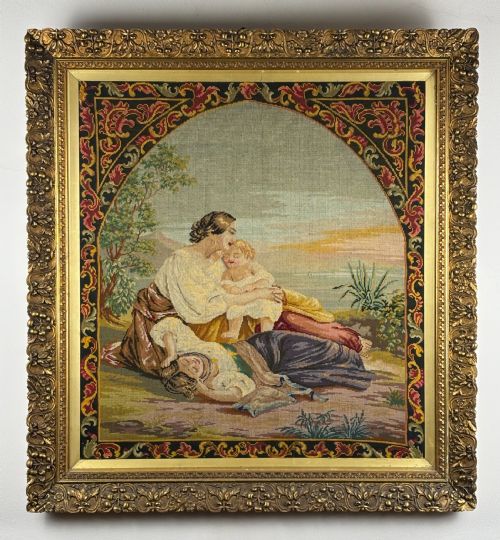
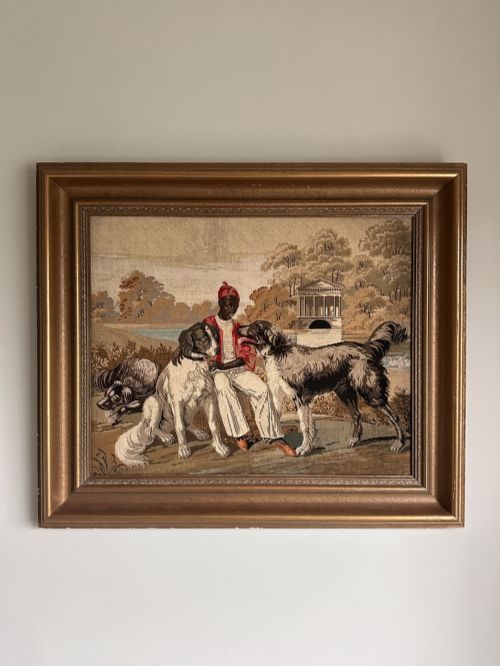
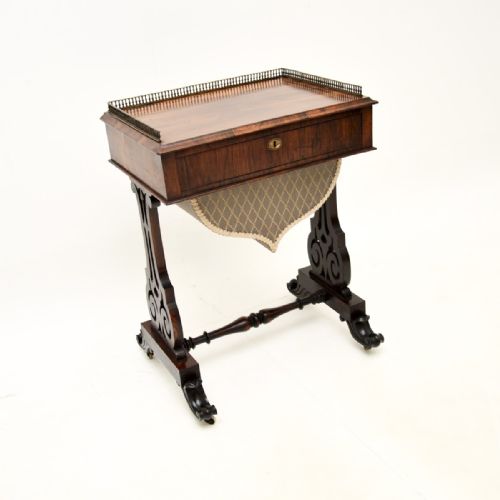
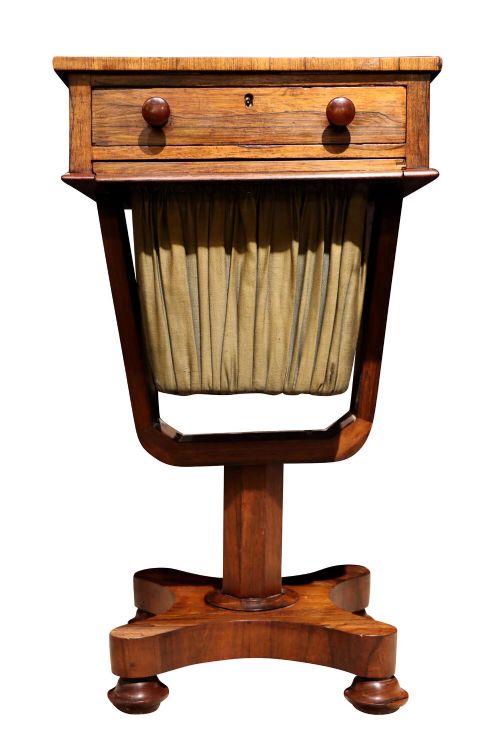
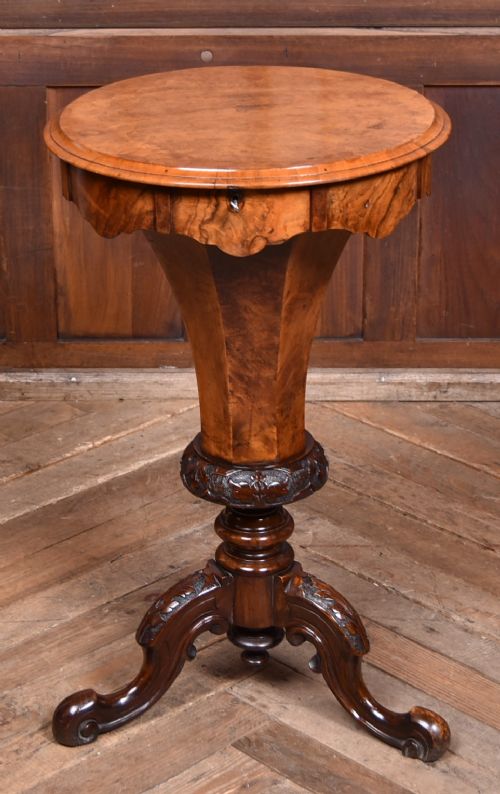
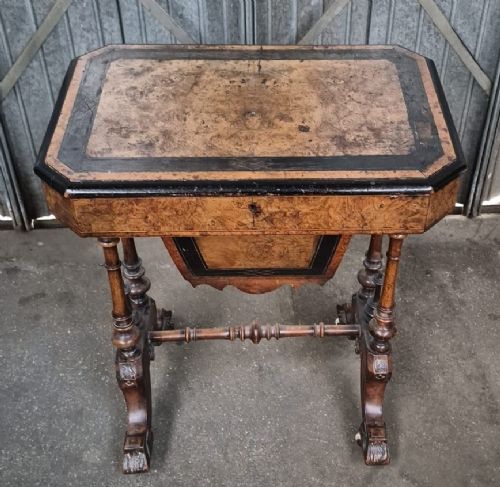
The most common forms include burr walnut or rosewood work tables fitted with fabric compartments, alongside framed Berlin woolwork tapestries depicting animals, figures and historical scenes. Stools and armchairs upholstered in period needlepoint also appear frequently.
Origins stretch across English, French and Dutch workshops from the nineteenth century, encompassing styles from Regency Chinoiserie and Biedermeier to Victorian Folk Art.
How victorian needlework was made
Makers utilised canvas, silk, wool and cotton threads to execute intricate needlepoint, Berlin work, plushwork and samplers, often mounting these textiles into wooden frames or onto furniture seats. The textile panels rely on counted thread techniques and varied stitch densities to build pictorial depth.
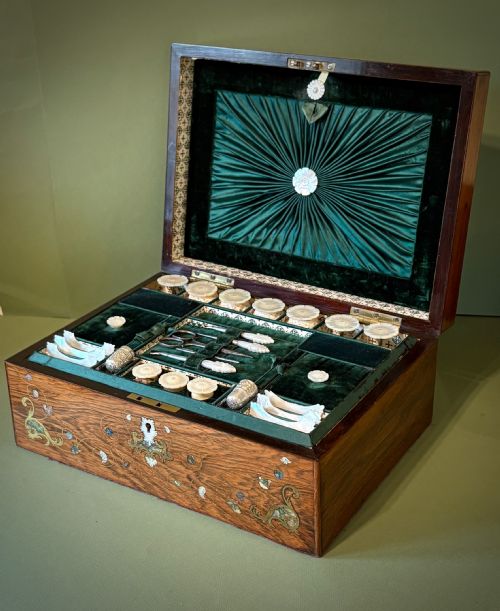
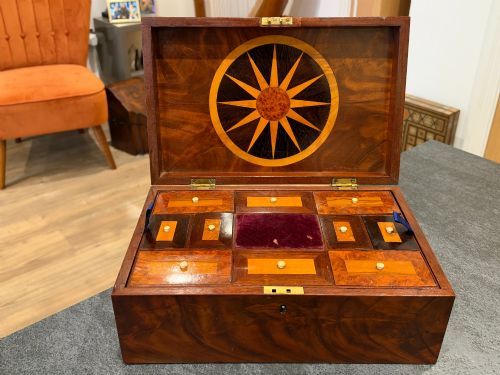
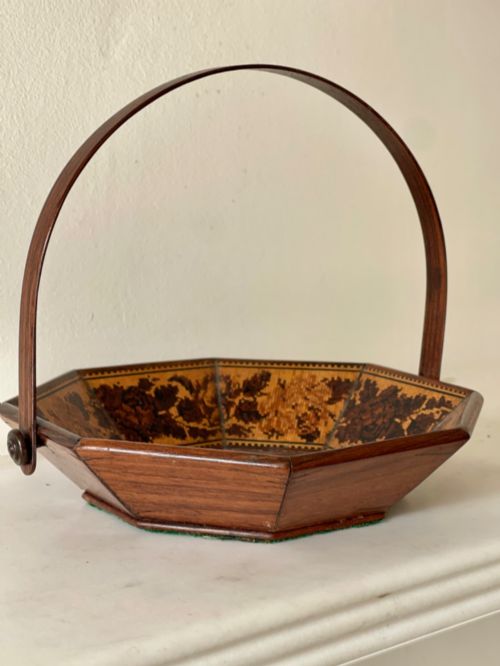
Structural furniture housings in mahogany, rosewood, walnut and oak were constructed by cabinetmakers using traditional joinery, incorporating turned pedestals, inlaid veneers, Tunbridge Ware decoration and brass hardware.
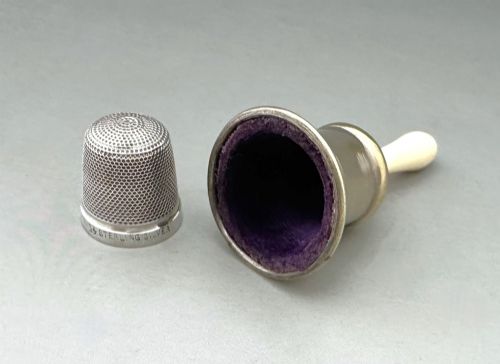
Silver and glass components frequently feature in smaller sewing accessories, compendiums and scissors.
Victorian Needlework Retail Price Guide 2026
Typical asking prices for victorian needlework among the pieces listed under this phrase on Sellingantiques today, from the lower quarter to the upper quarter. They describe what is for sale here now, not the wider market.
Stitchers occasionally recorded family pets in wool, ensuring spaniels and tigers joined the domestic household.
What varies in quality in victorian needlework
The differentiation between standard items and exceptional pieces rests upon the precision of the stitching and the ambition of the pictorial composition. Fine examples display careful colour shading, complex Berlin woolwork charts and tight, uniform tension across the canvas.
Cabinetwork quality similarly dictates value, seen in the selection of burr walnut or flame mahogany veneers, solid secondary timbers, intact internal compartments and refined hand-carved details on frames and tables.
The Victorian Needlework Glossary
- Berlin woolwork
- A type of counted-thread embroidery worked in wool on canvas from a painted grid pattern. This technique allowed makers to create highly detailed, polychrome pictorial scenes and animal portraits popular during the nineteenth century.
- Sampler
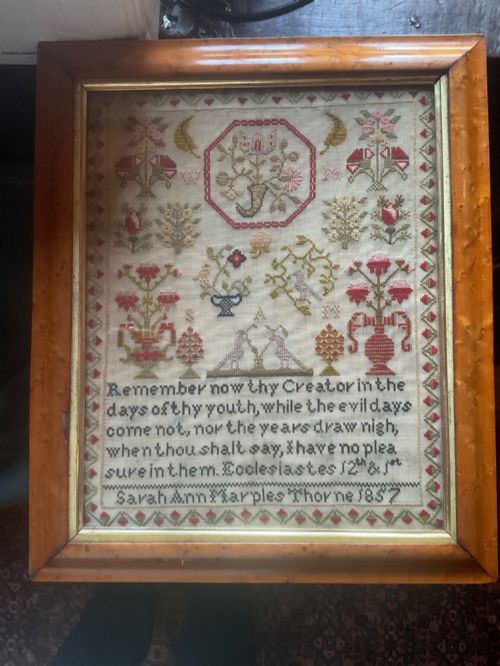
- A piece of needlework produced by a beginner or child to demonstrate proficiency in various stitches and alphabets. Dated examples often record the maker's name and age.
- Work table
- A specialised piece of furniture featuring a drawer or suspended fabric bag designed for sewing equipment and materials. These tables were essential domestic fixtures for nineteenth-century needlewomen.
- Tunbridge Ware
- Woodworking characterised by minute mosaic decoration formed from small, identically shaped pieces of naturally coloured woods. It frequently adorns small boxes and sewing accessories.
- Pole screen
- A vertical decorative panel mounted on a slender wooden pole that can be adjusted in height to shield a person's face from fireplace heat. Many feature original needlework or tapestry inserts.
- Plushwork
- A needlework technique utilising looped pile stitches that are subsequently cut to create a velvet-like, three-dimensional textured surface. It appears on domestic animal figures and decorative panels.
Victorian Needlework: Frequently Asked Questions
What is Berlin woolwork?
Berlin woolwork is a form of counted-thread embroidery executed in wool on canvas, guided by hand-coloured gridded paper charts. It gained immense popularity in the nineteenth century for producing richly coloured tapestries and cushion covers.
The technique allowed stitchers to achieve realistic shading and detailed pictorial effects, often depicting animals, historical figures or landscapes.
How do I date a needlework sampler?
Many samplers include embroidered dates, signatures and age markers stitched directly into the composition by the maker. When a date is absent, stylistic indicators such as the border design, alphabet style and framing materials assist in narrowing the period.
Fabric composition and the type of linen or canvas also provide clues to the approximate decade of creation.
Are fire screens still practical?
Original fire screens function primarily as decorative room dividers and historical textile displays today. While open coal fires are less common, these screens preserve fragile nineteenth-century needlework panels from direct heat damage.
They add distinct architectural character and period texture to modern interiors.