




Victorian Needlepoint Artwork
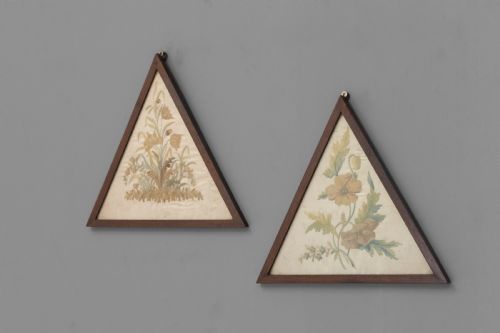
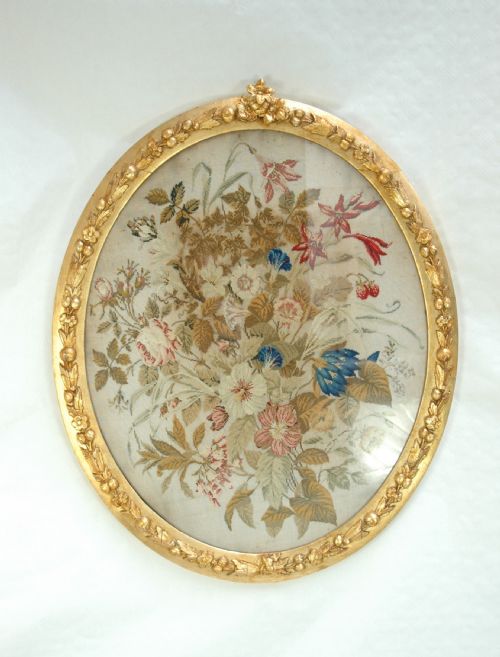
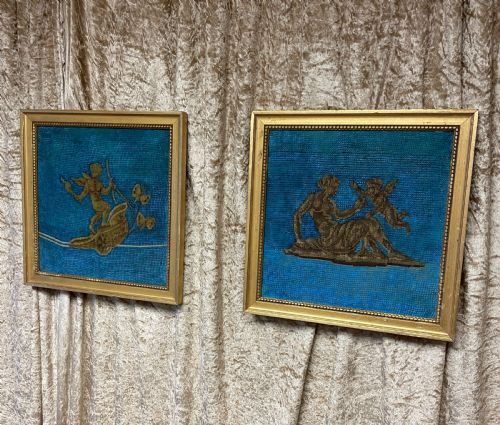
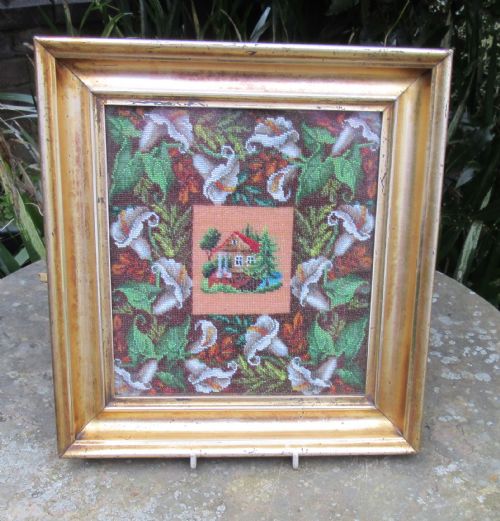
These Victorian needlepoint artwork pieces bring nineteenth-century hand-worked textiles into modern interiors.
Victorian Needlepoint Artwork
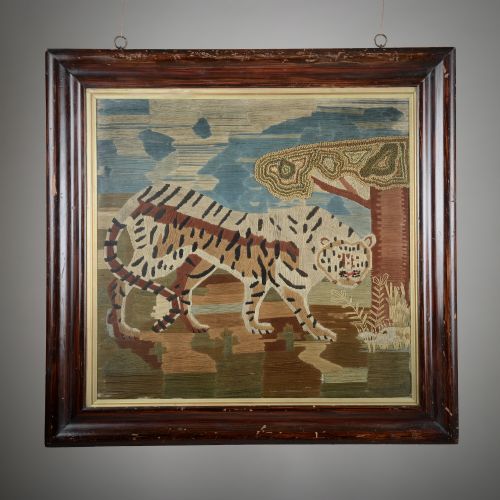
Victorian needlepoint artwork encompasses framed textile pieces created during the nineteenth century using wool, silk, and beadwork on canvas or linen grounds. Buyers encounter formats such as samplers, needlework pictures, framed tapestries, and embroidered wall art depicting subjects ranging from animals and portraits to horse racing tracks and religious scenes.
The objects stem from various origins including English country houses, French chateaux, and Italian workshops. Many survive within their original frames made from materials like rosewood, burr maple, oak, and gilded wood.
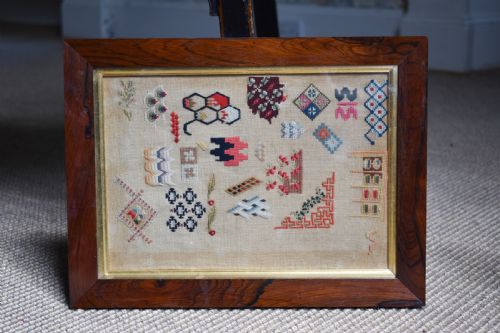
Alphabet samplers and pictorial panels dominate the selection, often bearing dates from the mid to late nineteenth century. These textile works reflect both domestic handcraft traditions and more formal classical or neoclassical designs.
How they were made
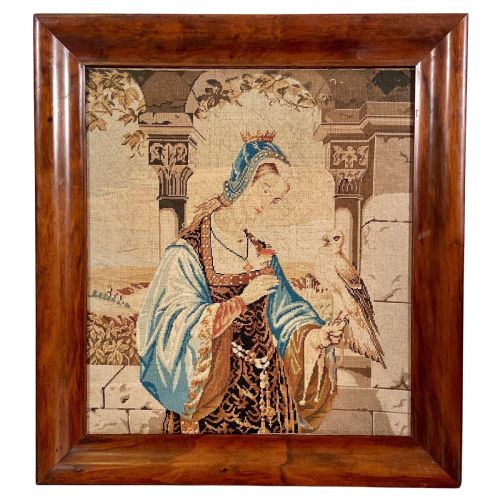
Maker's materials typically involve wool, silk, and linen stitched onto open-weave canvas grounds, sometimes supplemented by glass beads. The stitching techniques range from fine gros point to Berlin work, creating dense textured surfaces with pictorial depth.
Finished embroideries were stretched and mounted into timber frames, frequently utilising burr maple, rosewood, or oak to protect the textile. Glazing with glass was often added to shield the delicate wool and silk threads from dust and environmental wear.
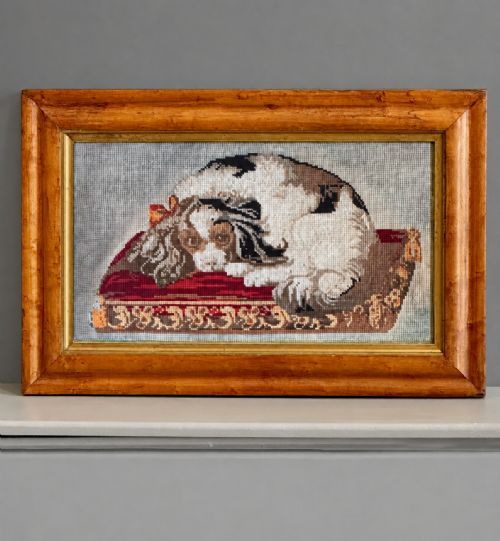
Stitched King Charles spaniels gaze out from burr maple frames, keeping eternal watch over nineteenth-century drawing rooms.
What varies in quality
The quality and originality of the framing heavily influence the piece. Housing a needlework in its period rosewood or burr maple frame preserves the integrity of the object far better than a later replacement.
The Victorian Needlepoint Artwork Glossary
- Berlin work
- A style of nineteenth-century needlepoint worked in wool on canvas from printed and hand-coloured squared paper patterns. This method allowed makers to produce highly detailed pictorial designs with rich colour shading.
- Sampler
- A piece of needlework produced as a demonstration or test of skill in various stitches and alphabets. These often include the maker's name and a date, serving as historical records of domestic education.
- Gros point
- A coarse needlepoint stitch executed on canvas that provides a durable and heavily textured surface. It is frequently found on nineteenth-century tapestries depicting figures and animals.
- Tapestry
- A form of textile art traditionally woven on a loom, though the term also applies to heavy embroidered needlework pictures from the nineteenth century. These framed pieces often portray classical, religious, or pastoral narratives.
- Beadwork picture
- An artwork created by stitching small glass beads onto a canvas ground to form detailed pictorial images. These pieces utilise the reflective quality of glass to create shimmering surfaces.
Victorian Needlepoint Artwork: Frequently Asked Questions
How should I hang needlepoint artwork?
Keep framed textiles away from direct sunlight to prevent the wool and silk threads from fading over time. Stable indoor humidity protects both the antique wooden frames and the fabric grounds.
Ensure pieces are hung securely using appropriate fixings suited to the weight of the timber and glass. Professional picture framing tape on the reverse helps seal out dust.
What is Berlin work?
Berlin work is a type of nineteenth-century needlework stitched in wool on canvas using squared paper charts. It became immensely popular for its bright colours and realistic pictorial effects.
Designers in Berlin exported hand-painted patterns across Europe and America, allowing makers to create intricate floral and animal compositions.
How do I date an antique sampler?
Many samplers include embroidered dates and the names of the makers who worked them. Stylistic clues such as alphabet fonts and border motifs also help narrow down the decade of production.
Framing materials and construction methods provide further physical evidence for dating the piece alongside the textile itself.
Are these pieces made of wool or silk?
Victorian needlework utilised both wool and silk, often combined within the same pictorial composition to create textural contrast. Wool provided durable coverage for backgrounds and garments, while silk added luminous highlights to skin and details.
Certain specialist works, such as beadwork pictures, incorporated glass elements alongside textile threads.