




Victorian Nautical Folk Art
Victorian nautical folk art brings home the handmade maritime life of the nineteenth century through detailed ship dioramas, woolwork embroideries, and carved bone objects.
Victorian Nautical Folk Art
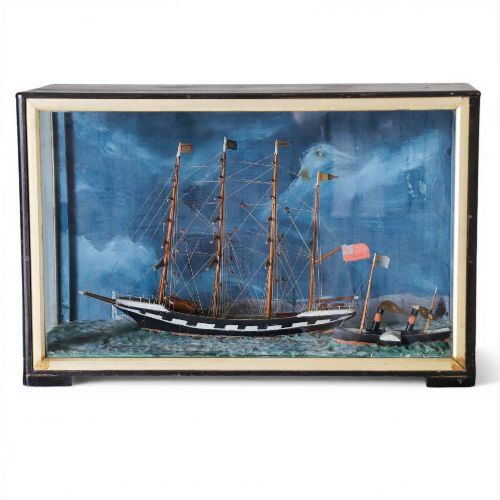
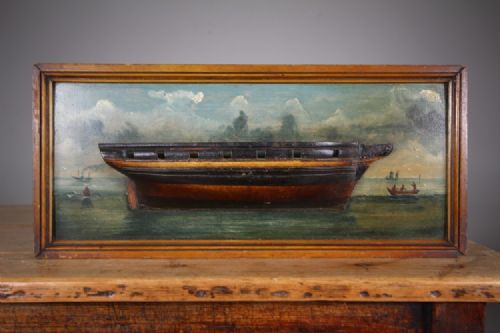
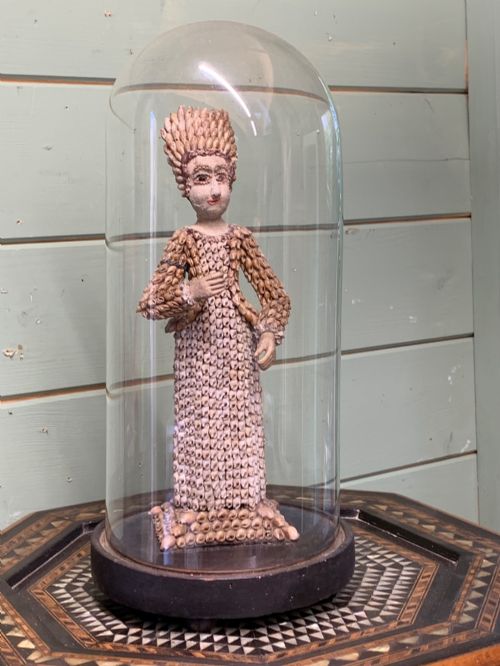
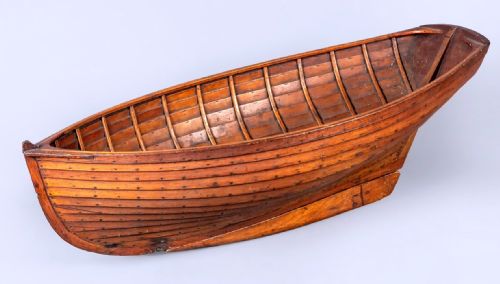
Victorian nautical folk art centres heavily on maritime dioramas and cased shadow boxes depicting sailing ships, clippers, and racing vessels at sea. These dimensional pieces frequently utilise painted backgrounds, carved wooden hulls, and textile rigging to capture nineteenth century maritime scenes.
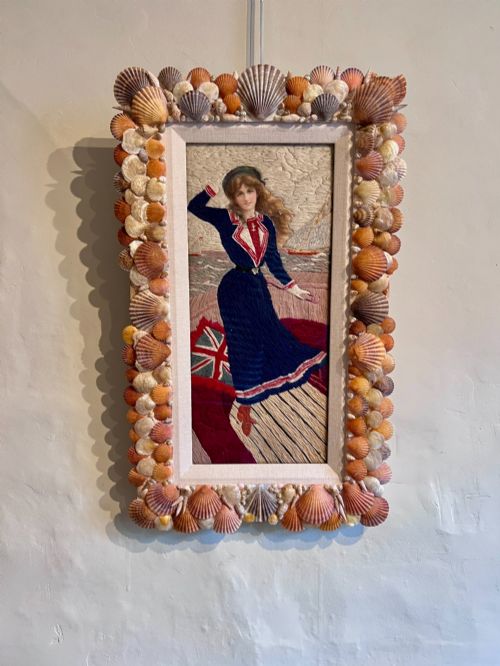
Beyond ship dioramas, buyers encounter textile wall art including woolwork embroideries known as woolies, often featuring sailing ships or sailor figures. Smaller decorative objects such as painted boxes, carved walking sticks, and sculptural models complete the range.
Originating across coastal Britain and beyond, these items span the nineteenth century and extend into early twentieth century examples. Welsh, English, and Cornish regional pieces appear alongside distant island works from Pitcairn.
Materials and construction methods
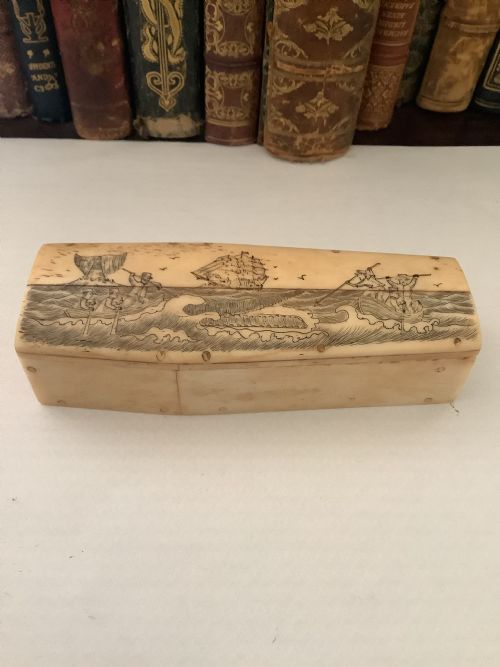
Makers constructed these objects primarily from wood, glass, paint, wool, fabric, bone, and metal, drawing directly on readily available maritime materials. Bone, horn, and whalebone supplied durable media for intricately carved walking sticks, fid tools, and small memento mori items.
Dioramas combine painted wooden or plaster elements with layered fabric sails and glass fronts to protect delicate miniature rigging. Textile works employ wool embroidery on canvas backgrounds, capturing maritime subjects through textured stitching.
Paint finishes in deep red and other pigments adorn wooden ship's wheels, boxes, and toy blocks, while straw work and carved fish demonstrate varied handcraft techniques.
Sailors passed long ocean voyages by stitching woolie embroideries and carving walking sticks from shark vertebrae.
Distinctions in quality
Quality rests upon the intricacy of detail and spatial depth within ship dioramas and cased scenes. Superior examples display careful rigging, well-proportioned carved hulls, and expressive painted seascapes rather than basic construction.
The Victorian Nautical Folk Art Glossary
- Diorama
- A three-dimensional miniature scene enclosed in a glass-fronted case. These boxes typically house carved wooden sailing ships set against painted seascapes.
- Woolie
- A nineteenth-century sailor's embroidery made predominantly from coloured wool yarn. They frequently depict square-rigged vessels under full sail.
- Fid
- A tapered conical tool carved from wood, such as rosewood, used by sailors for splicing ropes. Decorative examples served as personal mroor items.
- Memento mori
- An artistic reminder of human mortality. In this context, items include finely carved bone sculptures reflecting nineteenth-century sentiment.
Victorian Nautical Folk Art: Frequently Asked Questions
What is a woolie?
A woolie is a nineteenth-century textile embroidery created by sailors using wool yarn on canvas. These pieces typically portray sailing ships at sea.
They offer a direct window into maritime handcraft traditions and display varied stitch techniques to render waves and rigging.
How were ship dioramas displayed?
Ship dioramas were housed within deep wooden boxes protected by glass fronts. This framing preserved delicate paper, fabric, and painted elements from dust.
Collectors can wall-mount these shadow boxes or place them on stable flat surfaces to showcase their dimensional depth.
What materials did sailors carve?
Sailors and coastal makers carved whalebone, bone, shark vertebrae, and various woods during long voyages. These materials yielded durable walking sticks, handles, and small figures.
Working with bone and horn allowed craftsmen to produce intricate personal items using basic hand tools.
Where did Pitcairn Island pieces originate?
Pitcairn Island items originate from descendants of the Bounty mutineers and Polynesian settlers living in the remote Pacific. These makers carved flying fish and loving chalices from local woods.
Such objects reached collectors through maritime trade routes connecting distant islands to British ports.