
Victorian Music Canterbury Stand
When you search for a Victorian music canterbury stand, you are looking at practical nineteenth-century furniture designed to hold sheet music and folios.
Victorian Music Canterbury Stand
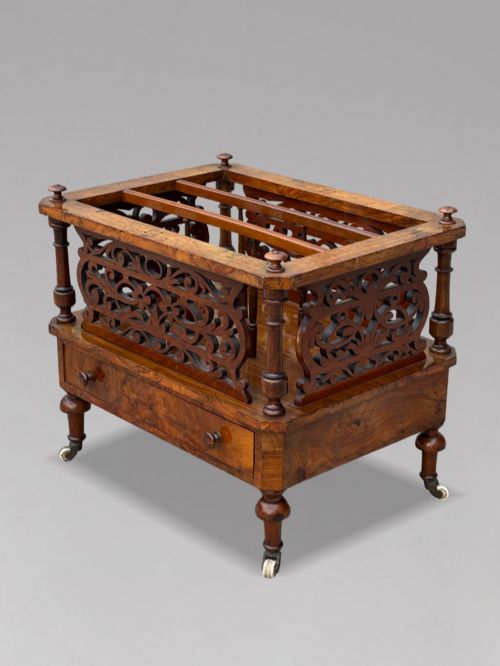
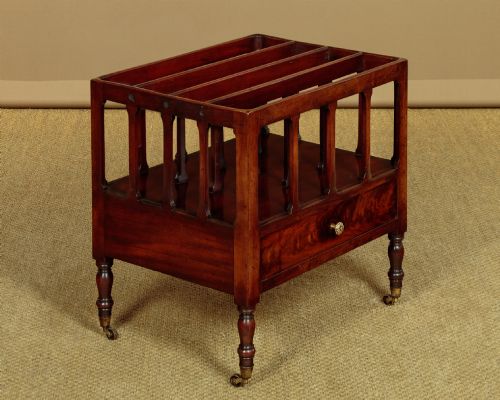
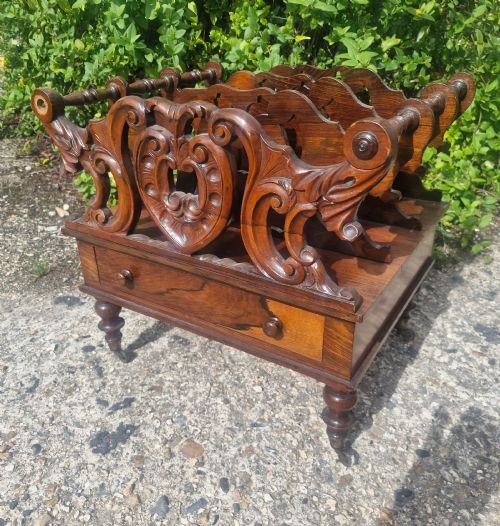
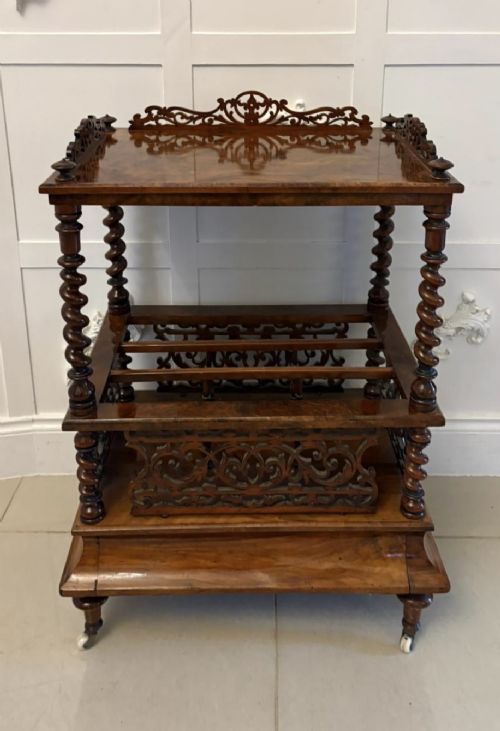
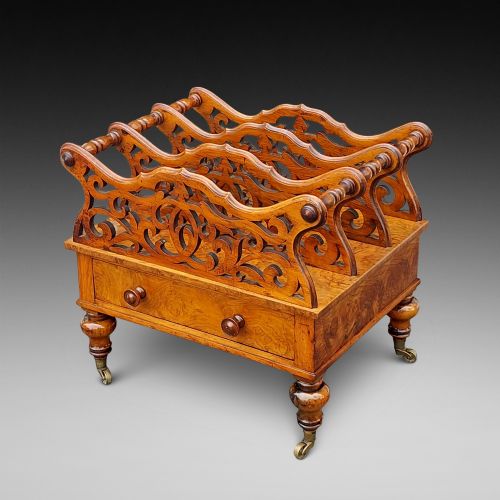
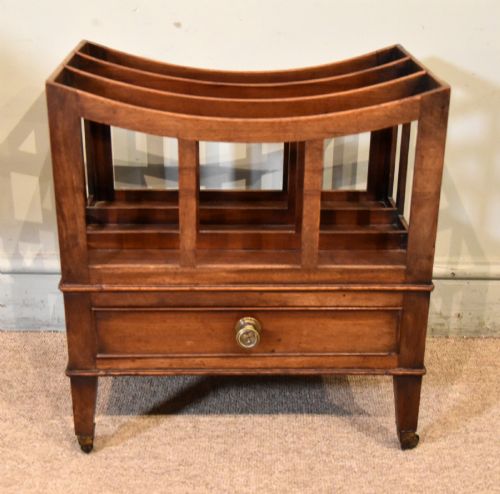
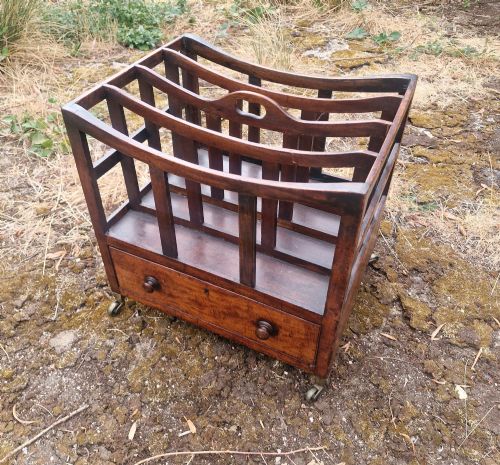
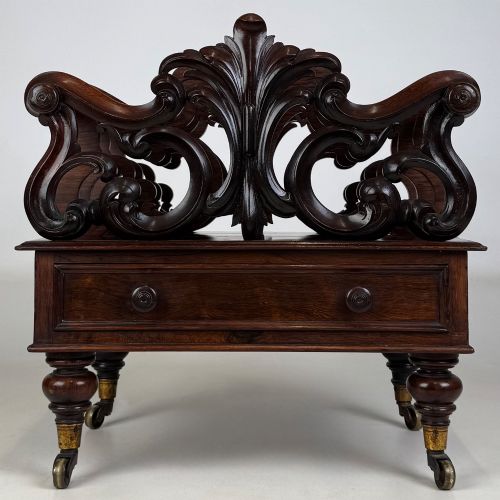
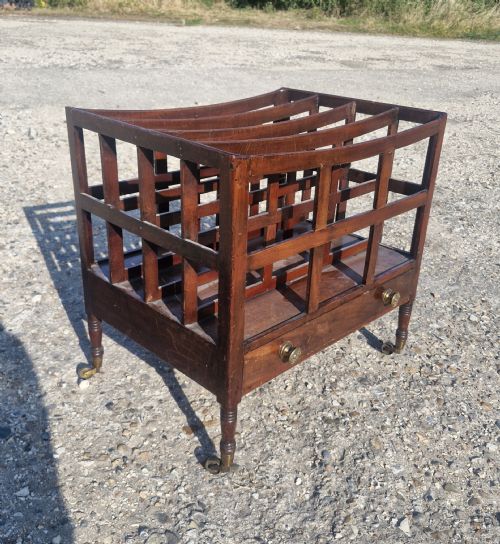
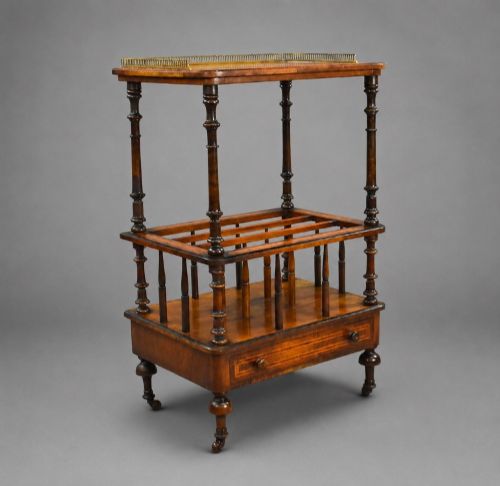
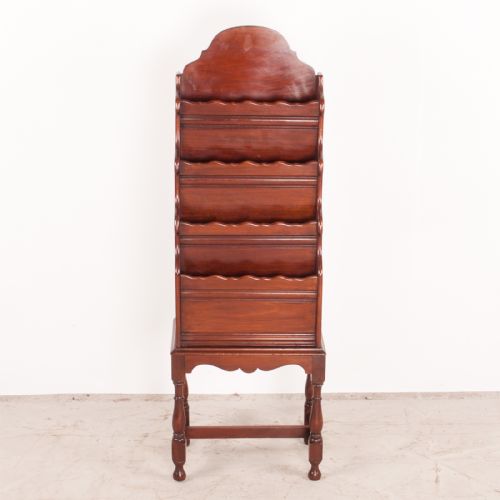
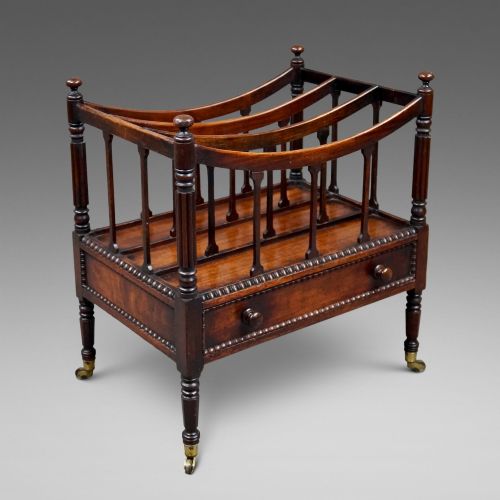
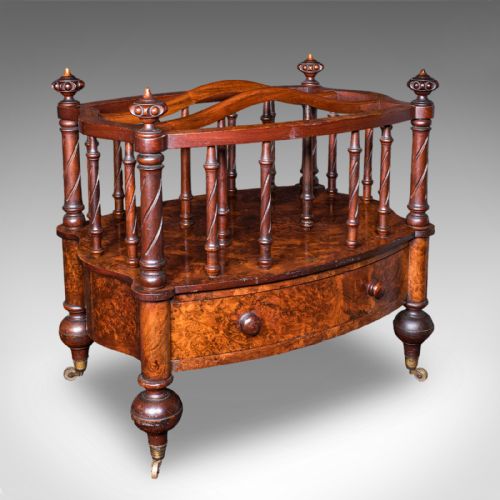
A Victorian music canterbury stand is a dedicated piece of nineteenth-century furniture originally built to organise sheet music, scores and periodicals in the domestic parlour. You will most frequently encounter these items in rich timbers like walnut, burr walnut, mahogany and rosewood, often combining upright slatted partitions for music with a lower drawer or a multi-tiered tabletop structure.
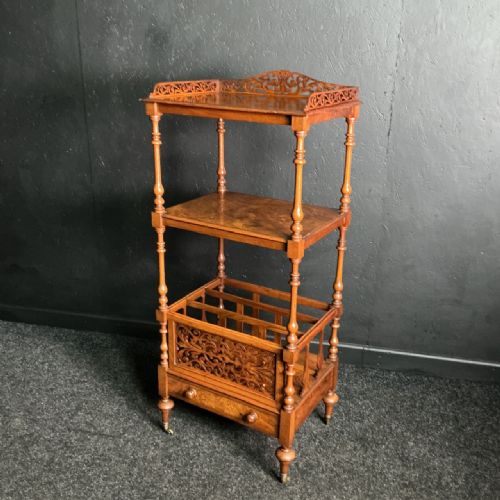
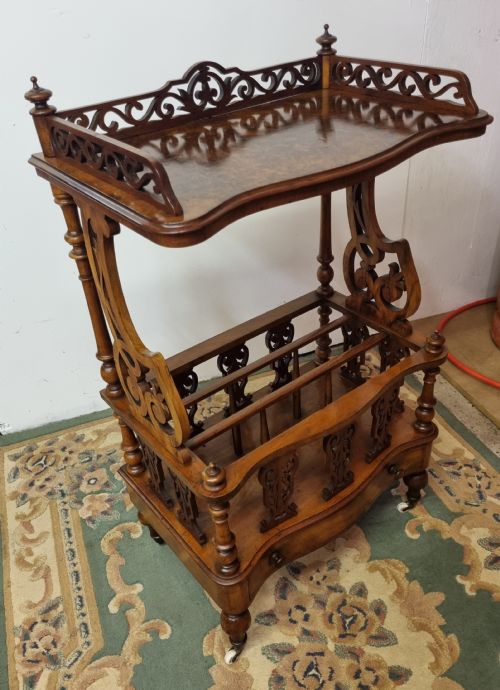
The selections span the nineteenth century, with strong representation from the Victorian era alongside Regency and William IV pieces. Many examples double as whatnots or occasional tables, featuring turned supports, ceramic castors and intricate marquetry inlay reflecting styles such as the Aesthetic Movement.
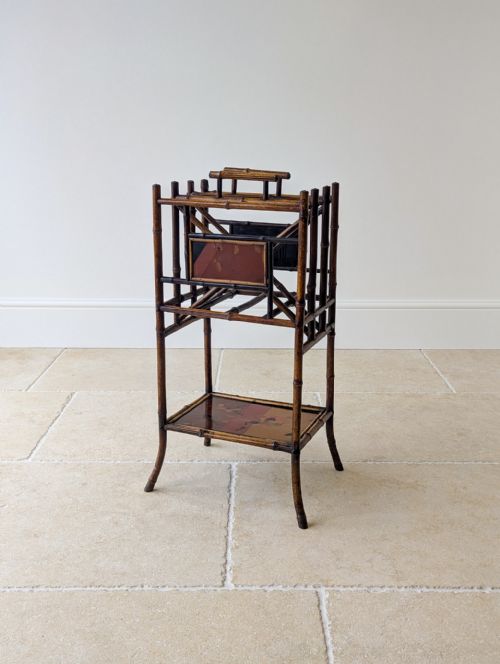
Beyond standard open-slatted designs, the listings include music cabinets, revolving stands and pieces incorporating bamboo or brass elements. They serve equally well today as distinctive magazine racks or side tables in a traditional interior.
How they were made
Cabinet makers utilised dense native and exotic hardwoods, selecting figured mahogany, rosewood and highly decorative burr walnut veneers for the visible surfaces. These timbers were often French polished to highlight the natural grain patterns and deep colour variations.
Structural elements incorporated turned wooden spindles, carved supports and delicate brass fittings, frequently mounted on small ceramic castors for mobility. Drawers featured traditional hand-cut dovetail joints, while shelves and partitions were secured with sturdy mortise and tenon construction.
One versatile cabinet hides its musical purpose so successfully it could double as a multi-functional side table for an evening's reading.
What varies in quality
The distinction between standard examples and superior pieces rests on the choice of timber and the intricacy of the cabinet work. Finely figured burr walnut veneers, elaborate boxwood stringing and detailed marquetry inlay elevate a piece above simpler mahogany or rosewood versions.
Construction details also separate the tiers of quality, seen in the crispness of turned columns, the presence of integrated drawers, and the inclusion of multi-functional elements like combined book rests or sliding partitions. Maker attribution, through stamped signatures or labels, further defines the standing of individual items.
Edwards & Roberts·Henry Ogden & Son
The Victorian Music Canterbury Stand Glossary
- Whatnot
- An open set of multi-tiered shelving supported by slender pillars, used for displaying ornaments or holding books and music. They frequently form the upper section of combined furniture pieces.
- Burr Walnut
- A highly decorative timber veneer taken from the gnarled growth of a walnut tree. It produces swirling, concentric grain patterns prized by nineteenth-century cabinet makers.
- Aesthetic Movement
- A late nineteenth-century design style that promoted art for art's sake, drawing inspiration from Japanese motifs and simpler forms. Pieces in this taste often utilise unconventional materials like bamboo.
- Serpentine
- A curved shape reminiscent of a snake's movement, featuring a convex centre flanked by concave curves. This contour appears on tabletops and drawer fronts of finer furniture.
Victorian Music Canterbury Stand: Frequently Asked Questions
What was a canterbury used for originally?
These stands were designed in the late eighteenth and nineteenth centuries to hold sheet music, folios and scores near the piano or music room. Families gathered in the parlour to play instruments, requiring dedicated storage to keep scores organised.
Over time, their utility expanded to hold newspapers and periodicals. Today, they function effectively as decorative magazine racks or side tables in living spaces.
How do I distinguish a Canterbury from a whatnot?
A standard canterbury focuses primarily on low, vertical partitions arranged specifically for holding upright items like music sheets or folios. Many include a carrying handle and a small base drawer.
By contrast, a whatnot consists of multiple stacked shelves supported by columns, intended for displaying objects. Makers frequently combined both forms, creating pieces with upper shelves and a partitioned lower rack.
Which woods are most common?
Mahogany and rosewood dominate the earlier nineteenth-century examples, offering deep reddish-brown tones and solid construction. Walnut and burr walnut became exceptionally popular during the mid-Victorian period for their rich, figured grain patterns.
Less conventional materials like bamboo appear in late-period pieces associated with the Aesthetic Movement. Brass and ceramic components frequently provide functional detailing on castors and handles.
How do I date a piece?
Dating relies on stylistic clues, construction methods, and timber preferences. Regency and William IV pieces often display clean classical lines in mahogany or rosewood, while mid-Victorian examples favour ornate burr walnut and serpentine shapes.
Late nineteenth-century items introduce alternative materials such as bamboo or reflect Aesthetic Movement influences. Cabinet hardware, dovetailing techniques, and secondary woods also help narrow the period of manufacture.