
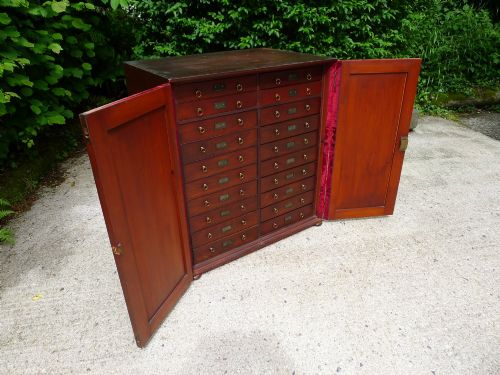
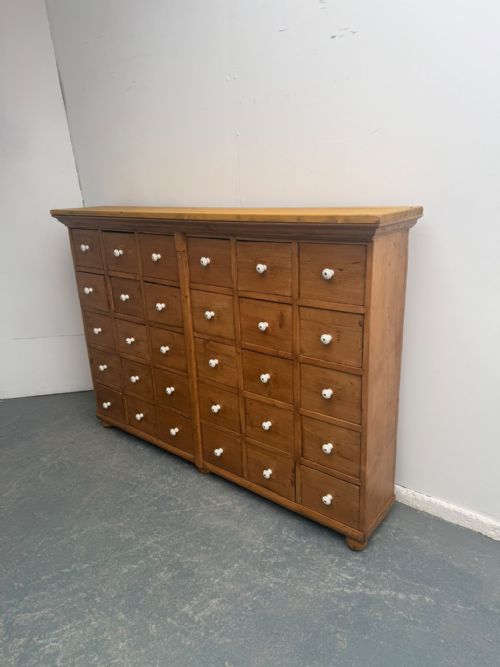


Victorian Multi Drawer Cabinet
These Victorian multi drawer cabinet pieces are functional archives built to hold everything from specimens to shop stock, offering robust storage for the modern home.
Victorian Multi Drawer Cabinet
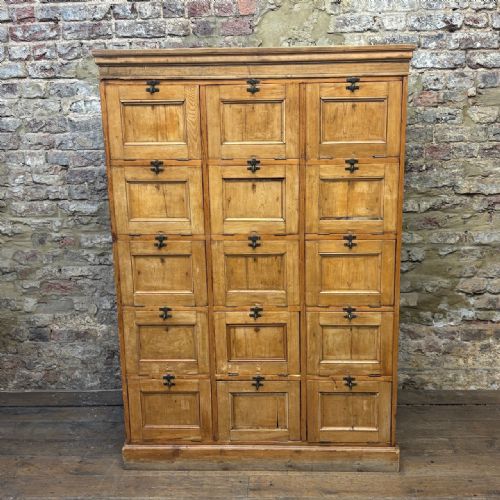
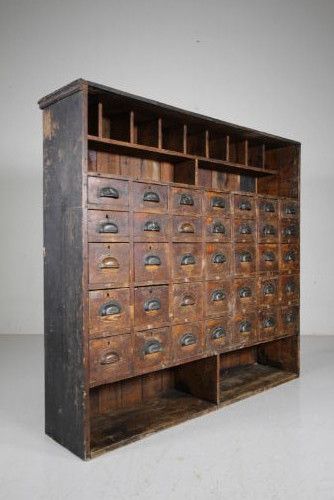
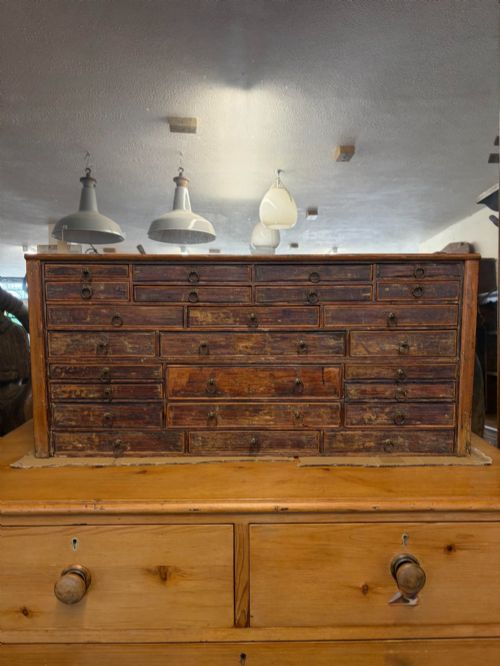
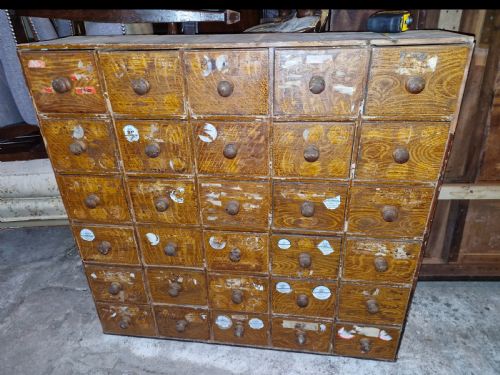
A Victorian multi drawer cabinet is primarily designed for systematic storage, appearing on this page as banks of drawers, collectors cabinets, shop fittings, and filing units. These pieces range from substantial pine shop counters to compact walnut jewellers chests, all sharing a multiplication of small storage compartments.
Most examples originate from the nineteenth century, utilising utilitarian pine, mahogany, or painted finishes to serve commercial, domestic, or scientific needs. The selection spans standard nineteenth century workshops as well as specific stylistic revivals including Gothic and Arts and Crafts forms.
Buyers encounter configurations varying from fifteen to fifty drawers, often retaining original brass or metal hardware. Whether constructed as modular filing systems or bespoke specimen chests, each Victorian multi drawer cabinet reflects the heavy demand for classified storage during the period.
Materials and construction
Carpenters built these cabinets predominantly in solid pine, mahogany, walnut, and teak, frequently employing stained deal or painted wood for commercial shop fittings. Structural integrity relied on dense timber frames designed to support numerous sliding drawers without sagging.
Hardware played a functional role, utilising brass and metal for drawer pulls, label holders, and patent mechanisms such as those found on letter files. Surfaces were polished, waxed, or painted in cream and black finishes, depending on whether the piece served a domestic study or a draper shop.
One extraordinary shop fitting squeezed fifty drawers into a single Hungarian pine frame, proving Victorian shopkeepers loved tiny boxes.
Judging quality and integrity
Quality in these multi drawer units rests on the precision of the drawer construction and the uniformity of the timber used throughout the carcase. Superior pieces maintain smooth drawer movement across dozens of compartments, avoiding the distortion common in heavily loaded commercial furniture.
Originality of surface finish and hardware dictates the standing of an individual cabinet, with factory painted shop fittings and polished mahogany holding distinct visual weights. Provenance or documented origins further elevate certain specimens above standard utilitarian storage.
Luxmore's of Ilfracombe·Amberg
The Victorian Multi Drawer Cabinet Glossary
- Bank of Drawers
- A piece of furniture consisting of numerous small drawers stacked vertically or horizontally. These units were originally used in offices, shops, and workshops for intensive sorting.
- Collectors Cabinet
- A specialised piece designed to house and display natural history specimens, coins, or small antiquities. They often feature shallow drawers lined for protection.
- Haberdashery Cabinet
- A glass-fronted or multi-drawer storage unit originating from draper and cloth shops. They were built to display and organise ribbons, threads, and small garments.
- Specimen Chest
- A compact cabinet created to store scientific samples, fossils, or botanical items. The drawers are typically dust-proof to preserve delicate contents.
- Deal
- Fir or pine timber commonly used for secondary furniture construction during the nineteenth century. It provided a stable yet economical base for painted or stained finishes.
Victorian Multi Drawer Cabinet: Frequently Asked Questions
What were multi drawer cabinets originally used for?
These cabinets served commercial, scientific, and administrative functions in shops, offices, and studies. Businesses utilised them for haberdashery and filing, while collectors housed natural history specimens inside.
Over time, many of these utilitarian pieces transitioned into domestic settings for general household storage and display.
How many drawers do these cabinets usually have?
The drawer count varies dramatically depending on the original purpose of the specific cabinet. Smaller examples might feature fifteen compartments, while large shop fittings and specimen chests often contain forty to fifty drawers.
Each configuration reflects the precise sorting requirements of the nineteenth century trade or collection it was built to serve.
What types of wood are most common?
Pine is the most frequent timber encountered, appearing frequently in shop fittings and utility furniture. Mahogany and walnut were reserved for finer collectors cabinets and jewellers chests.
Secondary woods like deal were also utilised, often stained, polished, or finished with painted surfaces depending on the intended environment.
Are these cabinets suitable for modern homes?
Their modular compartment design makes them exceptionally practical for organising modern items such as stationery, craft supplies, or collections. The robust nineteenth century construction ensures they withstand daily use.
Placing them in hallways, studies, or kitchens provides substantial storage capacity while introducing distinct period character.