



Victorian Mosaic Jewellery
Victorian mosaic jewellery comprises intricate glass tesserae, pietra dura, and micro mosaic pieces designed to be worn or housed in decorative boxes.
Victorian Mosaic Jewellery
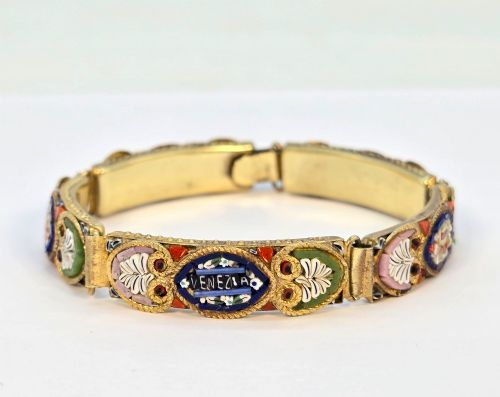
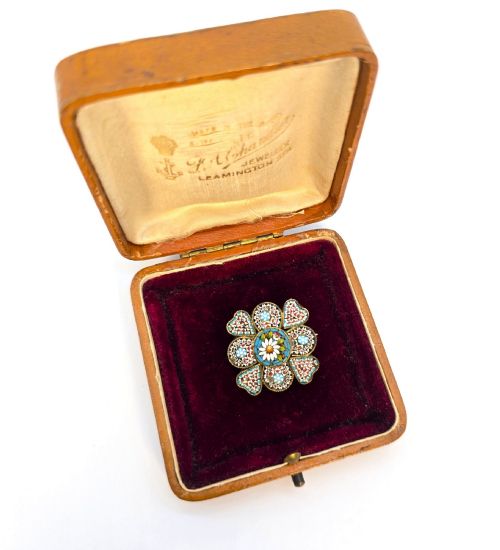
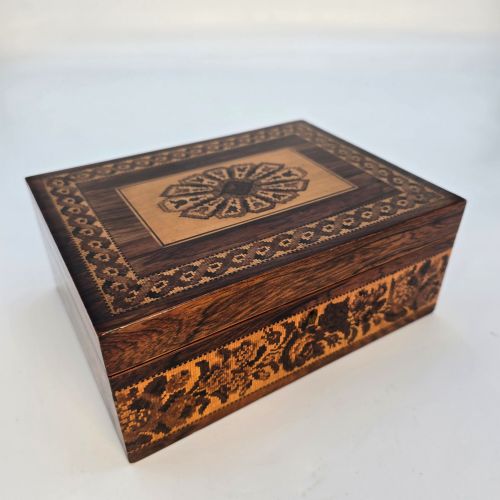
Victorian mosaic jewellery encompasses small wearable ornaments and decorative boxes featuring detailed pictorial designs assembled from tiny coloured materials. Buyers searching for victorian mosaic jewellery will encounter items ranging from Italian micro mosaic brooches and bracelets to English Tunbridge ware and Anglo-Indian Sadeli mosaic boxes.
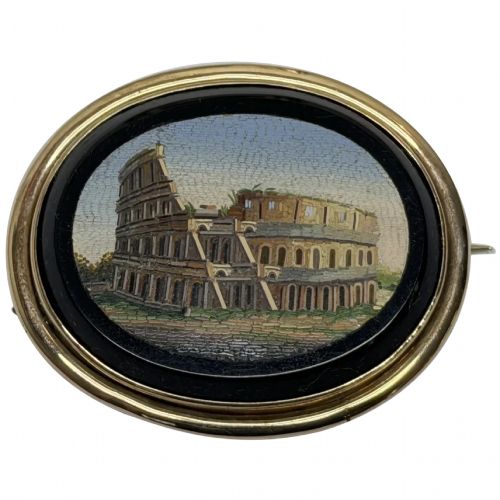
The objects span wearable pieces such as yellow gold brooches, pendants, and earrings alongside storage forms like trinket boxes, work boxes, and jewellery caskets. Many of these pieces reflect the influence of the Grand Tour, bringing miniature Italian craftsmanship to British buyers during the nineteenth century.
Materials and construction
The making of these pieces relies on specialised assembly methods, uniting glass tesserae or hardstones with wooden or metal structures. Micro mosaics utilise microscopic glass rods fused and cut to form pictorial subjects like the Roman Colosseum or doves, while pietra dura employs precision-cut hardstones mounted into metal or wood.
Wooden boxes incorporate intricate marquetry and micro mosaic techniques using diverse timbers such as rosewood, walnut, boxwood, and ebonised wood. Metal elements utilise brass, gilt metal, or yellow gold settings, often reaching fifteen or eighteen carats, to frame the mosaic panels securely.
Victorian Mosaic Jewellery Retail Price Guide 2026
Typical asking prices for victorian mosaic jewellery among the pieces listed under this phrase on Sellingantiques today, from the lower quarter to the upper quarter. They describe what is for sale here now, not the wider market.
Certain micro mosaics capture tiny winged doves so small you need a lens to count the glass rods.
Factors of quality
Quality in these pieces is dictated by the density and precision of the tesserae or hardstone inlay work. Finer examples display microscopic glass elements packed tightly together with virtually no visible gaps, creating a smooth, painterly surface that clearly delineates intricate motifs and shading.
The standard of the supporting mount or housing also elevates the piece, distinguishing standard commercial items from superior examples. High-grade items feature substantial yellow gold settings or finely constructed timber boxes utilising complex marquetry patterns alongside the central mosaic plaque.
Edmund Nye
The Victorian Mosaic Jewellery Glossary
- Micro mosaic
- A decorative technique using extremely tiny glass tesserae fused together to create detailed miniature pictures. These pieces were popular souvenirs during the nineteenth century.
- Pietra dura
- An artistic method involving the inlay of cut and fitted polished coloured stones to form pictorial designs. Hardstones such as onyx and agate are frequently utilised in these compositions.
- Tesserae
- The small individual blocks of coloured glass or stone used to build up a mosaic pattern. The finest examples use microscopic tesserae for high pictorial definition.
- Tunbridge ware
- A specific type of British woodwork featuring characteristic mosaic veneer assembled from thousands of tiny tinted wood blocks. It takes its name from the Kent town where it was principally produced.
- Grand Tour
- A cultural journey undertaken by wealthy young Europeans in the eighteenth and nineteenth centuries to study classical art. Travellers frequently returned with Italian mosaics and jewellery as mementos.
Victorian Mosaic Jewellery: Frequently Asked Questions
What is Victorian mosaic jewellery?
Victorian mosaic jewellery comprises wearable ornaments and decorative containers featuring minute glass tesserae or hardstone inlays. These items capture nineteenth-century tastes for intricate miniature artwork and travel souvenirs.
Such pieces range from gold brooches depicting classical scenes to wooden boxes decorated with geometric or pictorial mosaic patterns. They demonstrate exceptional patience and precision in miniature craftsmanship.
How do micro mosaics differ from pietra dura?
Micro mosaics are assembled from thousands of tiny coloured glass rods fused together to form detailed pictorial scenes. They often portray famous landmarks, animals, or floral motifs with a smooth surface.
Pietra dura instead uses precisely cut and fitted polished natural hardstones and coloured marbles. This technique relies on the natural grain and colour variation of stones rather than glass.
How should I care for these pieces?
Mosaic pieces require gentle handling to protect their delicate glass tesserae or stone inlays from impact. Avoid exposure to moisture, harsh chemicals, and ultrasonic cleaners which can weaken adhesives.
Store jewellery separately in lined boxes and keep wooden mosaic boxes away from direct sunlight and extreme humidity changes. Dust them softly with a dry, clean brush.
How can I tell the period?
Dating relies on examining the materials, construction methods, and styles characteristic of nineteenth-century manufacturing. Evidence of yellow gold standards, specific box timbers like rosewood and walnut, and provenance helps narrow the era.
Stylistic cues such as Grand Tour themes or specific regional woodworking traditions also indicate whether a piece originates from Victorian Britain or Italy.