
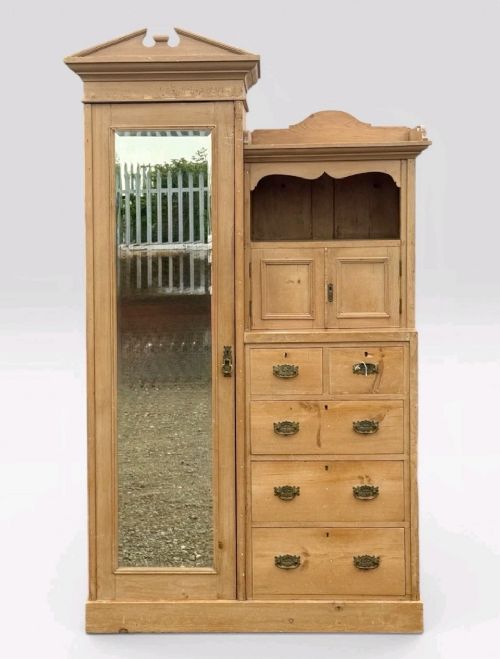


Victorian Mirror Chest
A victorian mirror chest combines a functional drawer base with an integrated swivelling glass, bringing practical bedroom storage and daily utility together.
Victorian Mirror Chest
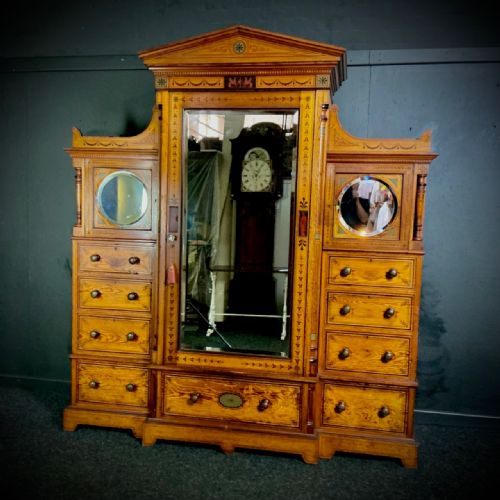
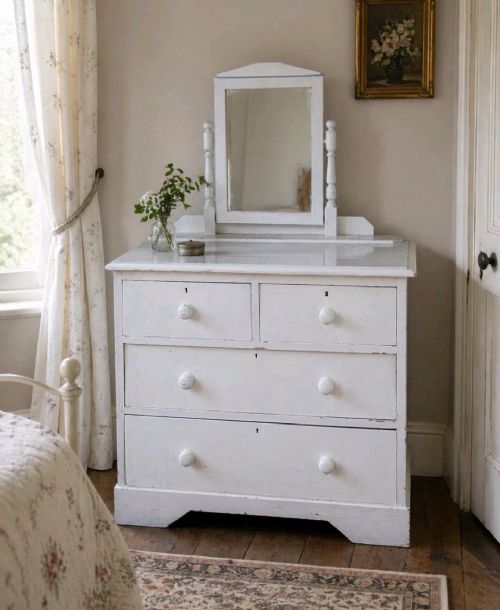
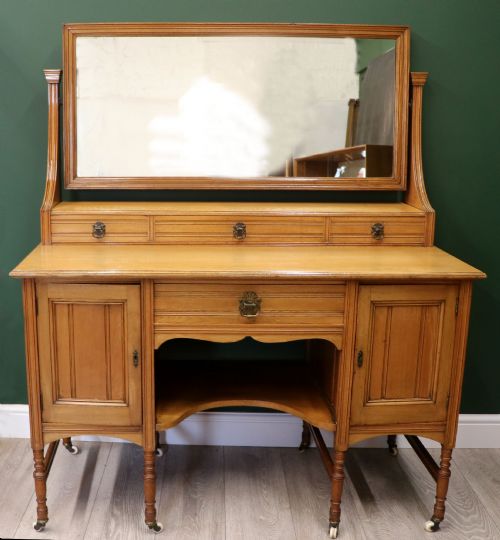
A victorian mirror chest unites a low chest of drawers with an upright or swivelling mirror fixed to the top surface, creating a dedicated piece for dressing and grooming. These items appear across the nineteenth century and into the Edwardian period, often taking the form of a dressing chest or a pedestal dressing table.
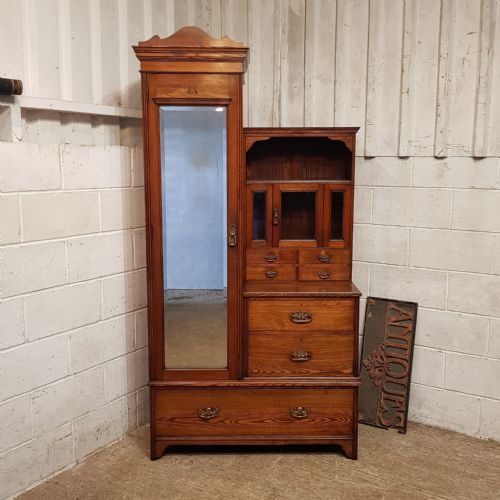
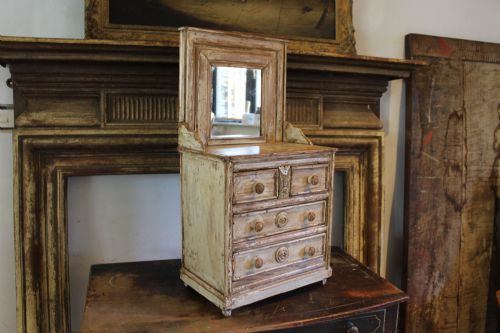
The pieces on this page span several woods including mahogany, walnut, oak, satin walnut, and pine, alongside painted or scumble glazed finishes. Many incorporate jewellery boxes, small side drawers, or candle sconces around the central glass plate.
Makers such as Edwards & Roberts, Wright & Hunter of Belfast, Gillows, and Harris Lebus produced variations ranging from simple country pine to sophisticated burr walnut and marquetry inlaid designs.
How They Were Made
Cabinet makers utilised dense hardwoods like mahogany, walnut, and oak for formal pieces, while domestic items relied on accessible softwoods such as pine and ash. Surfaces often received decorative treatments including marquetry inlay, satinwood banding, stencilling, or painted finishes.
Mirror plates were secured in adjustable wooden frames using brass pivots and screws, allowing the glass to tilt according to the user's needs. Drawer construction employed traditional dovetail joints, ensuring structural stability for daily bedroom use.
Listings feature woods such as mahogany, walnut, oak, satin birch, ash, and pine across Victorian and Edwardian periods.
What Varies in Quality
The distinction between standard utility items and finer workshop productions rests on timber selection and decorative ambition. Plain pine or scumble glazed storage pieces prioritise domestic function, whereas burr walnut, satin birch, and finely figured mahogany demonstrate greater cabinet-making skill.
Advanced examples incorporate elaborate marquetry, brass hardware, or specialised storage configurations such as pedestal columns and integrated jewellery compartments. The integration of the mirror frame and the crispness of the inlay distinguish standard regional furniture from branded London or provincial workshop outputs.
Edwards & Roberts·Wright & Hunter of Belfast·Gillows·Harris Lebus
The Victorian Mirror Chest Glossary
- Dressing chest
- A low chest of drawers fitted with a superstructure supporting a mirror plate. These pieces serve the dual purpose of clothes storage and personal grooming.
- Cheval mirror
- A full length mirror hung on a vertical frame with pivots, allowing the glass to swing freely. This feature appears on larger dressing units and standalone bedroom pieces.
- Marquetry
- Decorative veneer work formed by fitting together small pieces of wood, shell, or ivory to create pictorial designs. Cabinet makers applied this technique to drawer fronts and top surfaces.
- Scumble glaze
- A painted surface treatment manipulated with combs, rags, or brushes to imitate the grain of expensive timbers. This technique provided an economical finish on pine furniture.
- Tantalus
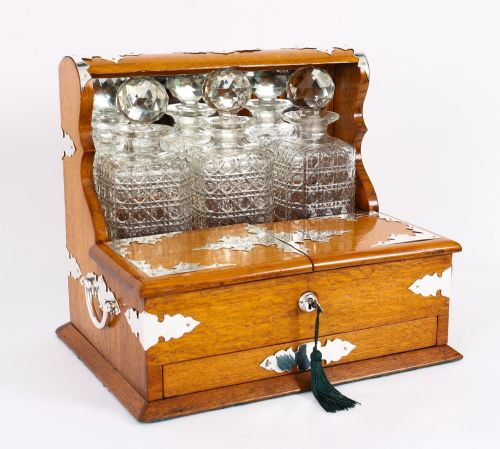
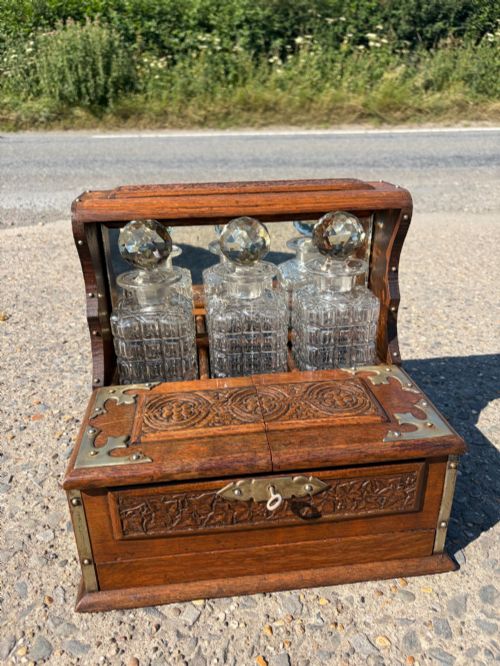
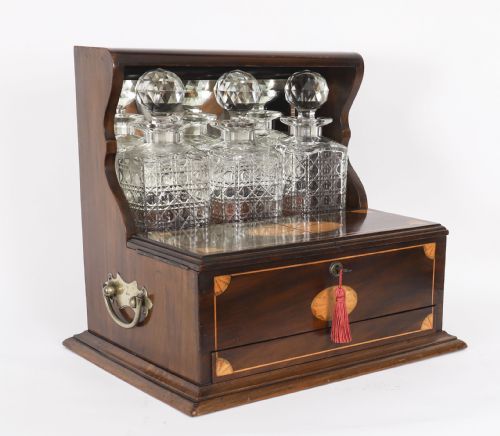
- A locking beverage stand holding decanters visible through a wooden and metal framework. While distinct from bedroom furniture, these occasional items appear alongside similar nineteenth-century cabinet work.
Victorian Mirror Chest: Frequently Asked Questions
What is a victorian mirror chest?
A victorian mirror chest is a bedroom storage item combining a chest of drawers with a fixed or adjustable mirror. It functions primarily as a dressing table for grooming and organising personal items.
These pieces emerged in various woods and styles throughout the nineteenth century, reflecting both regional domestic workshops and major cabinet-making firms.
How do I date a mirror chest?
Dating relies on observing construction methods, timber choices, and stylistic details such as brass hardware and inlay techniques. Pieces span the Victorian and Edwardian eras, with distinct shifts from heavy mahogany to lighter satin walnut and oak.
Makers' marks, where present, provide definitive attribution to specific nineteenth-century workshops and retailers.
Are the mirror plates original?
Original mirror plates often display subtle age spots, foxing, or slight distortion in the reflection due to historical manufacturing methods. Replacement glass typically appears cleaner and lacks the characteristic silvering degradation found in antique silver-backed glass.
Examining the backing boards and the fit within the wooden frame helps determine if the glass has been replaced over time.
How should I care for the wood?
Maintaining antique wood requires keeping the piece away from direct sunlight and stable environmental humidity to prevent warping or splitting. Regular gentle dusting preserves the polish without stripping historical finishes.
Wax polishing applied sparingly helps nourish timber surfaces like mahogany, walnut, and pine without building up excessive residue.