





Victorian Military Chest Desk
A victorian military chest desk is a clever multi-part writing cabinet designed for transport.
Victorian Military Chest Desk
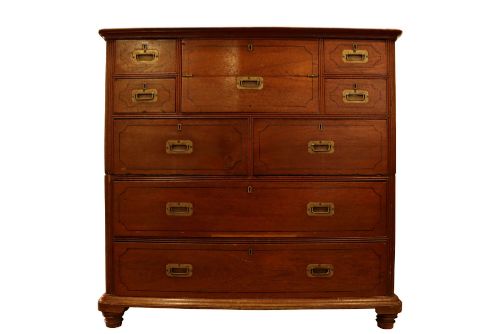
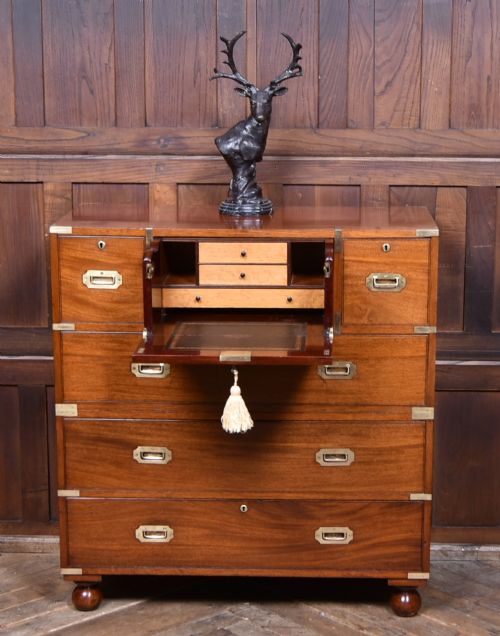
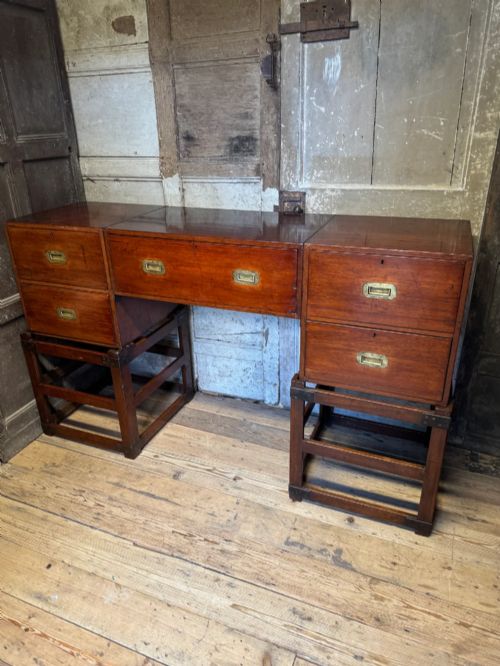
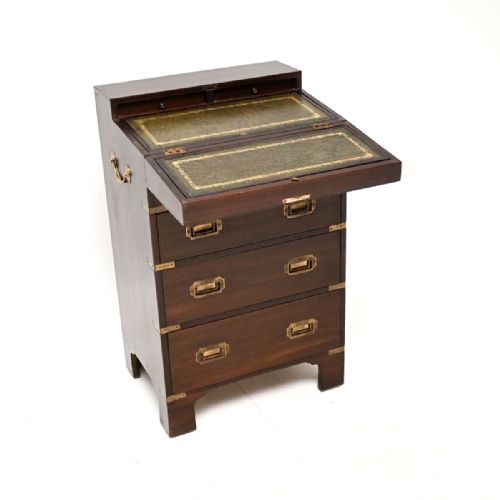
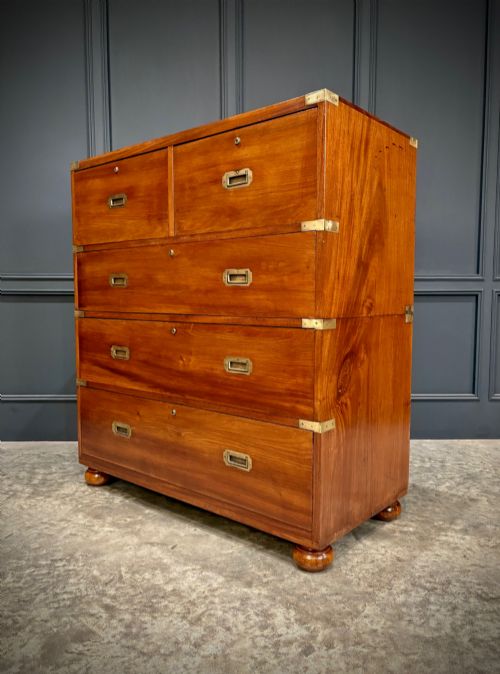
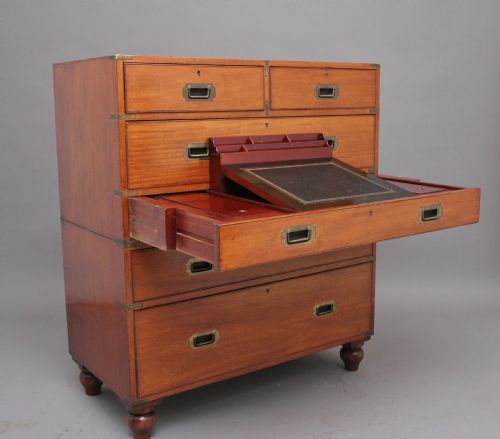
When you search for a victorian military chest desk, you are looking at sturdy portable furniture built for officers on the move during the nineteenth century. These pieces usually divide into two or more stacked sections for ease of handling on ships and carts. The form combines a chest of drawers with a fitted writing surface, often dropping down to reveal pigeonholes and small compartments.
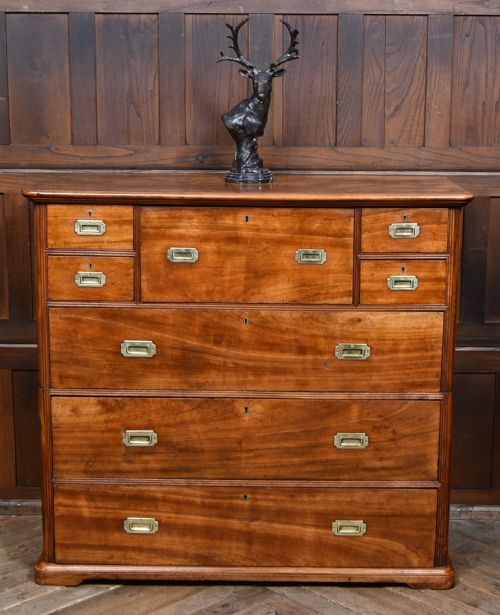
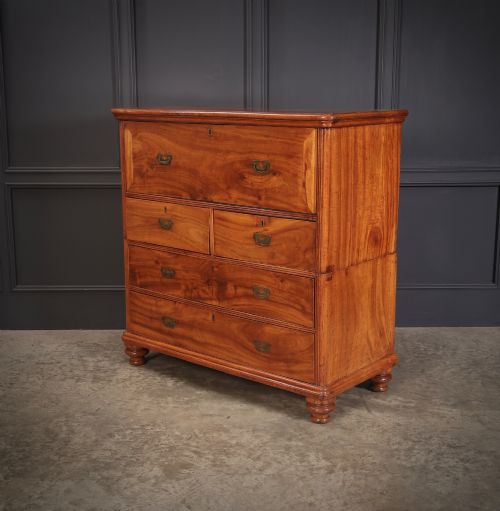
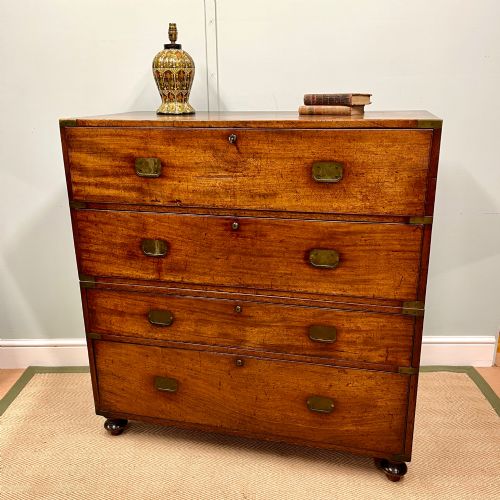
The most common version met on this page is the secretaire chest, constructed in dense timbers such as mahogany, teak or camphor wood. These examples feature recessed brass handles, protective corner brackets and flush hardware to prevent snagging during travel. Many date from the Victorian period, specifically the middle decades of the nineteenth century when campaign furniture production peaked.
How they were made
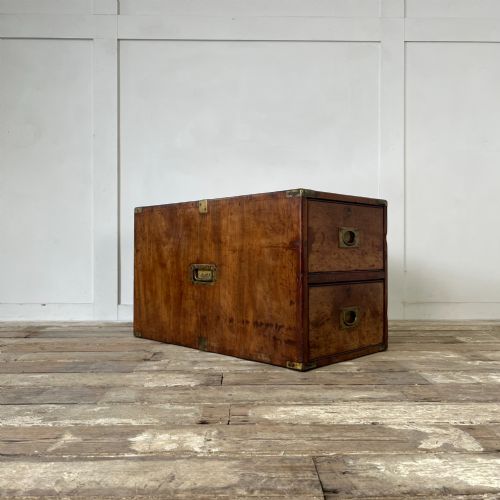
These chests rely on dense hardwoods like mahogany, teak and camphor wood to withstand rough travel and humid climates. Timber is often selected for stability and resilience, frequently paired with secondary woods for internal drawer linings. Carpenters constructed the carcases in separate stacked sections so that each block remained manageable for lifting.
Makers reinforced every vulnerable edge with brass strapping, corner plates and flush-fitting inset handles secured by tiny screws. The writing sections incorporate hinged flaps supported by internal lopers or quadrants, revealing small drawers and pigeonholes inside.
Victorian Military Chest Desk Retail Price Guide 2026
Typical asking prices for victorian military chest desk among the pieces listed under this phrase on Sellingantiques today, from the lower quarter to the upper quarter. They describe what is for sale here now, not the wider market.
Some chests carry engraved nameplates on their brass escutcheons, naming the captains who carried them across the empire.
What varies in quality
The standard of a victorian military chest desk depends on the crispness of the brass fittings and the integration of the writing drawer. Superior pieces use heavy cast brass hardware deeply inset into the timber, whereas simpler ones rely on thinner stamped metal plates. The internal arrangement of the secretaire drawer also dictates grade, with finely dovetailed secret compartments and turned ivory or bone pulls marking out the better workshops.
Construction methods show clear divisions between standard workshop output and bespoke officer commissions. Finer examples maintain tight corner joints and precise dismantling mechanisms where the brass bolts align smoothly across the sectional split.
The Victorian Military Chest Desk Glossary
- Secretaire chest
- A chest of drawers featuring a dedicated writing drawer with a drop-front or pull-out flap concealing compartments. This form serves both storage and writing needs in one cabinet.
- Campaign furniture
- Portable furnishings built in sections with removable legs and inset handles for military officers on active service. These items are designed for rapid packing and transit.
- Lopers
- Wooden pull-out slides fitted beneath a drop-front desk flap to support the writing surface when opened. They slide back into the carcase when the bureau is closed.
- Brass strapping
- Flat metal strips screwed across corners and edges to protect timber from splitting during rough transport. This hardware is typically countersunk flush with the wood surface.
Victorian Military Chest Desk: Frequently Asked Questions
What is a military secretaire chest?
A military secretaire chest is a portable cabinet divided into stacked sections, featuring a middle drawer that drops down to form a writing desk. These units provided officers with both wardrobe space and a functional workstation while on campaign.
Inside the drop-front drawer, makers arranged small stationery compartments, pigeonholes and secret drawers for documents. The exterior retained the flush brass handles and corner brackets characteristic of all campaign furniture.
Why are these chests made in two parts?
These chests are built in two or more separate stacked sections to make loading and transport manageable for pack animals and ships. Each box section can be lifted independently by side carrying handles.
Metal brackets and pins secure the upper and lower carcases together during use while allowing quick separation when packing up. This modular construction is a defining feature of authentic campaign pieces.
What timbers were used for campaign chests?
Makers utilised dense and durable hardwoods such as mahogany, teak, camphor wood and rosewood. These timbers resisted warping and insect damage during long postings in tropical climates.
Camphor wood also provided a distinct aromatic scent that helped protect stored clothing and papers from moths. Teak offered exceptional water resistance for sea voyages.
How do I identify a Victorian campaign piece?
Victorian campaign pieces are identified by their modular carcase construction, inset brass hardware, and carrying handles designed for transport. They date primarily from the nineteenth century and reflect the needs of British military expansion.
Examination of the timber, dovetail joints and brass screw types helps distinguish nineteenth-century production from later revival styles. Labels or stamped military marks sometimes provide further clues to their origin.