






Victorian Mechanical Music Box
These Victorian mechanical music boxes combine intricate brass works with figured wooden cabinetry to fill a room with precise, clockwork melodies.

Victorian Mechanical Music Box
A Victorian mechanical music box brings together precision engineering and fine cabinet making to play programmed tunes automatically. These pieces range from simple cylinder boxes to large disc-playing symphoniums and complex automata.
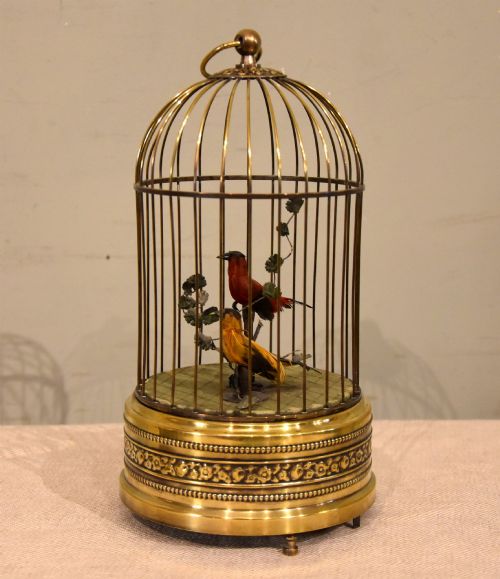
Most examples found here date from the nineteenth century, spanning decades of Swiss and British production. Buyers encounter standard cylinder boxes alongside specialised forms featuring bells, mandolin effects, or moving singing birds.
The objects serve as both functional instruments and decorative furnishings. Their primary appeal lies in the acoustic charm of steel combs plucked by rotating pins.
Materials and construction methods
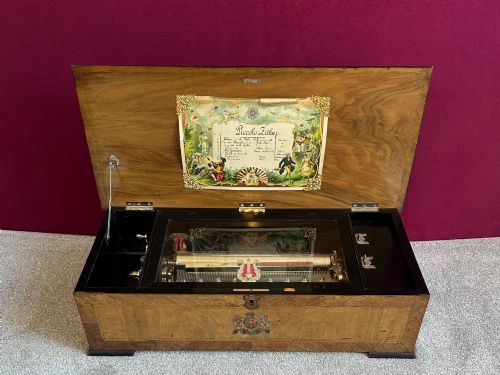
The physical structure relies on dense hardwoods such as walnut, ebonised wood, and rosewood, frequently enhanced with marquetry inlay and burr walnut veneers. These timber cases house the delicate internal mechanics while projecting the acoustic resonance of the melodies.
Internal components combine brass cylinders and steel combs with glass covers and metal winding keys. Makers tuned each steel tooth individually to produce specific notes as the pinned barrel revolved.
Victorian Mechanical Music Box Retail Price Guide 2026
Typical asking prices for victorian mechanical music box among the pieces listed under this phrase on Sellingantiques today, from the lower quarter to the upper quarter. They describe what is for sale here now, not the wider market.
Listings feature walnut, rosewood, and ebonised wood cases housing intricate brass and steel movements from the nineteenth century.
Distinctions in execution and scale
Quality separates ordinary cylinder boxes from sophisticated pieces by renowned makers like Nicole Freres or Langdorff & Fils. Superior examples feature a greater number of airs, visible bells, or intricate mechanical automata.
The crispness of the arrangement and the depth of the cabinetwork dictate the overall standing of an instrument. Finer pieces demonstrate superior tonal clarity from the steel comb and more elaborate marquetry details on the exterior case.
Langdorff & Fils·Lochmanns·Nicole Freres·LeCoultre·B A Bremond
The Victorian Mechanical Music Box Glossary
- Air
- A distinct musical tune or melody played by the cylinder or disc. Boxes are often described by how many airs they hold.
- Cylinder
- The rotating metal barrel set with pins that pluck the steel comb. This component dictates the sequence of notes.
- Comb
- The tuned steel plate with multiple teeth that vibrates to produce sound when struck. Each tooth corresponds to a specific pitch.
- Automaton
- A mechanical figure or mechanism designed to move in synchronization with the music. Examples include singing birds or moving figures.
- Marquetry
- Decorative woodwork created by fitting small pieces of veneer into patterns. This technique adorns the lids of many walnut and rosewood cases.
Victorian Mechanical Music Box: Frequently Asked Questions
How do these music boxes actually work?
A wound spring turns a brass cylinder or a metal disc, causing protruding pins or perforations to pluck tuned teeth on a steel comb.
This mechanical programming allows the instrument to play complex melodies without human intervention.
What is the difference between a cylinder and a disc box?
Cylinder boxes use a pinned metal barrel programmed to play a fixed number of specific tunes, usually between six and twelve.
Disc players utilise interchangeable flat metal sheets, allowing owners to swap media and expand their musical repertoire.
How were these instruments used originally?
Victorian households placed them in parlours and drawing rooms to entertain guests before the widespread availability of recorded sound.
They served as both status symbols and sources of domestic amusement during social gatherings.
Where were most of these boxes made?
The majority of mechanical music boxes originated in Switzerland, which became the global centre of precision barrel-organ and music box manufacturing during the nineteenth century.
Swiss workshops exported these instruments across Britain and Europe.
How should I care for a mechanical music box?
Keep the instrument in a stable environment away from direct sunlight and extreme humidity changes to protect the wooden case and internal steel components.
Wind the mechanism gently and avoid forcing levers if a tune cycle finishes.