

Victorian Mechanical Clock
A victorian mechanical clock brings the steady rhythm of nineteenth-century engineering into a room through brass, wood and glass.
Victorian Mechanical Clock
A victorian mechanical clock encompasses everything from brass carriage clocks and heavy fusee wall dials to carved walnut Black Forest cuckoo clocks and intricate skeleton timepieces. These pieces originate from British, French and German workshops operating during the nineteenth century and around nineteen hundred.
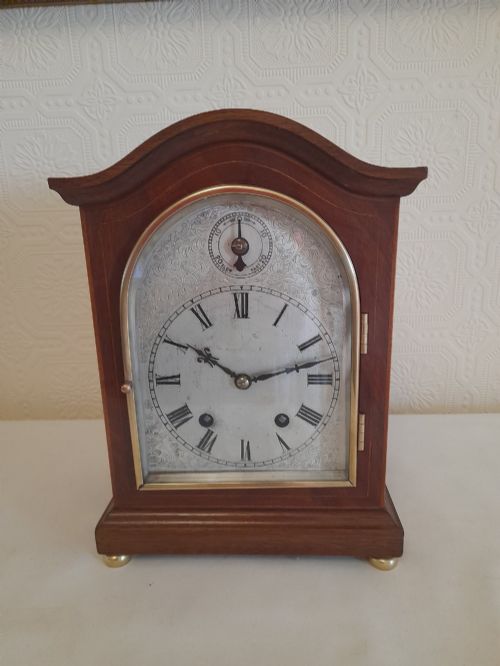
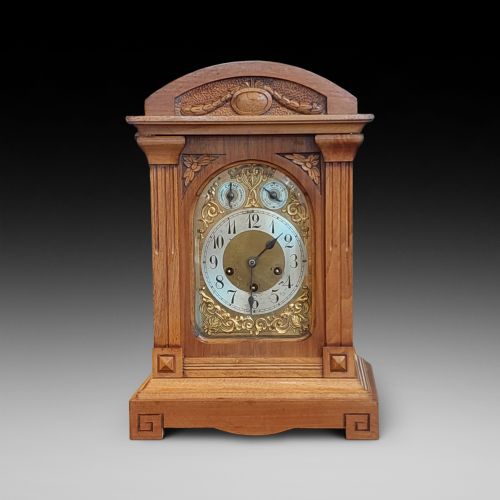
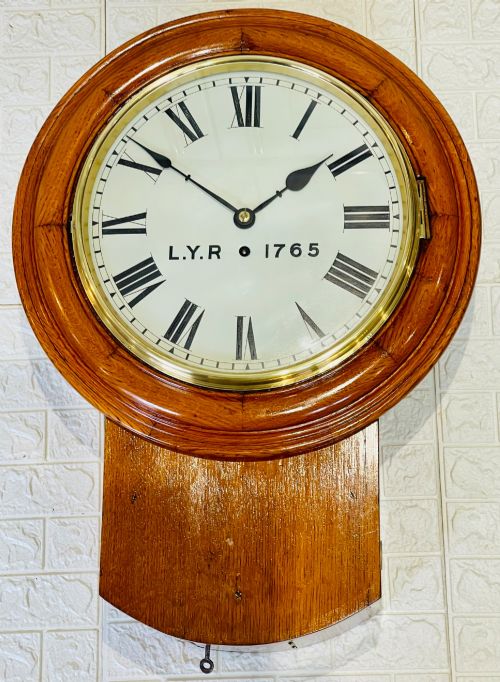
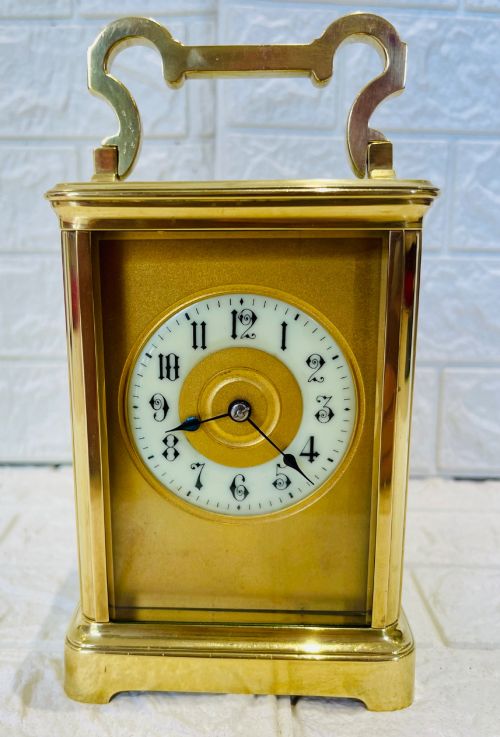
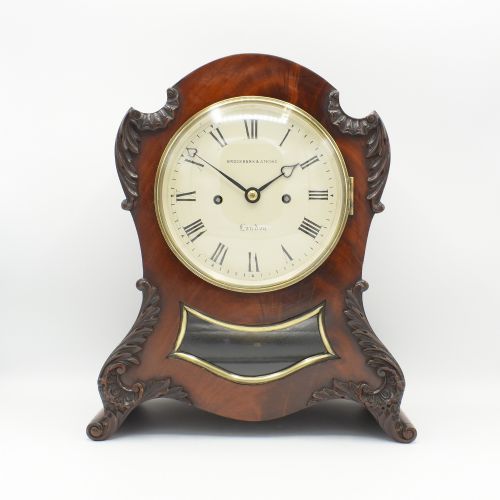
Buyers encounter distinct regional forms on this page, including railway station round dial clocks housed in mahogany or oak, domestic mantel clocks in walnut, and portable carriage clocks with glass panels. Each style reflects the specific timekeeping needs of nineteenth-century domestic, public and travel life.
Materials and Construction
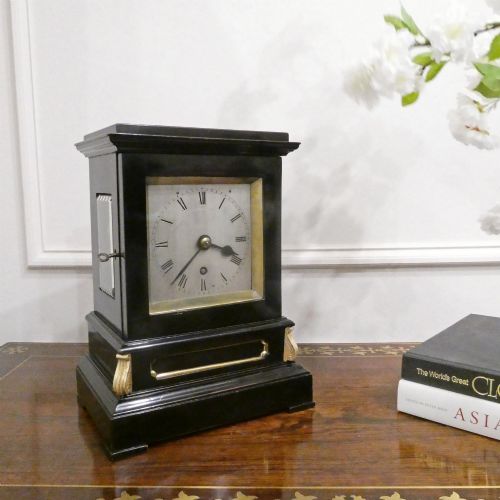
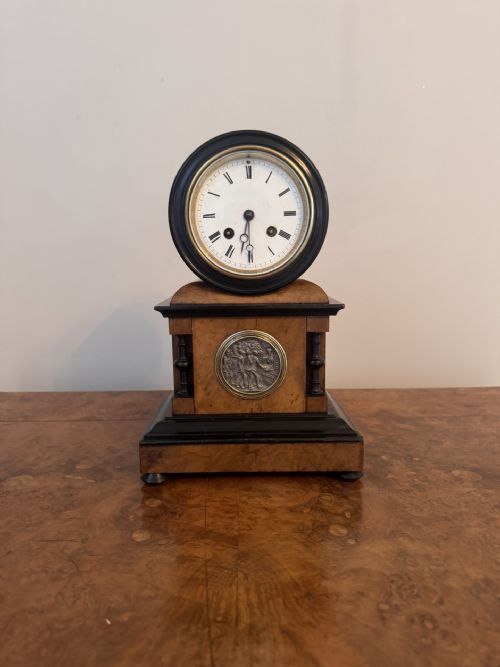
Casing construction relies heavily on native and imported timbers such as mahogany, oak, walnut, beech and ebonised wood, alongside cast brass and gilt brass for portable or architectural frames. Dial faces utilise white enamel or brushed metal marked with crisp numerals, protected behind bevelled or flat glass panels.
Internal movements depend on mechanical brass gear trains driven by weighted chains, pendulum swings or tightly wound mainsprings. Fusee mechanisms ensure even tension distribution across the gear train to maintain accurate timekeeping throughout the running cycle.
Listings feature brass, glass, enamel, mahogany, oak, gilt brass, walnut and iron across nineteenth century periods.
Evaluating the Movement and Case
Superior examples demonstrate refined finishing on internal brass plates and escapements, often bearing the signature of a known maker on the movement backplate or dial. The crispness of carved wooden details on Black Forest cases or the heavy casting quality of a brass gorge carriage clock frame directly indicate workshop standards.
Condition involves the integrity of the original dial enamel, the presence of matching components within the gear train, and the clarity of the timber grain on mahogany or oak wall dials. Dial clocks retain greater merit when their fusee chains and wooden surrounds remain unaltered from their period of origin.
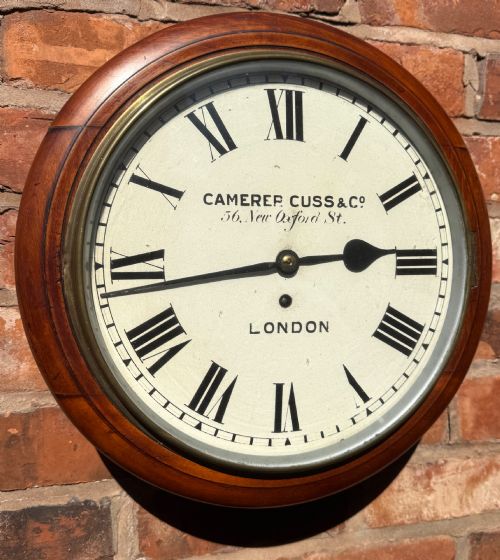
HENRI JACOT·Camerer Cuss And Co·H.A.C.·Brockbanks And Atkins·Goldsmiths Alliance Ltd·Mappin And Web·Drocourt Paris·C. Detouche Paris
The Victorian Mechanical Clock Glossary
- Fusee
- A conical pulley used with a cord or chain to maintain steady torque on the gear train as the mainspring unwinds. This mechanism compensates for the decreasing power of a relaxing spring.
- Carriage clock
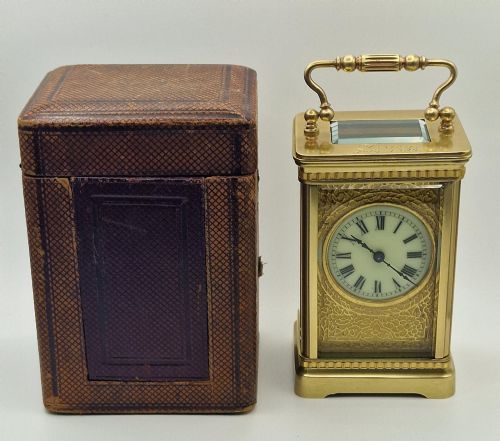
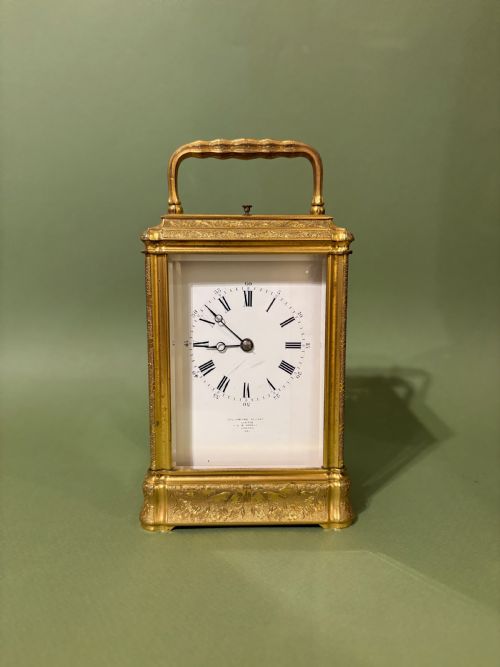
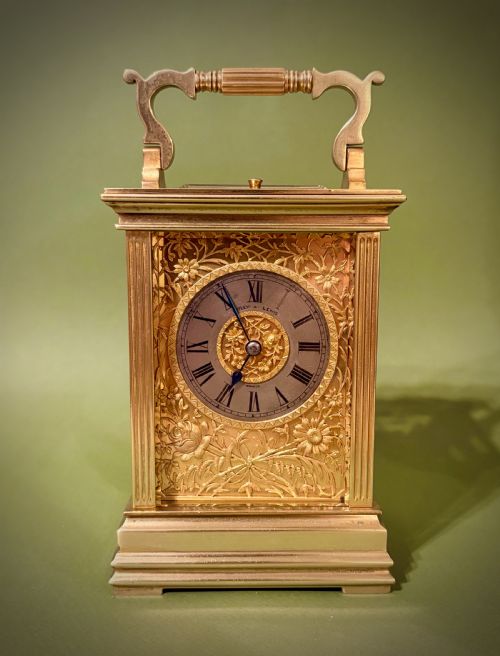
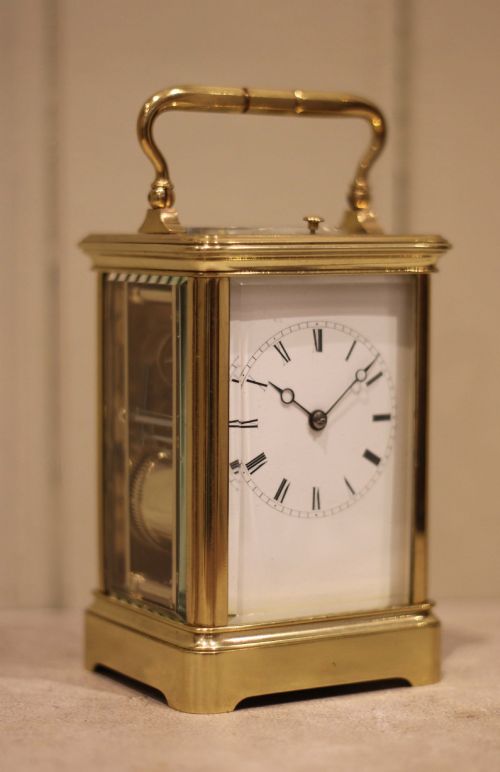
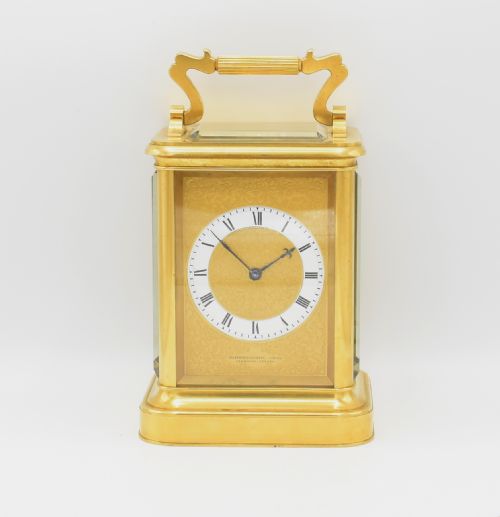
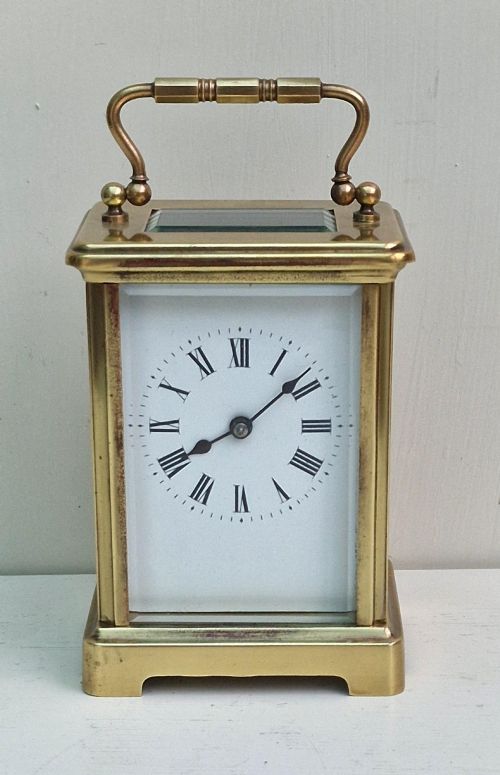
- A small, portable spring-driven timepiece designed for travel, typically fitted with a carrying handle and glass side panels to display the movement. They originated in France for officers and travellers.
- Dial clock
- A wall-mounted timepiece featuring a prominent circular face, frequently utilised in railway stations, offices and schools during the nineteenth century. They are commonly driven by a single fusee movement.
- Skeleton clock
- A timepiece with an exposed gear train held between openwork brass plates, allowing light to pass entirely through the movement. These pieces were often displayed beneath a glass dome on a wooden base.
- Gorge case
- A distinct stepped brass carriage clock housing style featuring a pillared rectangular frame and an overhead handle. The design provides structural rigidity while showcasing the interior mechanics.
Victorian Mechanical Clock: Frequently Asked Questions
How do fusee clocks work?
A fusee clock uses a spiralling conical pulley connected to the mainspring barrel by a fine brass chain. As the spring unwinds, the chain moves to a wider section of the cone to maintain consistent driving power.
This clever mechanical adjustment ensures the gear train receives even force from a full wind down to the final rotation, improving overall timekeeping accuracy.
Where were carriage clocks placed?
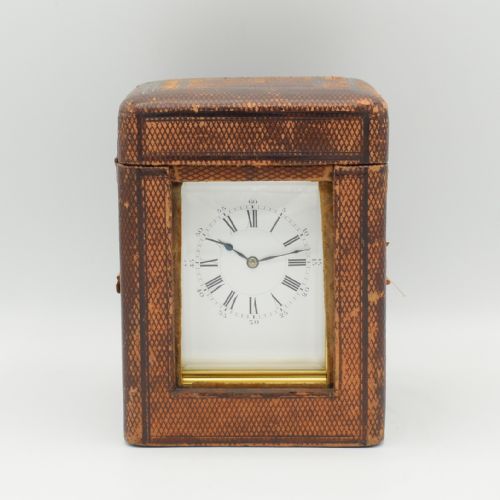
Carriage clocks were originally constructed as portable timepieces for travellers during the nineteenth century. Their sturdy brass frames and protective leather travel cases allowed them to be packed safely.
In domestic settings, owners placed them on mantelpieces, desks or bedside tables where their repeating strikes could be heard during the night.
How do I wind a mechanical clock?
Winding requires a matching key inserted into the winding squares on the dial face to tension the mainspring or pull up the driving weights. Care must be taken not to overwind the movement past its natural stop.
Most eight-day or fourteen-day movements need attention at regular weekly or fortnightly intervals to keep the pendulum swinging and the strike train functioning.
What is a skeleton clock?
A skeleton clock exposes its brass wheels, levers and escapement between openwork metal plates rather than hiding them behind a solid dial. This design displays the complete mechanical action of the gear train.
These pieces were typically mounted on a plinth and protected by a blown glass dome to keep dust away from the delicate exposed mechanism.