





Victorian Marquetry Games Table
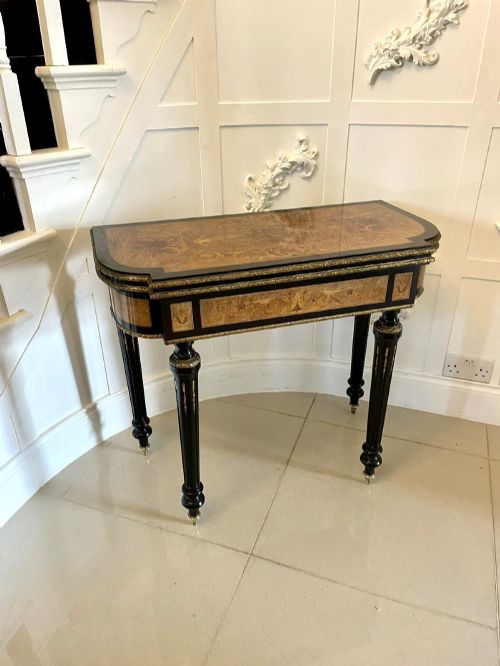
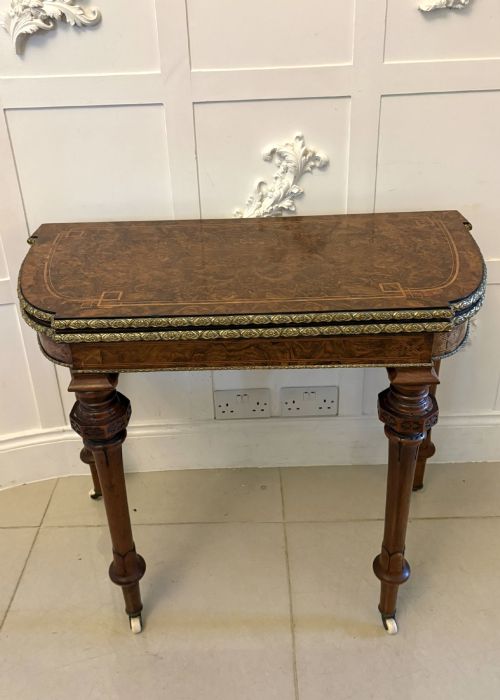
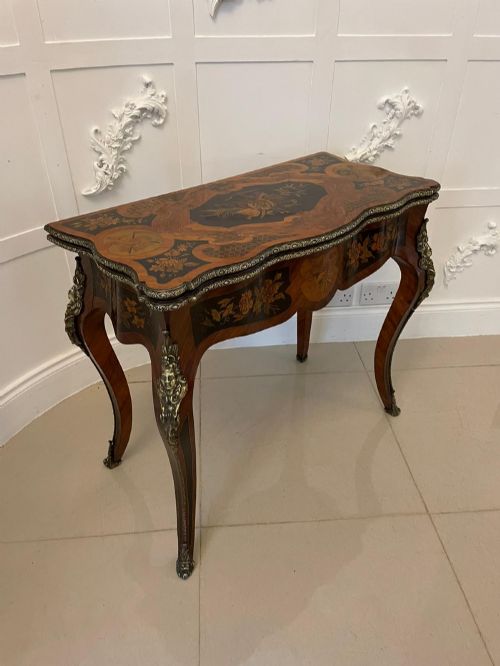
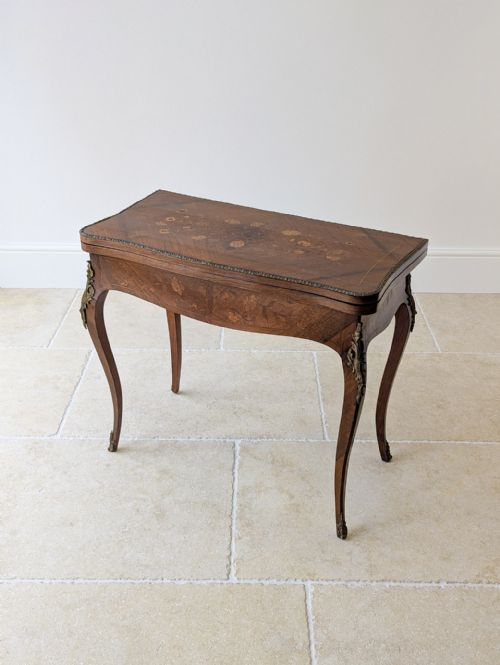
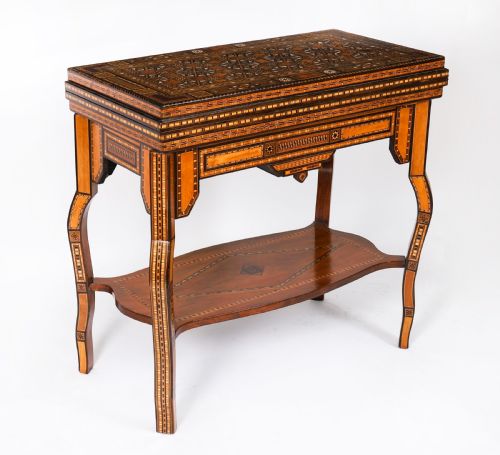
A victorian marquetry games table brings intricate floral and geometric wood inlay together with a folding or pivoting top designed for card playing.
Victorian Marquetry Games Table
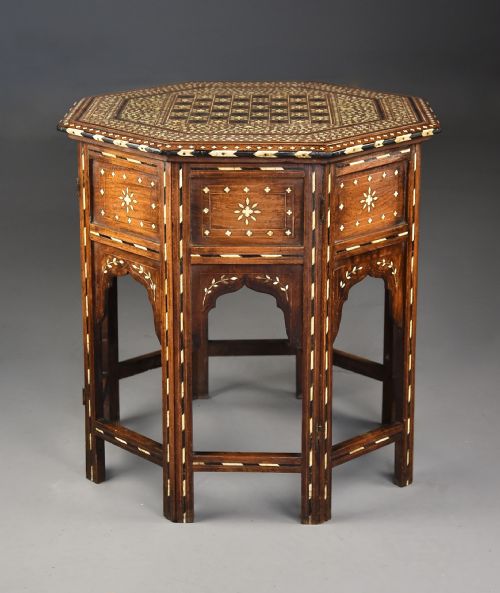
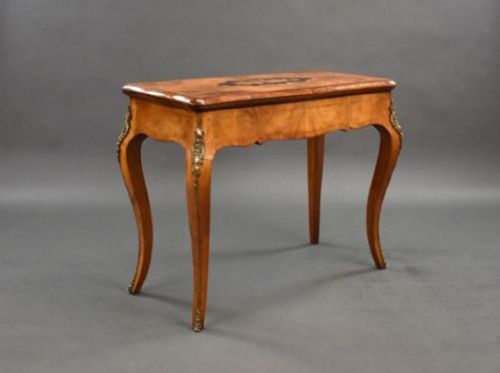
A victorian marquetry games table combines domestic utility with elaborate surface decoration, appearing most frequently as a fold-over card table or a multi-functional sewing and work table. These pieces date from the nineteenth century, spanning decades from eighteen fifty to nineteen hundred, and often employ walnut or burr walnut as a primary timber.
The buyer encounters several distinct configurations among these listings, including swivel-top card tables, envelope tables with folding triangular flaps, and combination chess or backgammon surfaces. Many examples adopt French revival styles, incorporating curved cabriole legs and serpentine edges alongside traditional British cabinet-making forms.
Materials and construction
Cabinet-makers constructed the carcase using solid timbers such as mahogany, walnut, or rosewood, upon which they laid decorative veneers of burr walnut, kingwood, tulipwood, and satinwood. Marquetry panels were assembled by cutting contrasting wood veneers together to form floral, geometric, or pictorial motifs before pressing them into the primary surface.
Metal mounts in brass or ormolu frequently accent the corners, edges, and cabriole legs, adding structural protection and visual weight to the design. Folding mechanism hinges and interior compartments utilise precision brass hardware concealed within the framework of the table.
Victorian Marquetry Games Table Retail Price Guide 2026
Typical asking prices for victorian marquetry games table among the pieces listed under this phrase on Sellingantiques today, from the lower quarter to the upper quarter. They describe what is for sale here now, not the wider market.
The listings demonstrate a strong preference for burr walnut timber combined with floral marquetry inlay across nineteenth-century games tables.
Factors of distinction
Quality rests primarily upon the precision and complexity of the wood inlay, where tighter floral execution and greater variety of exotic timbers elevate a piece above simpler linear banding. The choice of primary timber also distinguishes standard production from finer work, with burr walnut and figured rosewood commanding greater visual depth.
Structural integrity of the folding mechanism and the grain alignment across the fold-over top demonstrate the skill of the original workshop. Finer examples display meticulous attention to internal fitted compartments for sewing or gaming equipment, maintaining harmonious proportions whether opened for play or closed as a console.
Maple & Co.·Edwards & Roberts
The Victorian Marquetry Games Table Glossary
- Marquetry
- A decorative technique where small pieces of contrasting veneer are assembled into pictorial or geometric patterns on a wooden ground.
- Burr walnut
- A prized wood harvested from walnut tree growths, characterised by swirling, knotty grain patterns that create rich optical movement.
- Ormolu
- Gilded bronze ornamentation cast and chased to mount upon furniture corners, aprons, and legs during the nineteenth century.
- Envelope table
- A card table featuring four triangular flaps that pivot open diagonally to reveal a baize-lined playing surface.
- Cross banding
- A decorative border of veneer laid with the grain running perpendicular to the central panel.
Victorian Marquetry Games Table: Frequently Asked Questions
What games were played on these tables?
These tables accommodated card games such as whist and cribbage, alongside chess and backgammon played on reversible or inlaid boards. Many incorporated hidden compartments for storing playing pieces, counters, and dice.
Interior wells often doubled as sewing or work spaces, holding wools and tools beneath the removable game boards or folding lids.
How do I identify the wood types?
Walnut and burr walnut dominate these listings, displaying rich brown tones with distinctive swirling grain knots. Rosewood offers a darker, heavier appearance with prominent reddish-brown streaks.
Exotic secondary veneers like kingwood, tulipwood, and satinwood provide contrasting colour and grain for the marquetry panels and border banding.
Are these tables sturdy enough for daily use?
Most examples were built for active domestic service, utilising robust internal framing and folding hinges designed to support regular weight. The pivoting mechanisms on swivel-top and fold-over designs remain functional when handled with care.
Placing the table away from direct heat sources prevents the wood veneers from drying and lifting over time.
How can I date a nineteenth century piece?
Dating relies upon stylistic markers, construction methods, and the specific revival tastes popular during the period. Mid-century examples often favour robust walnut frames with ormolu mounts, while later nineteenth century pieces frequently adopt lighter rosewood or envelope designs.
Cabinet-maker stamps and trade labels, when present, offer precise attribution to workshops active between eighteen fifty and nineteen hundred.