



Victorian Marble Top Washstand
A victorian marble top washstand brings heavy stone and rich timber together for a practical bedroom centrepiece.
Victorian Marble Top Washstand
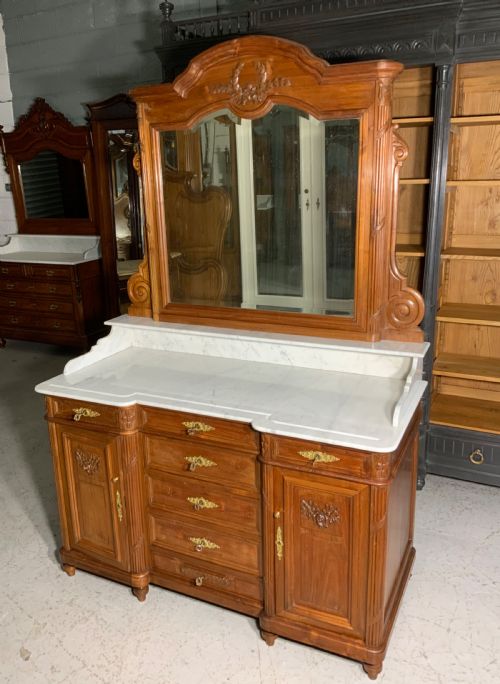
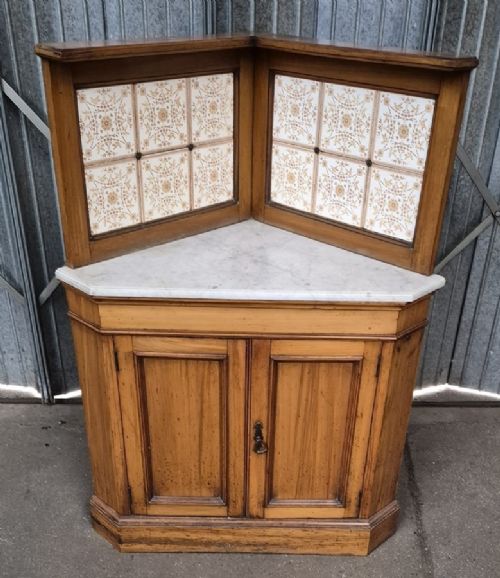
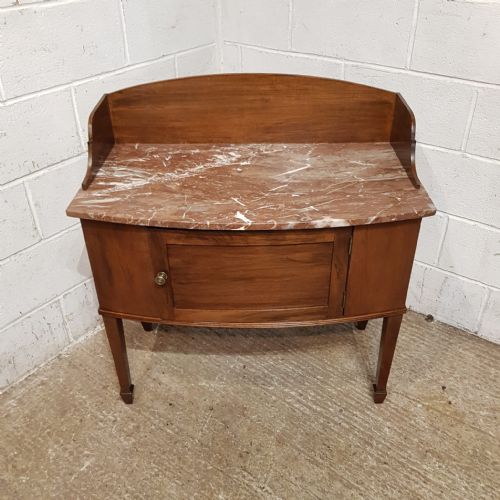
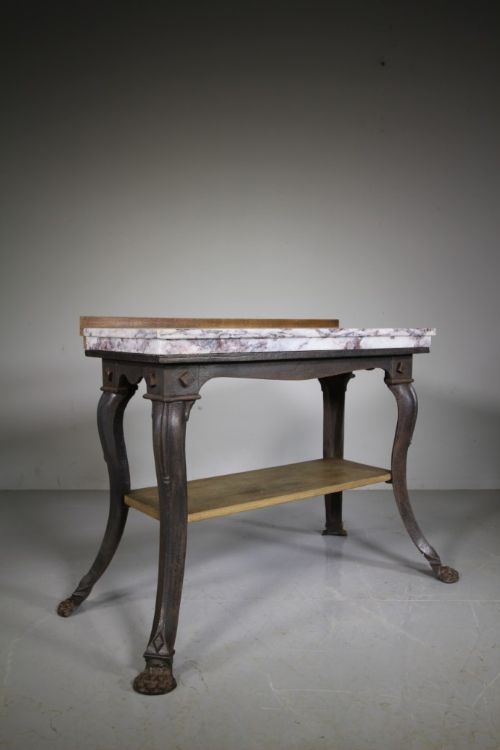
A victorian marble top washstand is a solid bedroom furnishing built to hold basins and jugs before plumbed bathrooms became standard. These pieces emerge chiefly from the nineteenth century and the Edwardian era, spanning simple pine frames to elaborate walnut or mahogany cabinetry. The typical survival on this page takes the form of a low timber cabinet topped with thick stone and frequently finished with a tiled upstand or low gallery.
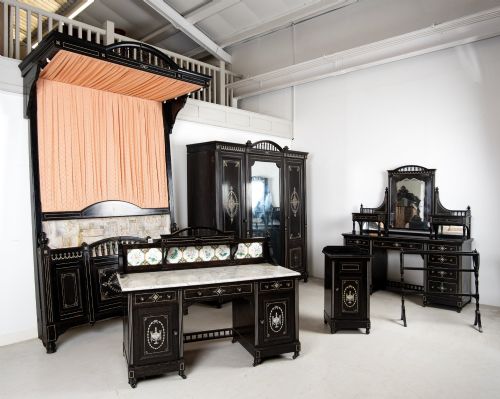
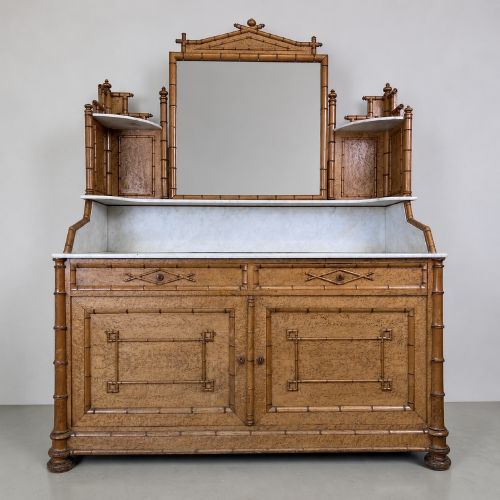
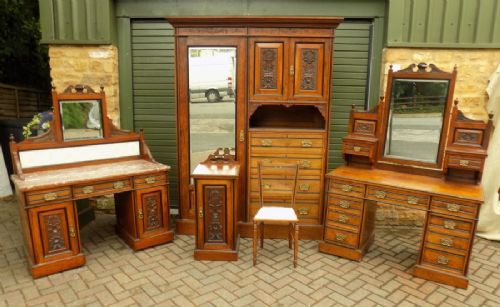
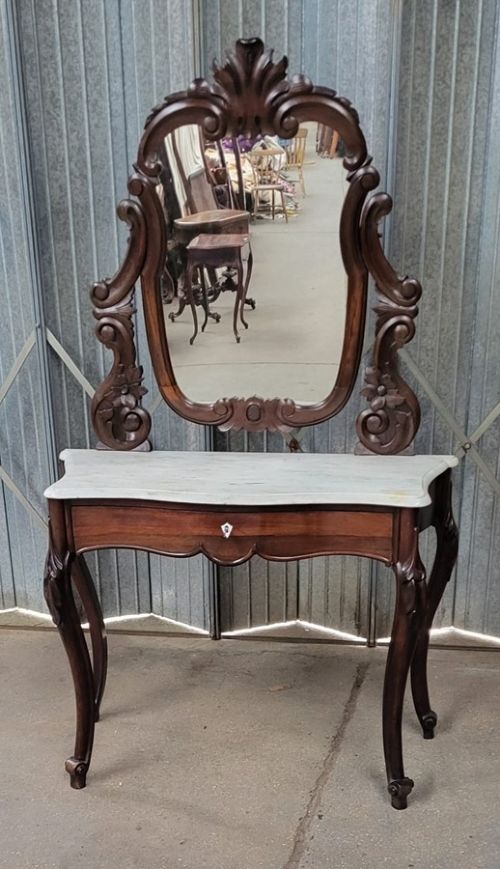
Makers adapted the form to various room sizes, producing bow-fronted designs, corner units, and larger duchess washstands that combined dressing table surfaces with washing facilities. Alongside standard English walnut and mahogany examples, buyers encounter French influences such as faux-bamboo maple and ebonised aesthetic movement frames. These variations show how a utilitarian bedroom necessity evolved into decorative furniture.
Materials and Construction
Carpenters constructed the carcases using dense timbers like mahogany, walnut, ash, satinbirch, and pine, often adding marquetry inlay, ebonising, or painted grain finishes. Heavy marble slabs, ranging from white utility stone to rouge and coloured varieties, were fitted directly to the upper surface to withstand daily splashing and heavy use. Many pieces integrate ceramic tiles along the backstand, sometimes featuring maker patterns from factories like Minton.
Structural integrity relied on dovetailed drawer construction, sturdy turned or fluted legs, and sometimes iron or brass fittings. French workshops favoured exotic woods such as bird's-eye maple alongside faux-bamboo turnings, while English makers leaned towards figured walnut and solid mahogany with tiled splashbacks.
Listings feature woods spanning mahogany, walnut, ash, satinbirch, and pine alongside marble, brass, glass, and ceramic tiles.
Quality and Craftsmanship
The distinction between standard utility pieces and top-tier examples rests upon the selection of timber figures and the thickness of the marble. Superior pieces utilise finely matched burr walnut, elaborate floral marquetry, or detailed satinwood inlay rather than plain painted pine. The complexity of the cabinetry, such as bow fronts or integrated tiled backs with maker attributions, marks out superior workshops.
The quality of the marble slab and its edge profiling also determine the grade of the washstand. Finer counters feature thick, well-veined stone accurately fitted to the wooden frame without excessive gaps, paired with heavy brass or ceramic hardware.
Walker & Sons·Maples and Co·Gillows·Minton
The Victorian Marble Top Washstand Glossary
- Gallery
- A raised wooden border around the back and sides of the marble top designed to prevent items from sliding off. This feature often incorporates decorative spindle work or tiled panels.
- Upstand
- A vertical backsplash rising behind the marble surface, frequently inset with decorative ceramic tiles to protect the wall from water splashes. These tiles sometimes bear specific Victorian registry marks.
- Duchess Washstand
- A grander hybrid furniture form combining the washing facilities of a standard washstand with the mirrors and surfaces of a dressing table. These typically feature extensive mahogany or walnut framing.
- Faux-Bamboo
- A decorative technique where hardwood is carved or turned to imitate the segmented joints of bamboo stalks. This style gained popularity during the aesthetic movement and French-influenced periods.
- Marquetry
- The art of applying fitted pieces of wood veneer to a structure to form decorative patterns and floral designs. High-end Victorian cabinets often display complex multi-wood marquetry on the drawer fronts.
Victorian Marble Top Washstand: Frequently Asked Questions
What was a washstand used for?
These items served as the primary washing station in bedrooms before running water was installed. They held a large ceramic basin, a matching water jug, and soap dishes on the stone surface.
Beneath the marble top, enclosed cupboards or drawers stored chamber pots, towels, and personal hygiene items out of sight.
Will modern bathrooms fit them?
Many buyers repurpose these cabinets as vanity units by mounting modern basins and plumbing through the wooden top. The sealed stone surface naturally resists water splashes, making it practical for contemporary spaces.
Plumbers may need to adjust internal shelf space or drawer backs to accommodate modern waste pipes.
How do I date a piece?
Dating relies on identifying timber choices, construction methods, and stylistic movements like the aesthetic movement or Edwardian revival. Earlier nineteenth-century examples often feature solid mahogany and simpler turning, while later pieces introduce extensive tiled galleries and exotic veneers.
Cabinetmaker stamps, registry marks on tiles, and drawer dovetail regularity provide further chronological clues.