
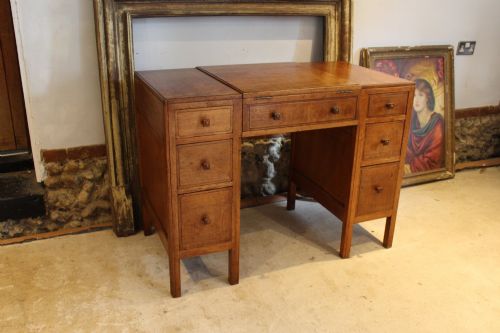

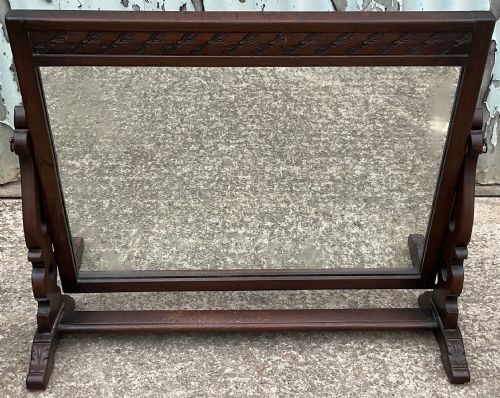


Arts and Crafts Vanity Table
An arts and crafts vanity table brings honest timber, simple form and careful handcraft into the bedroom.
Arts and Crafts Vanity Table
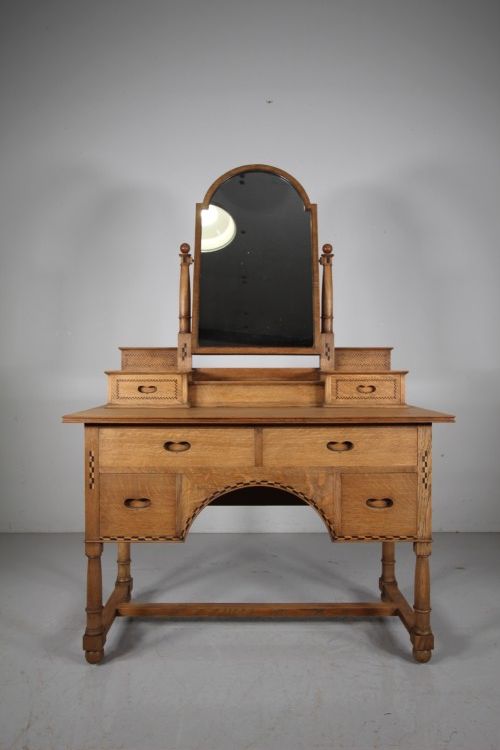
An arts and crafts vanity table encompasses dressing tables, dressing chests, and washstands designed to emphasise utility and natural materials. These pieces emerge primarily from the late nineteenth century through the early decades of the twentieth century, with Edwardian examples appearing frequently.
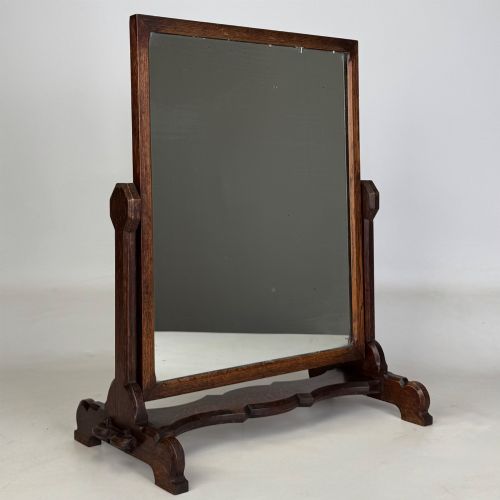
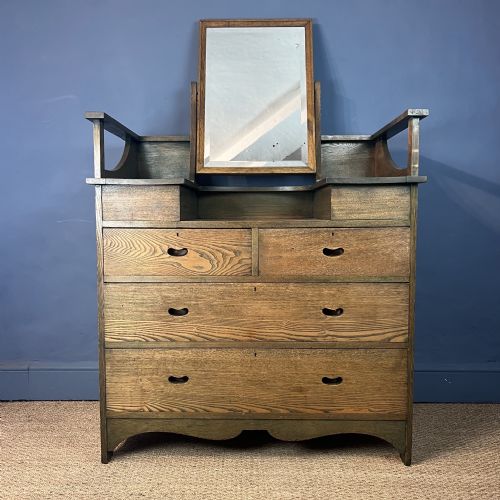
Forms range from compact dressing mirrors and toilet mirrors to substantial dressing chests fitted with swing mirrors and matching stools. Oak predominates as the material of choice, often complemented by ash, mahogany, and marble.
Regional British craftsmanship shines through various stylistic interpretations, spanning the Cotswold School, Art Nouveau accents, and straightforward utilitarian constructions. Each piece serves daily domestic routines while maintaining the architectural integrity characteristic of the movement.
Materials and construction
Makers constructed these pieces predominantly using solid oak and ash, valuing the natural grain and strength of homegrown timber over veneered surfaces. Joinery relied on exposed dovetails, pegged joints, and straightforward construction methods that celebrated structural honesty.
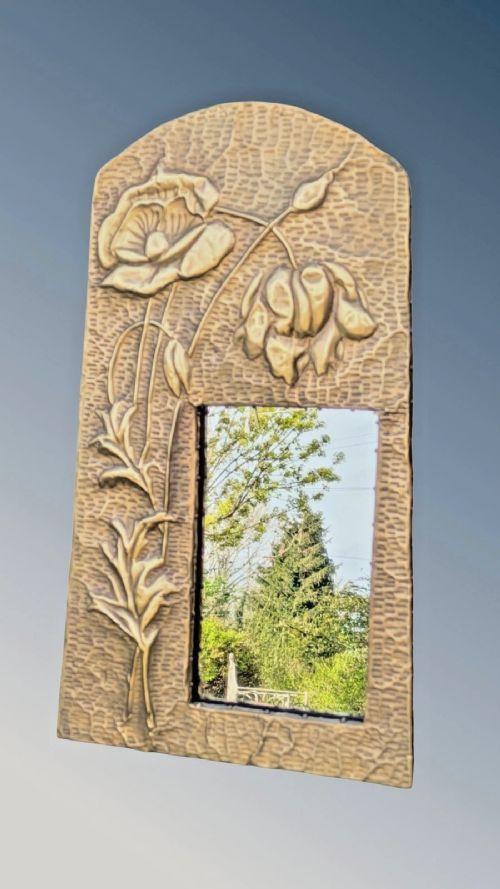
Metalwork played a defining role, with brass, iron, and silvered copper utilised for hinges, handles, and repoussé mirror frames. Details such as wood inlay, marquetry, and stylised botanical motifs added restrained ornament without obscuring the functional form.
Listings feature pieces spanning the late Victorian period, Edwardian era, and the 1930s, constructed primarily in oak, ash, and mahogany with brass and marble accents.
Distinctions in craftsmanship
The degree of hand-finishing and the integrity of the timber selection set exceptional pieces apart from standard workshop production. Maker attribution, through labels, stamps, or distinctive design characteristics, elevates the standing of a dressing chest.
Proportion and the integration of hardware reveal the maker's skill. Superior examples balance substantial oak frames with refined touches like bevel-edged mirrors and hand-hammered copper details.
George Walton·Heal and Sons·Shapland and Petter·Wright and Hunter of Belfast·Harris Lebus·J Shoolbred
The Arts and Crafts Vanity Table Glossary
- Dressing chest
- A piece of furniture combining drawers for storage with an attached or adjustable mirror for grooming. These items often form the centrepiece of an arts and crafts bedroom suite.
- Repoussé
- A metalworking technique where the metal is hammered from the reverse side to form a raised design in relief. This method frequently appears on brass and copper mirror frames.
- Cotswold School
- A late nineteenth and twentieth-century design movement centred on traditional hand-tooling and vernacular furniture making. Pieces from this tradition display unpretentious construction and visible craftsmanship.
- Marquetry
- The art of applying pieces of veneer to a structure to form decorative patterns and pictures. Makers utilised this technique sparingly on oak surfaces to add subtle visual interest.
- Washstand
- A wooden stand designed to hold a basin and jug for washing, often topped with marble. Many share the structural characteristics and materials of contemporary dressing tables.
Arts and Crafts Vanity Table: Frequently Asked Questions
What is an arts and crafts vanity table?
It is a dressing table, chest, or stand created during the late nineteenth or early twentieth century under the influence of the Arts and Crafts movement. These pieces prioritise solid oak construction and utility over excessive ornamentation.
They often include adjustable mirrors, dovetailed drawers, and metal fittings made from brass or copper.
How do I identify the period?
Look for construction markers such as pegged mortise and tenon joints, hand-hammered metalwork, and labels or stamps from known makers. The use of quarter-sawn oak and minimal, honest decoration points directly to the Edwardian era and the early twentieth century.
Design influences like Art Nouveau motifs or Cotswold School simplicity further help date the piece accurately.
Were these tables used with matching stools?
Many dressing chests and tables were accompanied by dedicated oak or ash stools, sometimes featuring upholstered seats or piano stool configurations. These seating options shared the timber and design language of the main vanity table.
Complete sets including a washstand and matching chest also exist within the period production.
How do I care for oak and brass furniture?
Maintain the wood by applying natural beeswax periodically to nourish the grain and protect the surface from moisture. Avoid placing the furniture in direct sunlight or near heat sources to prevent the timber from splitting.
Clean brass and copper elements gently with a soft cloth without using harsh chemical polishes that strip the aged patina.