



Victorian Map Chest Drawers
These Victorian map chest drawers offer exceptional utility and deep timber warmth, built to house large documents and precious specimens.
Victorian Map Chest Drawers
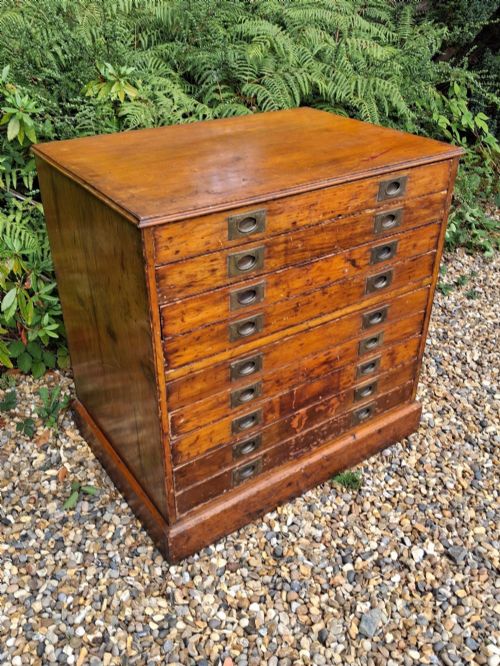
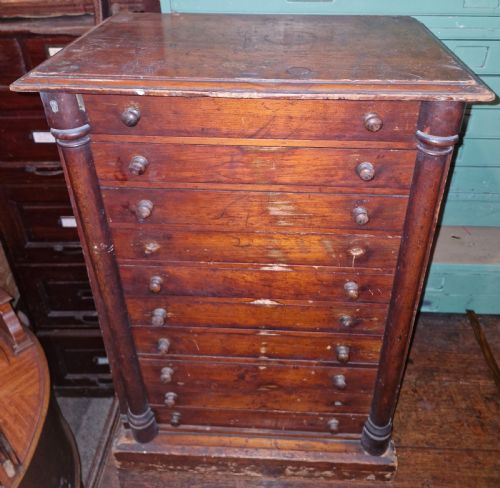
Victorian map chest drawers and related collectors cabinets survive in several specific forms from the nineteenth century. Buyers searching for victorian map chest drawers encounter multi-drawer formats including specimen chests, artists chests, and tall filing cabinets. These pieces originate from the Victorian period, spanning the mid nineteenth century through to around nineteen hundred.
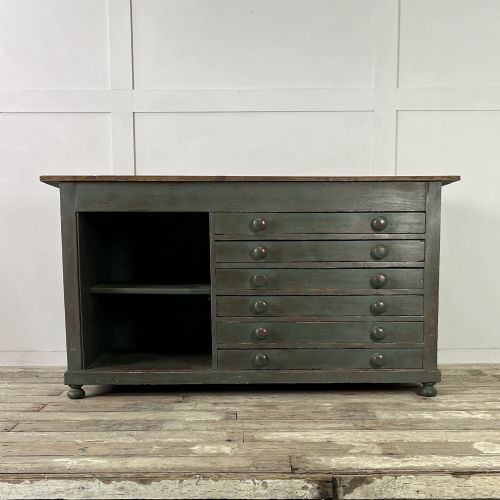
The primary forms utilise numerous shallow or deep drawers designed for organising flat paper, drawings, or small scientific samples. Workshops constructed these items from utilitarian softwoods like deal and pine alongside richer cabinet timbers such as mahogany, red walnut, fruitwood, and satinwood. Specific examples emerge in Arts and Crafts variations alongside standard Victorian utility designs.
Construction and Materials
Cabinet makers relied heavily on solid timber construction using pine and deal for structural carcases and internal drawer linings. Exterior surfaces frequently displayed figured hardwoods like mahogany, red walnut, fruitwood, and satinwood, occasionally enhanced with painted finishes or polished treatments.
Hardware played a functional role in daily operation, incorporating brass handles, label holders, and metal fixtures to secure numerous shallow compartments. Joinery techniques ensured smooth sliding action across banks of multiple drawers without modern mechanical runners.
Victorian Map Chest Drawers Retail Price Guide 2026
Typical asking prices for victorian map chest drawers among the pieces listed under this phrase on Sellingantiques today, from the lower quarter to the upper quarter. They describe what is for sale here now, not the wider market.
Some forty-drawer cabinets required an entire regiment of butterflies or maps to keep them properly occupied.
Judging Quality
Superior examples demonstrate refined timber selection, such as richly grained English burr walnut or carefully matched mahogany veneers over robust carcases. The choice of secondary woods inside the drawers and the crispness of the dovetail joints indicate the tier of the workshop that produced the cabinet.
Hardware integrity and original brass pulls elevate a piece, while simpler painted deal or utilitarian pine chests represent a more straightforward, functional standard. The overall proportion and the complexity of the multi-drawer configuration distinguish standard commercial items from master cabinet work.
Standish·Maple and Co·Holland and Sons
The Victorian Map Chest Drawers Glossary
- Specimen chest
- A multi-drawer cabinet originally built to store natural history samples, coins, or botanical specimens in shallow compartments.
- Deal
- A traditional British term for softwood timber, typically pine or fir, commonly used for secondary carcase work and utilitarian furniture.
- Red walnut
- An American or European hardwood displaying a reddish-brown tone, utilised by nineteenth-century cabinet makers for dense, durable drawer construction.
- Satinwood
- A pale, lustrous exotic timber known for a reflective grain pattern, often employed on high-grade Victorian cabinetwork.
- Arts and Crafts
- A design movement valuing visible construction, honest materials, and simpler handcrafted aesthetics over mass-produced ornamentation.
Victorian Map Chest Drawers: Frequently Asked Questions
What were map chests originally used for?
These multi-drawer cabinets served primarily in offices, studies, and studios to store oversized maps, architectural plans, and delicate documents flat.
Their shallow drawer depth prevented paper from curling or sustaining damage during daily archival retrieval.
How do I care for a nineteenth-century timber cabinet?
Keep wooden furniture away from direct heat sources and sudden humidity fluctuations to prevent veneer lifting or timber splitting.
Apply a traditional beeswax polish sparingly to maintain the lustre of mahogany, walnut, and pine surfaces.
Can I use a specimen chest for modern storage?
The numerous shallow drawers make these cabinets ideal for organising modern stationery, art supplies, jewellery, or collections.
Their sturdy nineteenth-century construction handles everyday domestic use reliably when placed on a level floor.
How do I distinguish between pine and hardwood versions?
Pine and deal chests often feature painted or stained surfaces designed for utilitarian workspaces, showing a softer grain structure.
Hardwood versions display distinct natural figuring in timbers like mahogany or walnut, reflecting higher workshop status.