


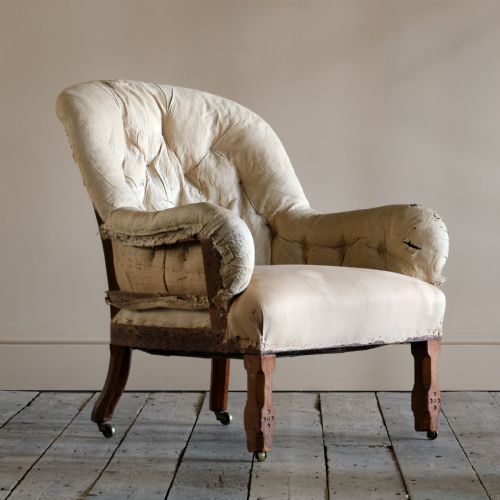

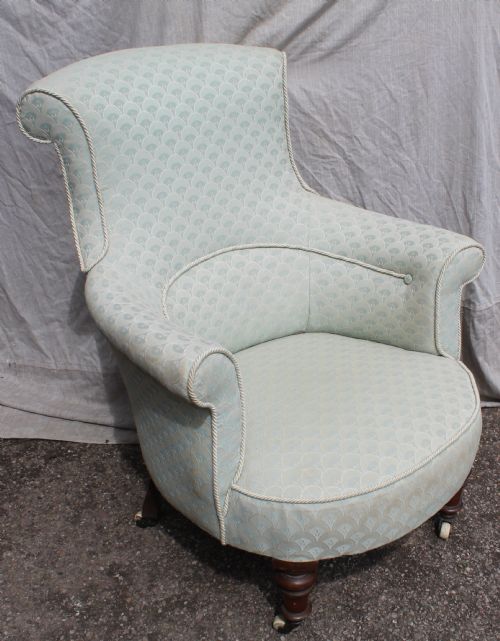
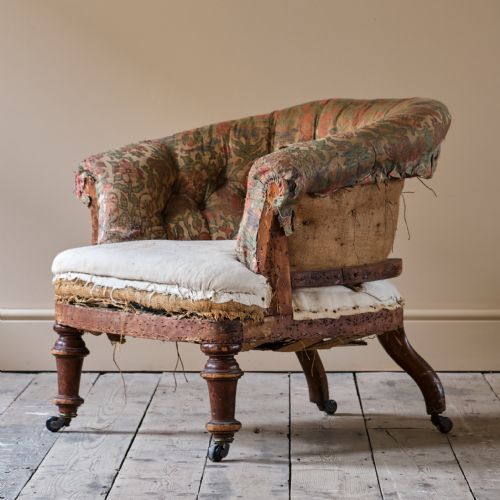


Victorian Mahogany Tub Chair
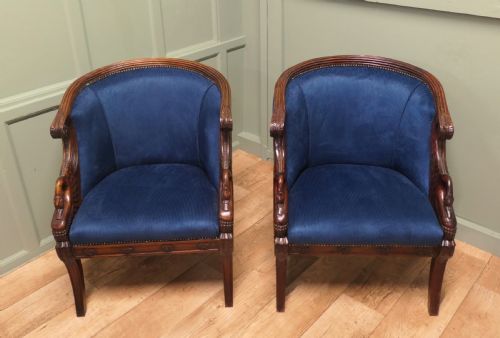
A victorian mahogany tub chair offers enveloping comfort, combining dense timber with curved backrests designed for sitting by the hearth or at a desk.
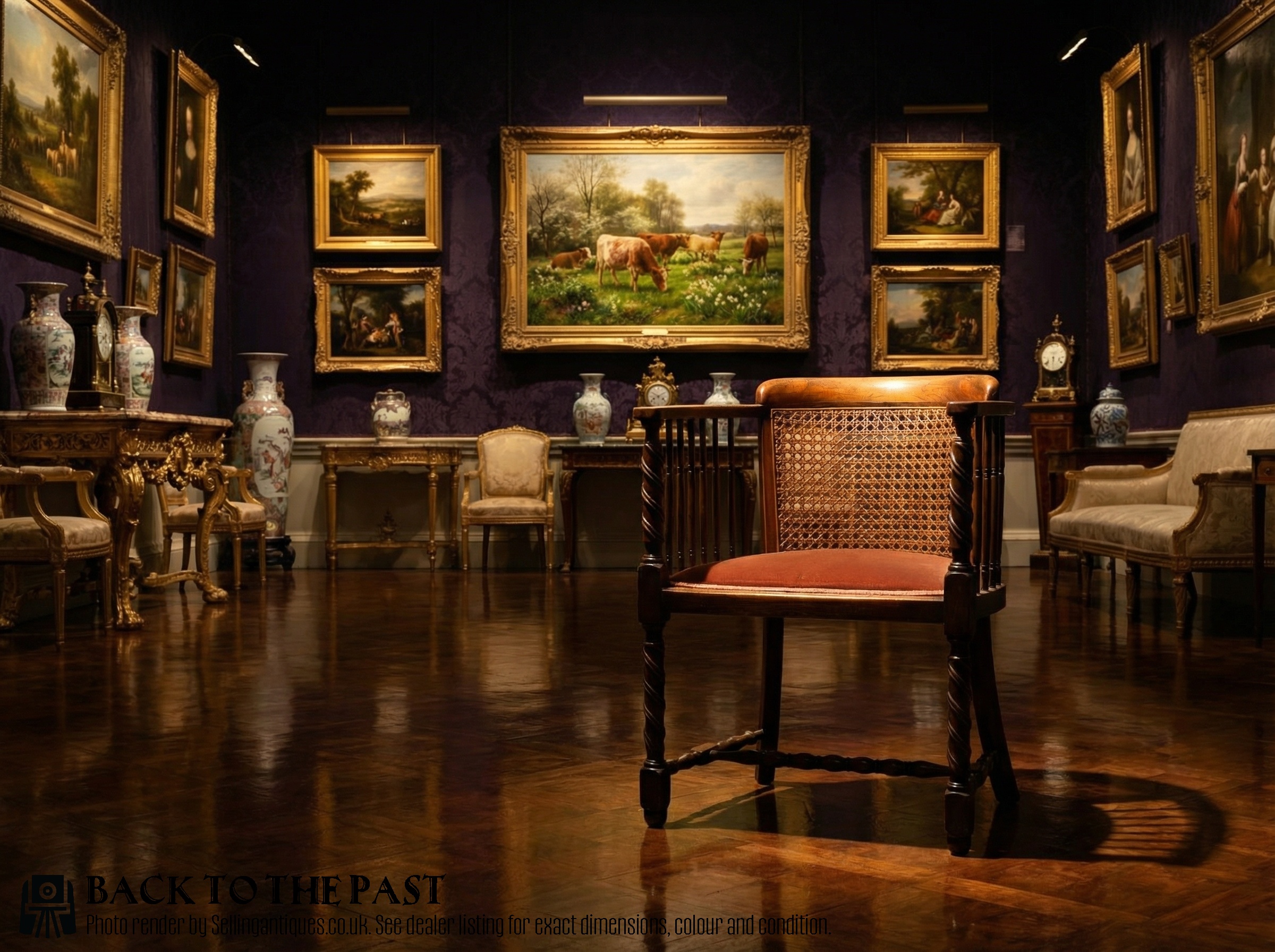
Victorian Mahogany Tub Chair
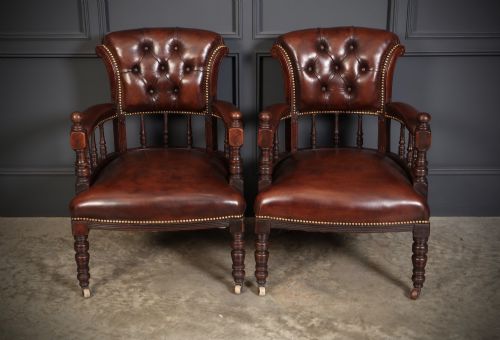
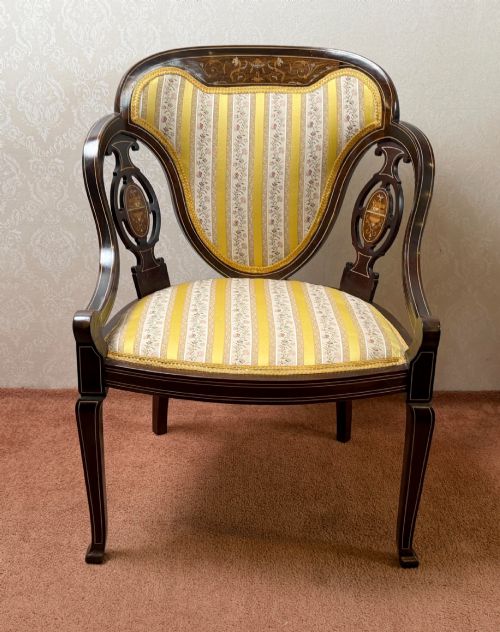
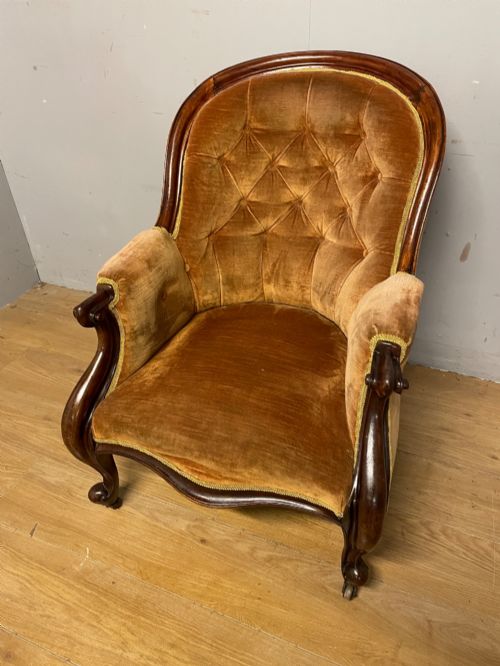
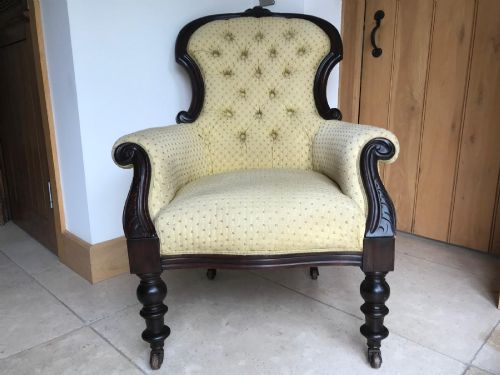
The versions most commonly found here date from the mid-nineteenth century through to the Edwardian period, often incorporating stylistic touches such as Sheraton Revival inlay, Aesthetic Movement lines, or deep buttoned upholstery.
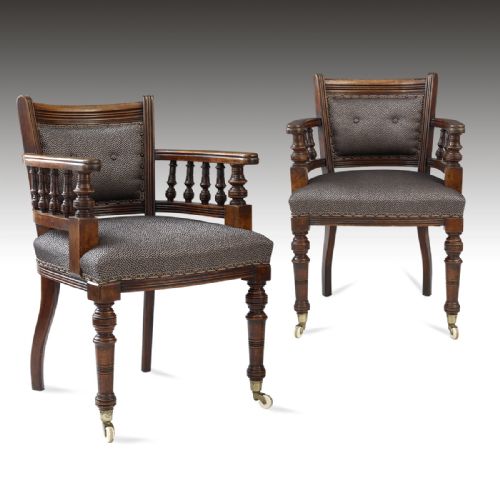
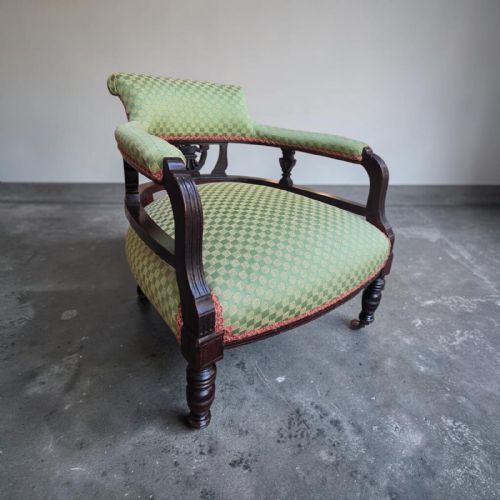
Makers adapted the form for specific tasks, producing sturdy office chairs with brass castors alongside elegant ladies' salon chairs upholstered in velvet, leather, or patterned fabric.
How They Were Made
Frames are constructed predominantly from solid mahogany, frequently bent or curved to form the signature horseshoe or tub backrest, sometimes supported by slender turned legs or additional strengthening stretchers.
Upholstery techniques varied by function, utilising horsehair stuffing, springs, and buttoning beneath coverings of leather, cotton, or heavy velvet, secured with brass tacks.
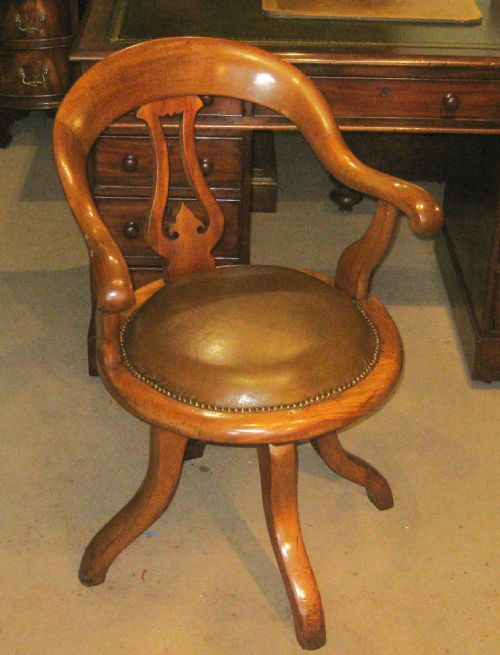
Hardware such as brass castors and swivel mechanisms appear frequently on desk and library variants to facilitate movement across study floors.
Victorian Mahogany Tub Chair Retail Price Guide 2026
Typical asking prices for victorian mahogany tub chair among the pieces listed under this phrase on Sellingantiques today, from the lower quarter to the upper quarter. They describe what is for sale here now, not the wider market.
Some nineteenth-century examples feature an unusual fifth leg added centrally beneath the seat to support enthusiastic Victorian desk-writers.
What Varies in Quality
Quality rests upon the integrity of the timber frame and the finesse of the joinery where the curved back rail meets the seat supports. Superior examples display carefully selected grain patterns and robust construction that withstands the lateral stresses inherent in the curved design.
The execution of secondary details distinguishes finer pieces, such as crisp hand-carving, subtle marquetry inlay, or branded stamps from notable cabinet makers and retailers. The quality of the original leather hides or period textile coverings also marks the distinction between standard domestic seating and high-end commissioned pieces.
Gillows·Harrods London·Jenks and Wood·Hampton and Sons·Cope and Collinson
The Victorian Mahogany Tub Chair Glossary
- Tub chair
- An armchair featuring a continuous curved back and arms forming a single enclosing enclosure. This shape provides substantial lateral support and warmth.
- Captain's chair
- A sturdy revolving or fixed desk armchair with a rounded low back. These often incorporate leather upholstery and brass castors for office use.
- Bergere
- An upholstered wooden armchair with enclosed cane work sides and back panels. The technique introduces lighter visual weight to heavy timber frames.
- Button-back
- An upholstery method where depressions are formed in the padding by stitches pulled tight and secured with buttons. This secures the internal stuffing and creates a textured geometric pattern.
- Show wood
- Polished timber framework left exposed around the upholstered elements of a seat. It highlights the quality and grain of the mahogany.
Victorian Mahogany Tub Chair: Frequently Asked Questions
What is a tub chair?
A tub chair is an upholstered seat characterised by a low, rounded backrest that flows directly into the arms, creating a protective, curved profile.
Originally designed to keep draughts away from the sitter, the form remained popular throughout the nineteenth century for both studies and sitting rooms.
How do I date a mahogany chair?
Dating relies on observing changes in timber colour, secondary woods, hardware like castors, and stylistic details such as inlaid decoration or buttoning.
Mid-century examples tend to feature heavier mahogany frames, while later pieces from the end of the century often show lighter Sheraton Revival influences or inlaid panels.
Were these chairs used at desks?
Many nineteenth-century variants were specifically built for writing tables, featuring swivel mechanisms, brass castors, and leather upholstery.
These office versions allowed lawyers, scholars, and merchants to turn easily between desks and bookshelves while remaining supported.
What is the difference between a gents and ladies chair?
Gentlemen's chairs were typically constructed with broader proportions, firmer padding, and higher backs to accommodate male sitters.
Ladies' chairs, often called nursing or salon chairs, were built lower to the ground with smaller frames to suit the fashions and domestic habits of the period.