


Victorian Mahogany Secretary Desk
A Victorian mahogany secretary desk combines handsome timber with hidden writing compartments, offering a practical workspace for modern writing and storage.
Victorian Mahogany Secretary Desk
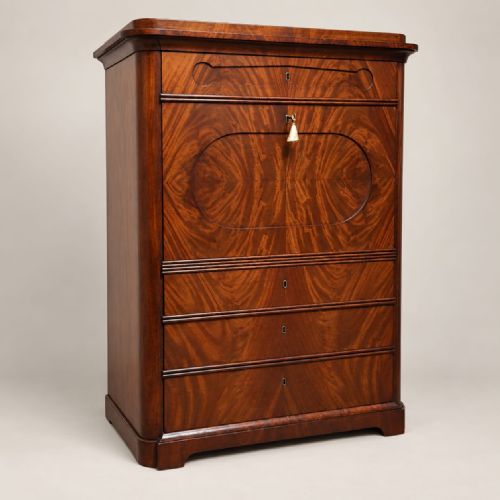
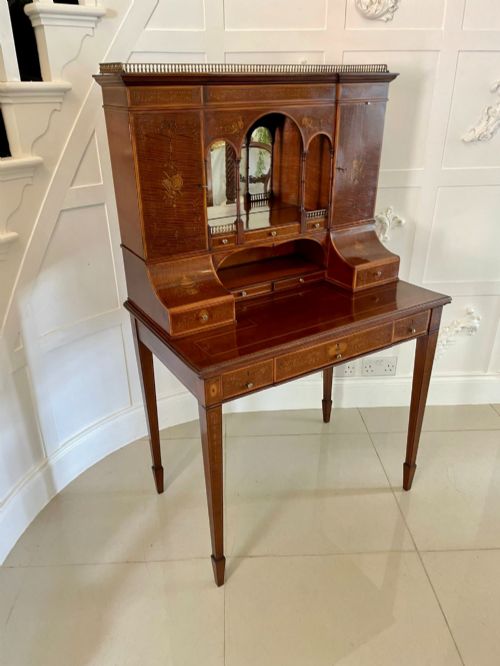
A victorian mahogany secretary desk encompasses large secretaire bookcases, cylinder desks, and smaller writing cabinets built across the nineteenth century. The most common format on this page is the tall glazed secretaire bookcase, featuring a fitted drop-front writing drawer above lower shelving or cupboards.
Makers utilised rich timber grains to create imposing library pieces alongside compact Davenport and cylinder forms. These items served functional domestic roles for correspondence and record-keeping in nineteenth-century homes.
Construction and Materials
Solid timber and flame mahogany veneer provide the primary exterior surfaces, often enhanced with satinwood inlay or brass hardware. Structural carcases rely on secondary timbers whilst interiors feature pigeonholes and small drawers arranged around a baize or leather writing surface.
Glazed upper bookcase doors utilise timber framing to protect collections of books, while specialised mechanisms control locking flaps and cylinder rolls. Secondary materials such as glass, walnut, and rosewood appear selectively across various regional workshops.
Listings feature items spanning the Victorian, Regency, Georgian, and Edwardian periods, constructed primarily in mahogany with brass, glass, and leather.
Assessing Craftsmanship and Detail
The sophistication of internal drawer arrangements and the matching of veneer grain across large drawer fronts distinguish finer examples. Superior execution shows in the precision of inlaid details, dovetail joinery, and the smooth operation of internal mechanisms.
Proportion and architectural detailing also dictate the standing of a piece, with restrained classical lines or crisp carving separating standard workshop output from exceptional cabinet work.
Edwards and Roberts·Druce and Co
The Victorian Mahogany Secretary Desk Glossary
- Secretaire
- A desk or chest of drawers containing a fitted writing drawer with a drop-front. This clever hybrid allows a tall bookcase or chest to double as a writing surface without sacrificing storage capacity.
- Cylinder desk
- A writing desk featuring a quarter-circle rotating wooden cylinder that conceals the writing surface and pigeonholes. Opening the rolltop mechanism typically extends the desk surface forward.
- Escritoire
- A tall writing cabinet with a fall-front writing flap enclosing small compartments. The term derives from the French word for writing.
- Davenport
- A compact small desk featuring a sloping writing top and side drawers. These portable pieces gained popularity during the nineteenth century for use in parlours and boudoirs.
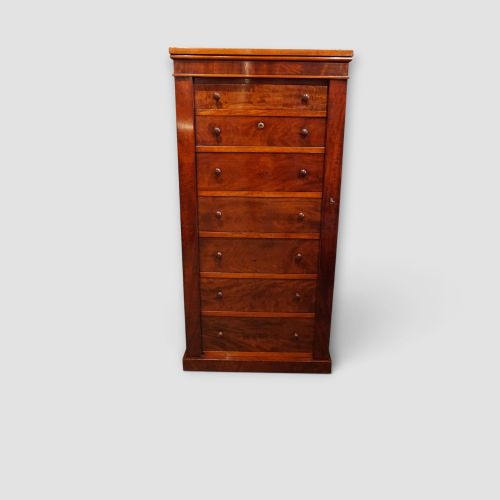
- Wellington chest
- A tall, narrow chest of drawers secured by a hinged vertical locking flap on one side. This locking mechanism holds all drawers shut with a single key.
Victorian Mahogany Secretary Desk: Frequently Asked Questions
How do I use a secretary desk today?
Drop-front writing drawers and cylinder tops provide a concealed space for laptops and correspondence while keeping rooms tidy.
Lower shelving and drawers offer practical storage for books, stationery, or household files in living areas and studies.
How do I care for nineteenth-century mahogany furniture?
Keep wooden surfaces away from direct heat sources and strong sunlight to prevent the mahogany finish from fading and the veneer from lifting.
Apply a traditional wax polish occasionally to nourish the timber and maintain a soft sheen without building up heavy residues.
How can I tell early Victorian pieces from later ones?
Early pieces from the mid-nineteenth century often display simpler classical proportions and heavier construction using solid mahogany and flame veneers.
Later Victorian and Edwardian examples frequently incorporate lighter satinwood inlay, marquetry decoration, and more eclectic revival styles.