

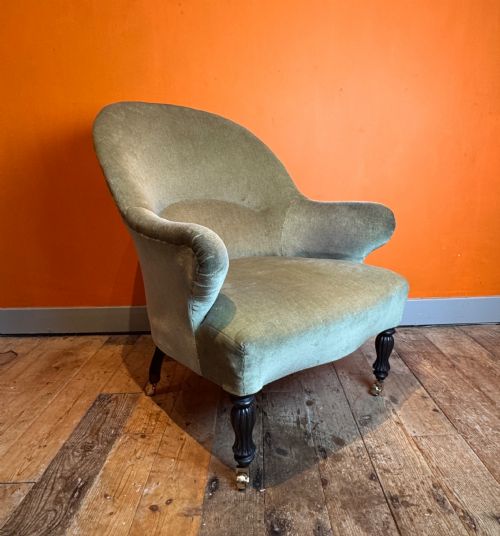
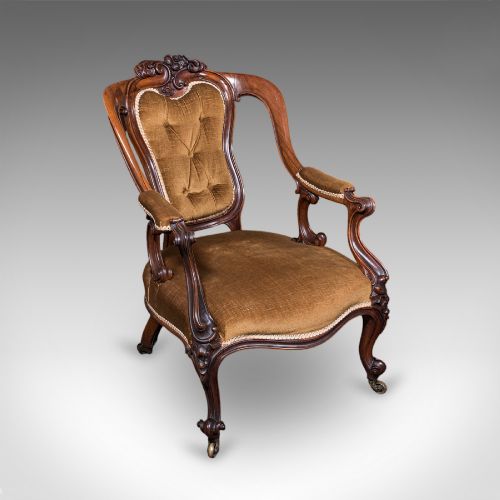
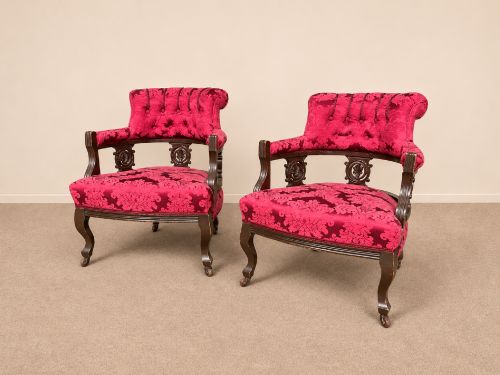
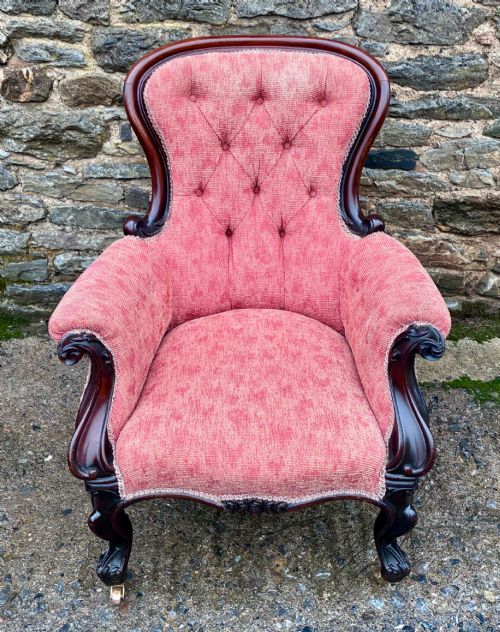
Victorian Mahogany Salon Chairs
Victorian mahogany salon chairs bring formal nineteenth-century seating into modern interiors through rich timber frames and period upholstery.
Victorian Mahogany Salon Chairs
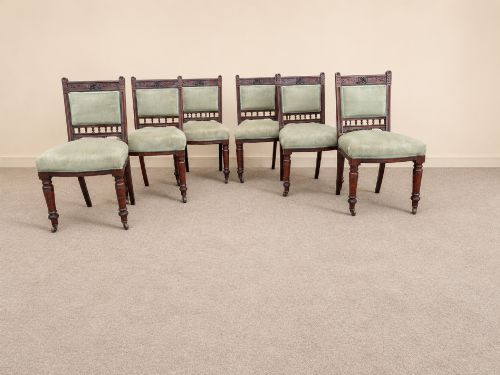
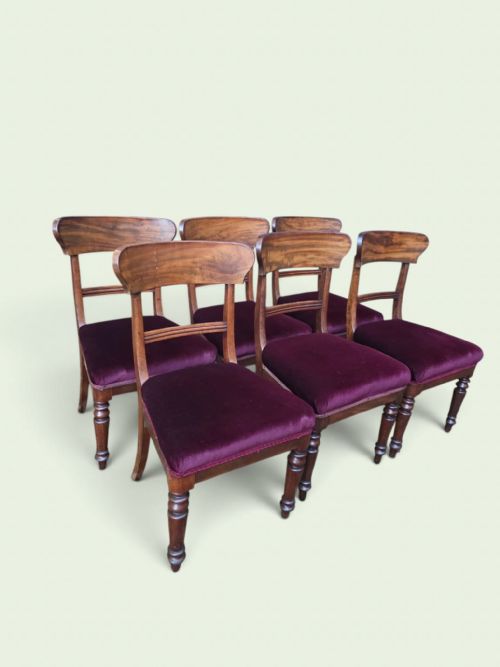
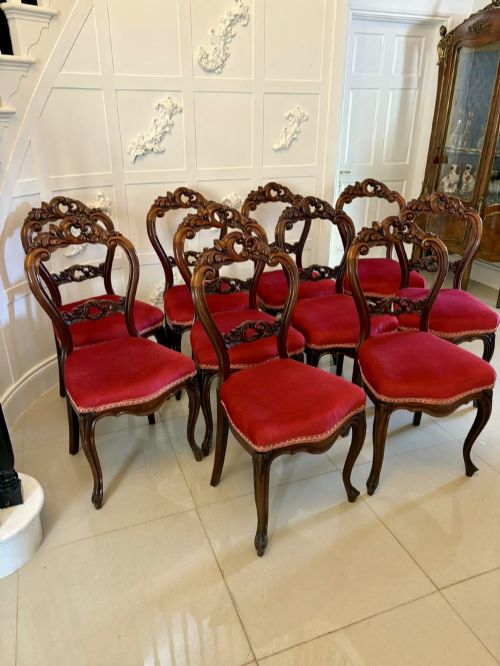
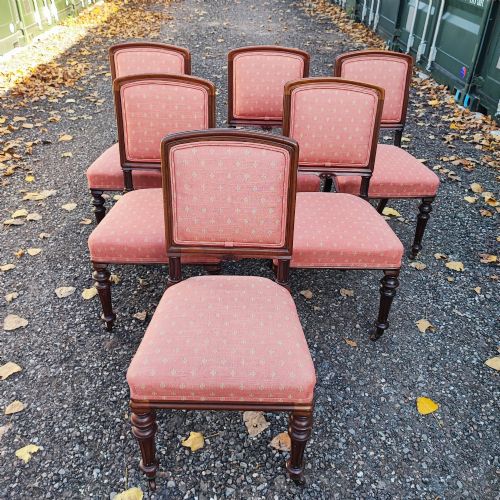
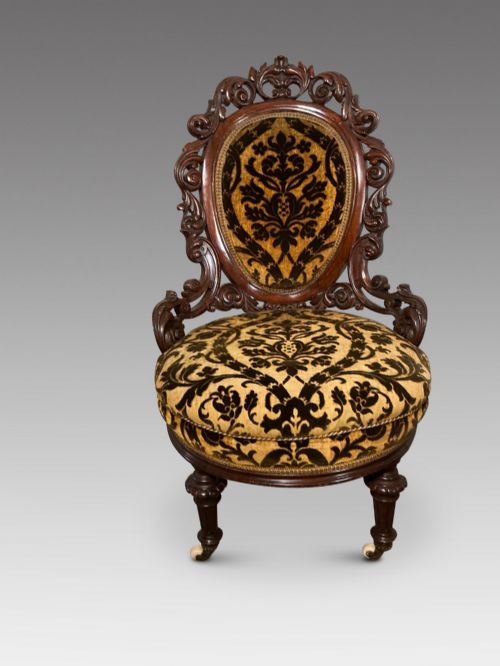
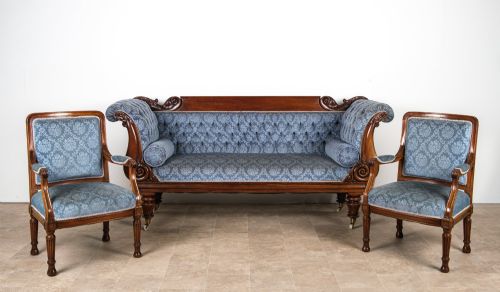
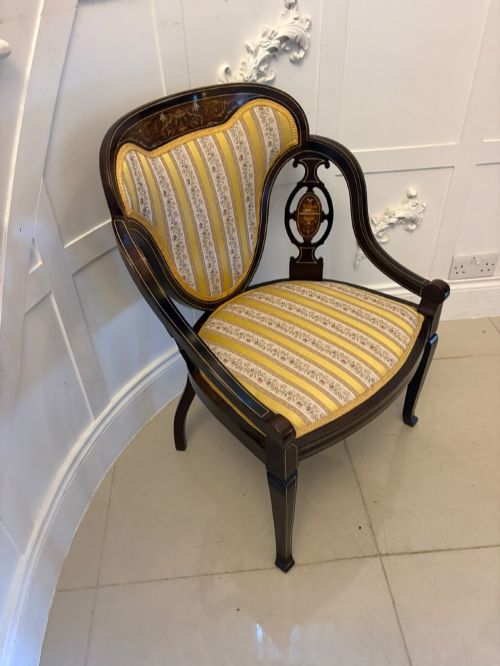
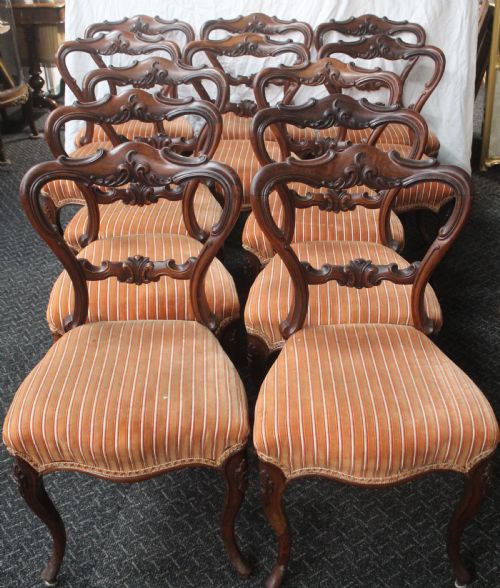
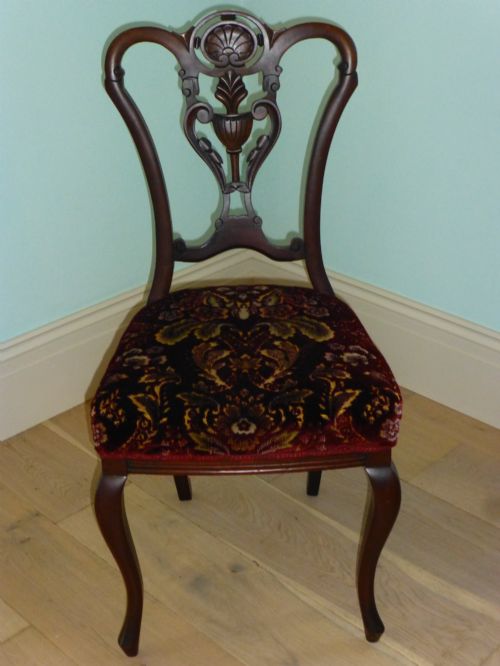
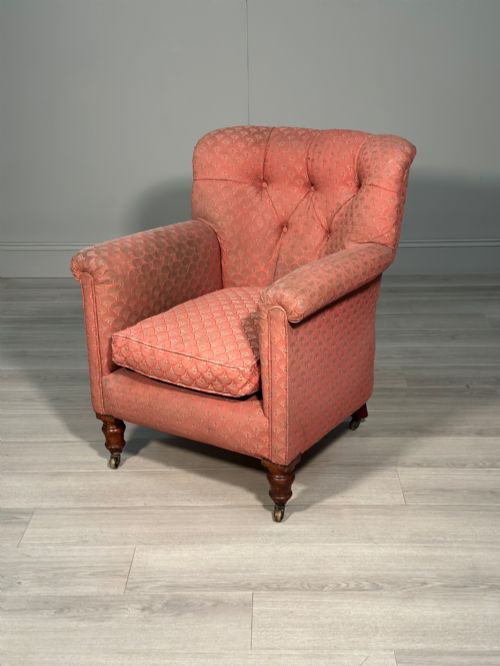
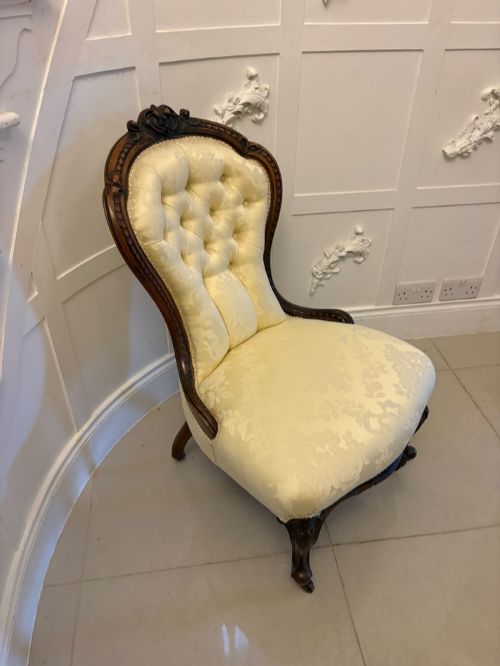
Victorian mahogany salon chairs encompass a range of nineteenth-century seating forms designed for reception rooms, including side chairs, armchairs, and matching suites. The pieces on this page span from early Victorian designs through to the late nineteenth century, reflecting diverse domestic uses from formal dining to parlour lounging.
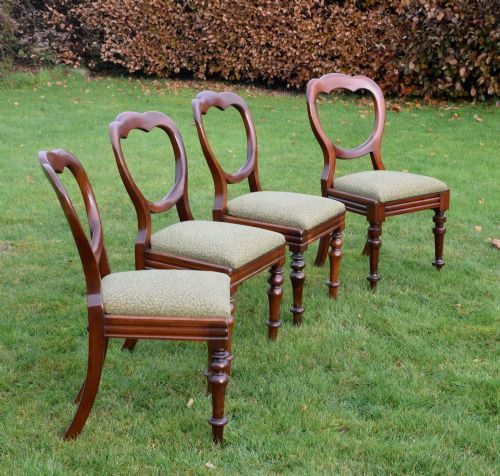
Makers utilised various regional interpretations across Britain, producing balloon backs, spoon backs, and cabriole leg formats. Buyers encounter both single occasional seats and matched sets ranging from pairs up to ten dining chairs.
Materials and Techniques
Frames rely primarily on solid mahogany, occasionally incorporating rosewood, walnut, bone, and boxwood inlay for decorative contrast. Timber was typically turned, carved, or curved into balloon and spoon back profiles.
Upholstery relies on traditional textiles such as velvet, damask, and brocade, secured over sprung bases and deep buttoning techniques.
Victorian Mahogany Salon Chairs Retail Price Guide 2026
Typical asking prices for victorian mahogany salon chairs among the pieces listed under this phrase on Sellingantiques today, from the lower quarter to the upper quarter. They describe what is for sale here now, not the wider market.
One unexpected military-historic offering is the colonel's salon chair, proving Victorian officers appreciated a well-upholstered sit.
Distinction in Craft
Quality rests in the crispness of the timber carving and the structural integrity of the frame joints. Hand-carved details and substantial mahogany scantlings distinguish finer salon seating from simpler utility chairs.
The sophistication of the timber grain and the precision of inlaid decorative elements mark the upper tier of nineteenth-century production.
J.B. C&W·Holland & Sons
The Victorian Mahogany Salon Chairs Glossary
- Balloon back
- A chair back shaped in a continuous oval curve resembling an inflated balloon, popular during the mid-nineteenth century.
- Spoon back
- An upholstered chair back with a concave wooden rim reminiscent of a spoon bowl, designed to fit the human spine.
- Cabriole leg
- A furniture leg that curves out at the knee and tapers inward to an ankle, frequently terminating in a scroll or pad foot.
- Button back
- An upholstery style where depressions are formed in the padding by stitching buttons in a grid pattern.
- Damask
- A reversible figured fabric woven on a jacquard loom, frequently utilised for period parlour seating.
Victorian Mahogany Salon Chairs: Frequently Asked Questions
How do I identify a Victorian salon chair?
Examine the timber frame for solid mahogany construction and typical nineteenth-century silhouettes like balloon or spoon backs. Look for period joinery methods beneath the seat.
Check for stylistic cues such as carved foliate motifs, cabriole legs, and traditional upholstery materials like velvet or damask.
Were these chairs used for dining?
Many Victorian mahogany chairs served dual purposes in dining rooms and parlours depending on their height and arm configuration. Side chairs and balloon backs often functioned around dining tables.
Armchairs and low salon seats were generally reserved for reception rooms and drawing rooms.
How should I care for mahogany frames?
Protect antique mahogany from direct sunlight and drastic temperature fluctuations to prevent timber splitting. Dust regularly with a dry cloth and apply occasional wax polish.
Avoid silicone-based sprays which can degrade the aged patina of nineteenth-century polish over time.
Can I mix different chair styles together?
Nineteenth-century interiors frequently combined diverse seating forms within the same reception space. Pairing side chairs with a matching armchair creates an authentic period arrangement.
Ensure scale and timber tone remain complementary when grouping disparate Victorian pieces.