

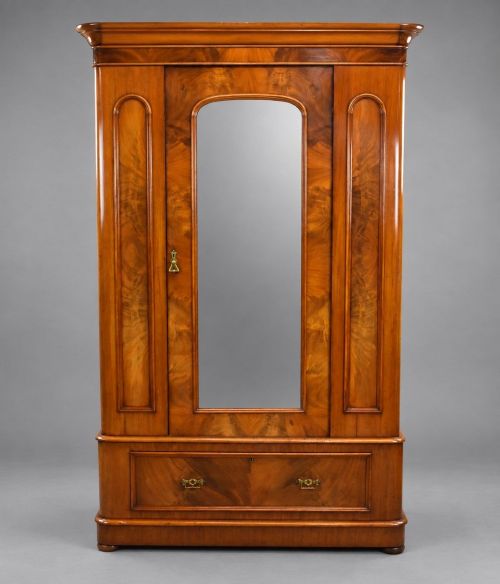
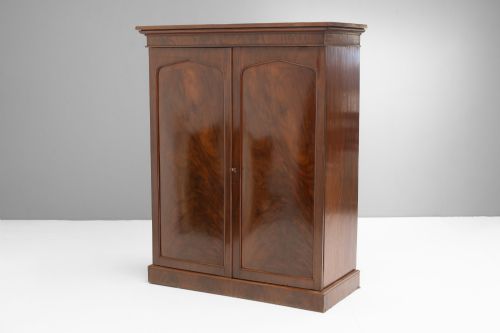
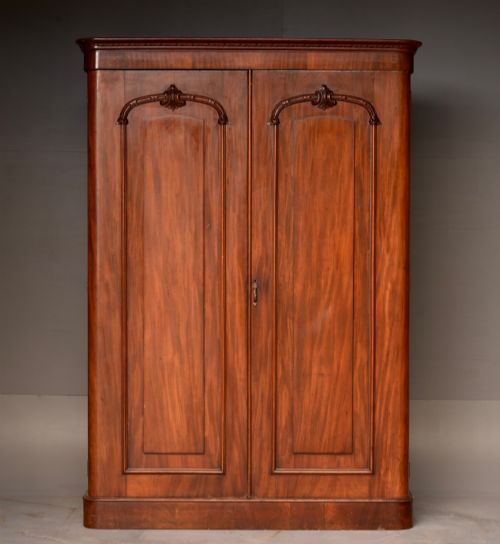
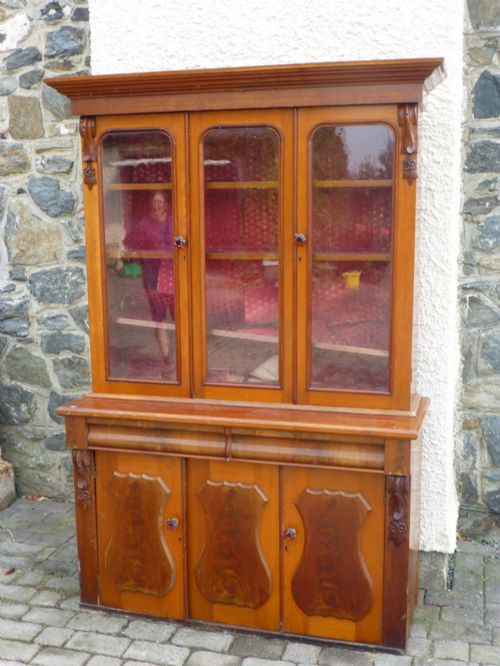
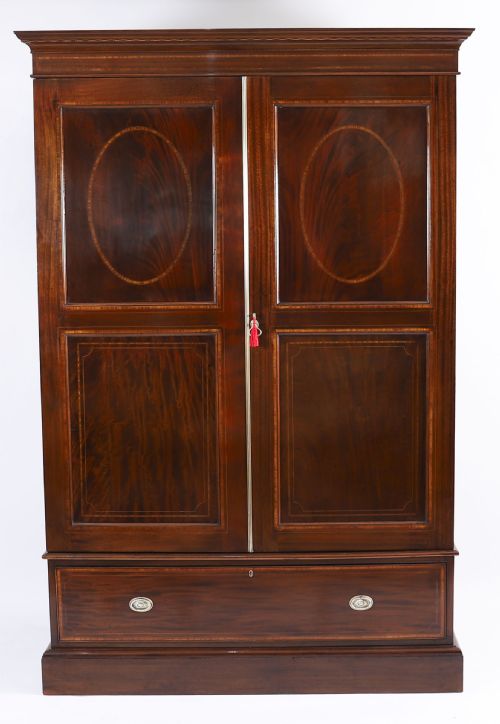
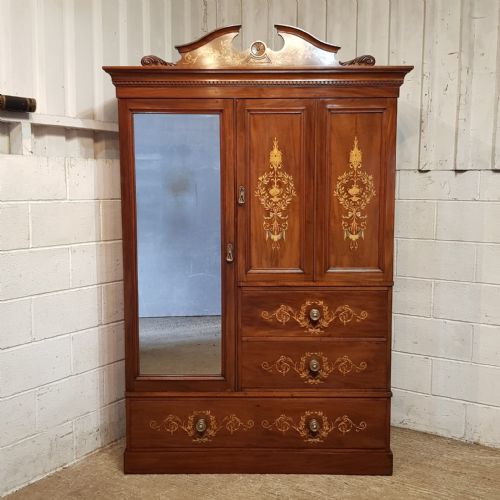
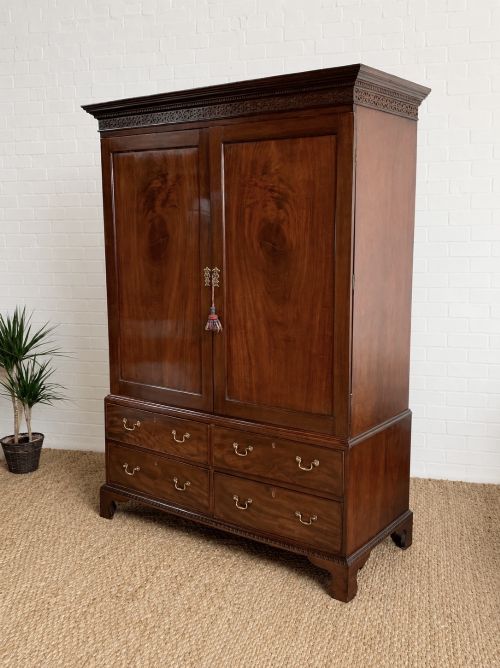
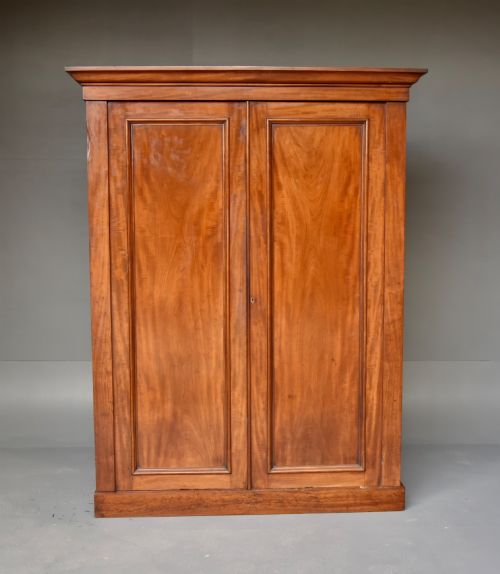

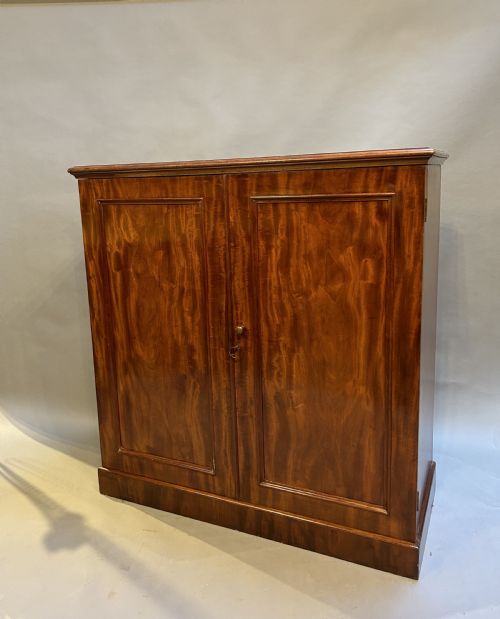
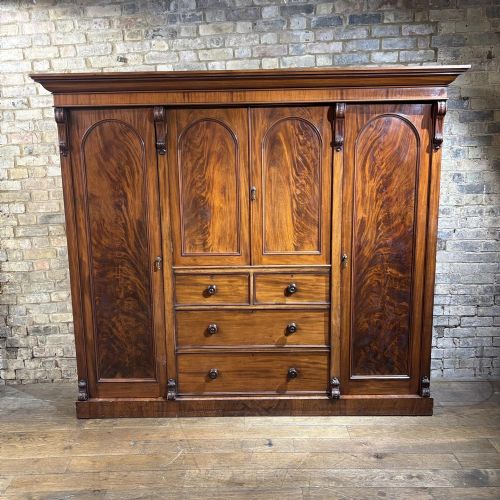
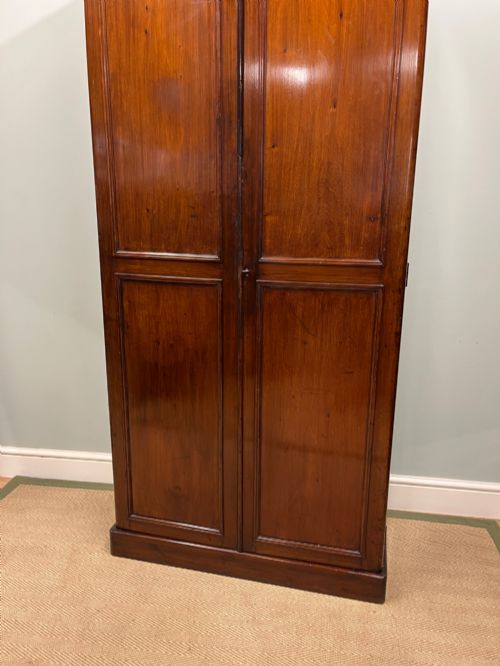
Victorian Mahogany Press Cupboard
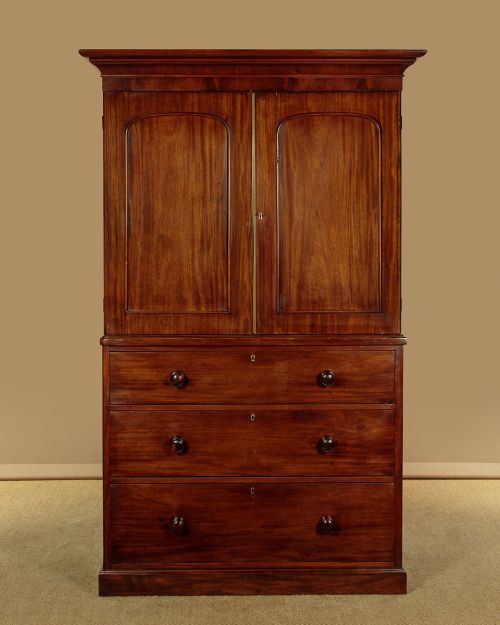
A victorian mahogany press cupboard offers substantial bedroom storage, combining deep sliding linen trays above and graduated drawers below.
Victorian Mahogany Press Cupboard
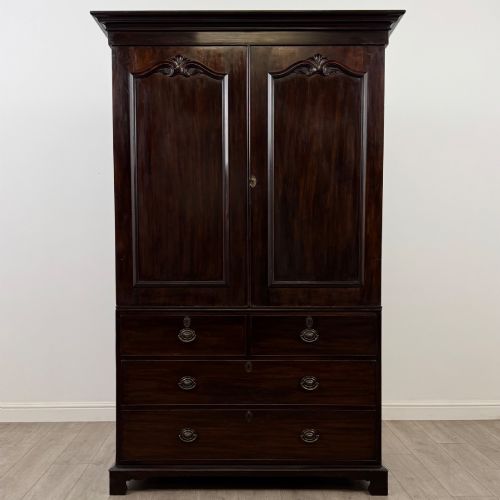
A victorian mahogany press cupboard is a traditional two-part storage piece designed for domestic textiles and garments. The upper section typically encloses sliding trays or shelves behind panelled doors, while the lower section contains a chest of drawers.
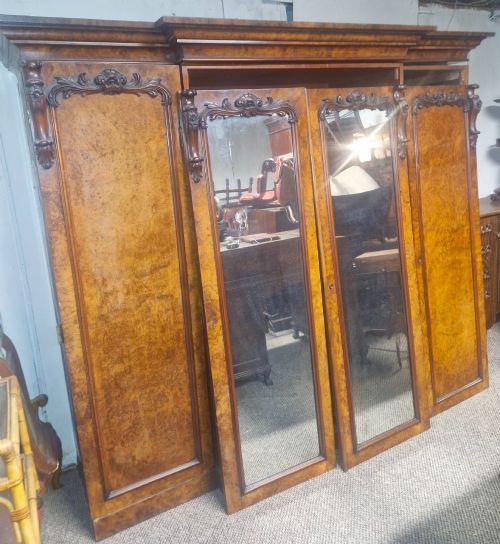
Most examples encountered here date from the nineteenth century, spanning periods from William IV through late Victorian styles. These pieces range from modest single-door formats to grand breakfront and triple-door wardrobe configurations.
Regional variations appear across the selection, including Scottish presses, Welsh vernacular pieces, and Channel Island designs. Makers and retailers such as Maples and Co, Edwards & Roberts, and Heal's also contributed notable examples to this heritage.
Materials and Construction
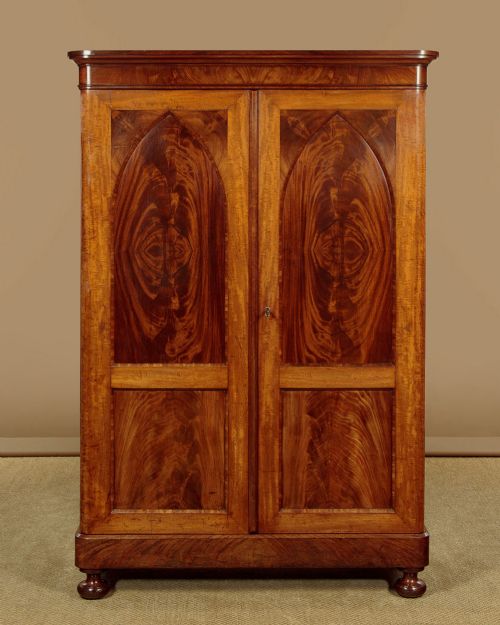
Makers utilised solid mahogany and applied flame mahogany veneer to primary surfaces, achieving rich grain patterns across large panel doors and drawer fronts. Secondary timbers such as oak and pine frequently form internal drawer linings and carcass backs.
Brass hardware, including recessed handles, escutcheons, and hinges, secures doors and drawers while providing functional contrast to the dark timber. Glass panels, satinwood stringing, and blind fretwork cornices occasionally accent specific Victorian and Edwardian iterations.
Victorian Mahogany Press Cupboard Retail Price Guide 2026
Typical asking prices for victorian mahogany press cupboard among the pieces listed under this phrase on Sellingantiques today, from the lower quarter to the upper quarter. They describe what is for sale here now, not the wider market.
Listings feature mahogany, satinwood, oak, and pine across Victorian, Edwardian, and Regency periods.
Assessing Craftsmanship
The selection of timber grain defines visual hierarchy, with book-matched flame mahogany veneers marking superior cabinet-making. Subtleties in architectural moulding, such as carved cornices and fine marquetry inlay, distinguish standard domestic furniture from high-workshop production.
Structural integrity depends on the precision of drawer dovetailing and the smooth operation of internal linen slides. Pieces retaining original brass fittings and unified finishes hold greater integrity than those altered over subsequent decades.
maples & co·Heals·Edwards & Roberts·Howard & Son's
The Victorian Mahogany Press Cupboard Glossary
- Press cupboard
- A large storage piece featuring upper sliding trays enclosed by doors and lower drawers for apparel. This form evolved to store household linens flat before modern hanging wardrobes became standard.
- Flame mahogany
- A decorative veneer sliced from timber where branches join the main trunk, producing a flickering, fiery grain pattern. Cabinet-makers used this veneer symmetrically on prominent doors and drawer fronts.
- Compactum
- A multi-functional wardrobe combining hanging space, drawers, shelves, and sometimes sliding trays within a single unified carcass. This efficient format gained popularity during the Victorian and Edwardian eras.
- Blind fretwork
- Carved ornamentation applied to a solid background rather than pierced right through. It creates textural relief along cornices and friezes without weakening the structural timber.
- Breakfront
- A piece of furniture where the central section projects forward from the flanking wings. This architectural arrangement adds depth and visual rhythm to large wardrobes and bookcases.
Victorian Mahogany Press Cupboard: Frequently Asked Questions
How were press cupboards used originally?
These pieces served as primary storage for household textiles, folded linens, and garments before fitted bedroom furniture became common. The upper sliding trays kept folded fabrics accessible without creasing.
The lower drawers accommodated heavier clothing and personal items, keeping bedrooms tidy and organised.
Can these accommodate modern clothing hangers?
Many traditional presses feature sliding shelves or linen trays in the upper section rather than hanging space. Some variations, such as compactum wardrobes, incorporated dedicated hanging compartments alongside shelves.
Buyers often assess internal configurations to determine whether shelves suit folded garments or if adaptation is needed for modern wardrobes.
How do I date a Victorian piece?
Dating relies on architectural styles, construction methods, and timber choices spanning the nineteenth century. Early examples show Georgian stylistic influences, while later Victorian pieces incorporate heavier mouldings or elaborate marquetry.
Maker stamps, secondary wood types like oak or pine, and hardware styles provide further chronological markers.
How do I fit a large press into a room?
Press cupboards were constructed in two or more sections, separating the upper cupboard from the lower drawer base for transport. This modular design assists with maneuvering the heavy mahogany carcass through doorways and up staircases.
Checking ceiling height and floor space ensures the tall proportions and projecting cornices integrate comfortably into modern bedroom layouts.