
Victorian Mahogany Lounge Chair
A victorian mahogany lounge chair offers deep seats and rich timber frames, bringing nineteenth-century comfort and craft to the modern sitting room.
Victorian Mahogany Lounge Chair
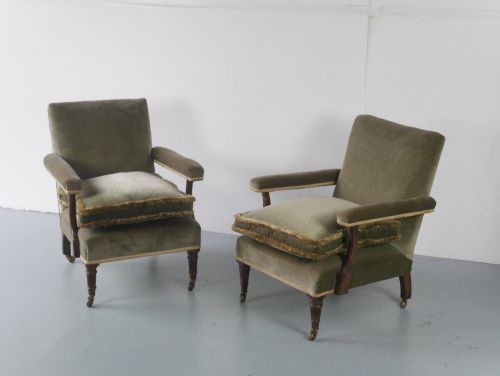
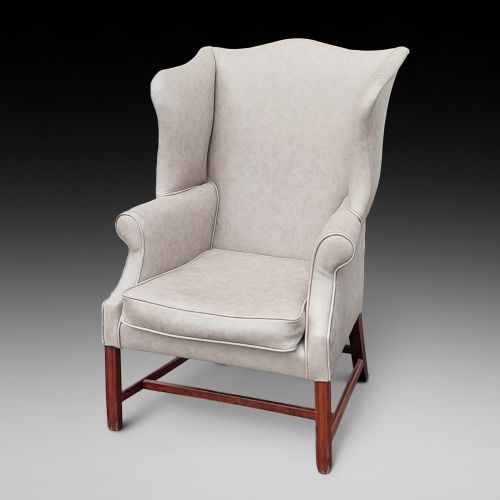
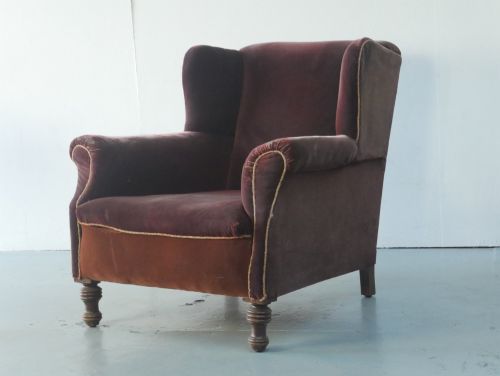
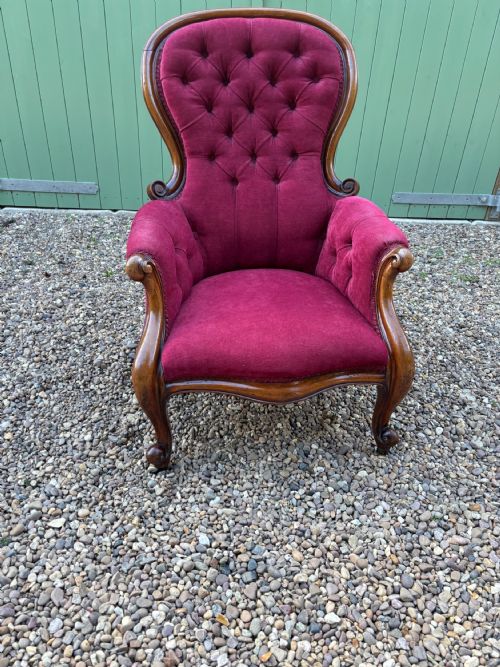
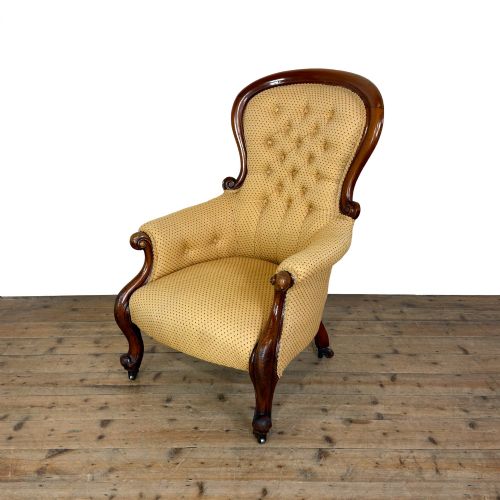
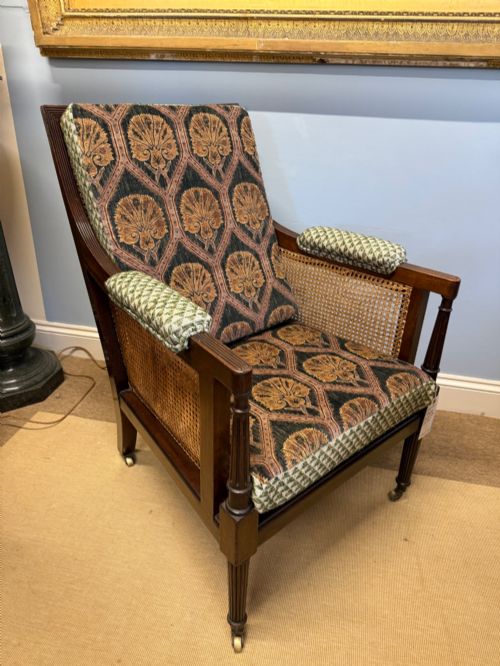
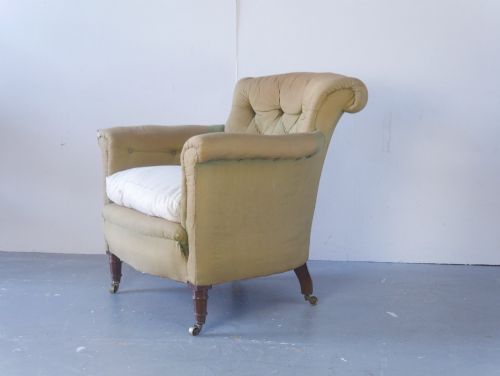
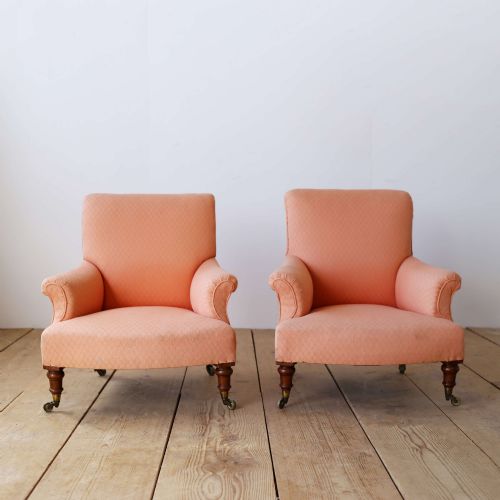
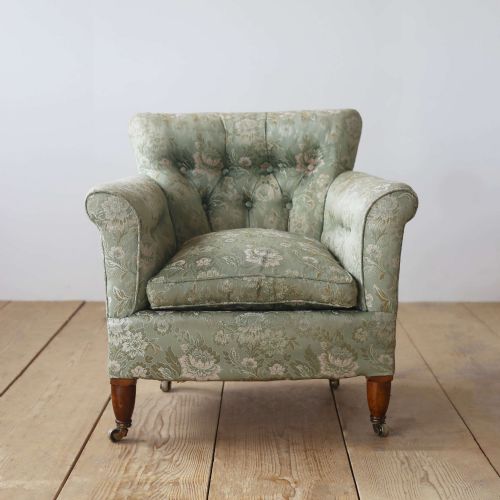
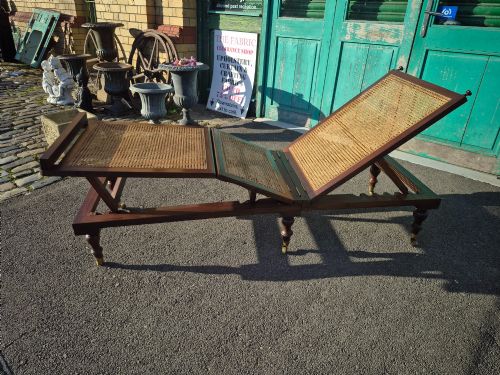
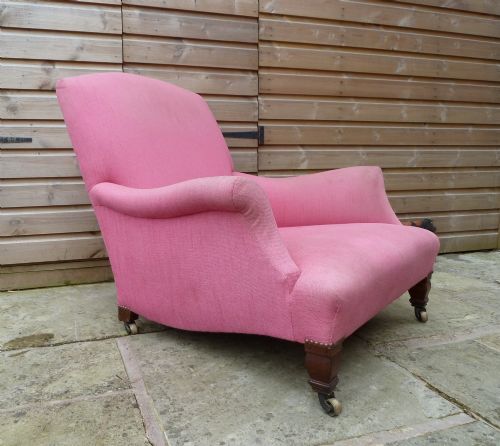
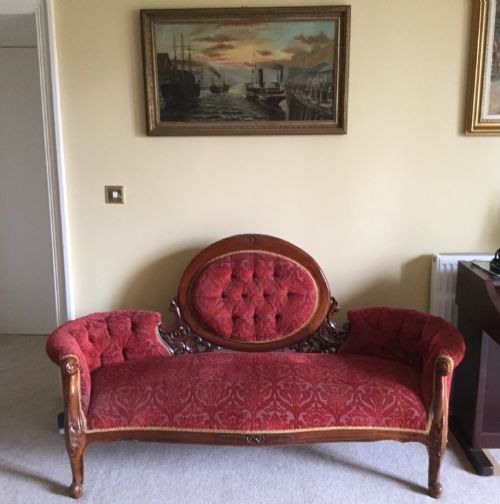
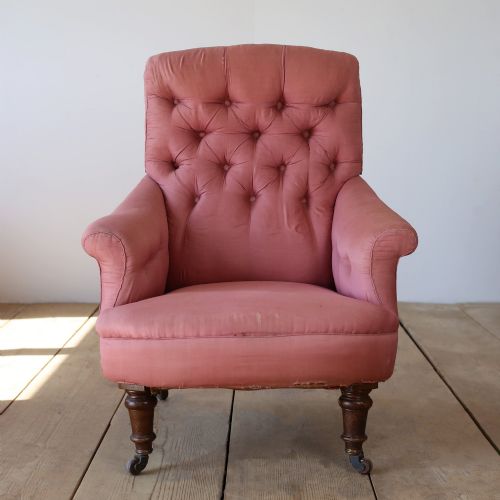
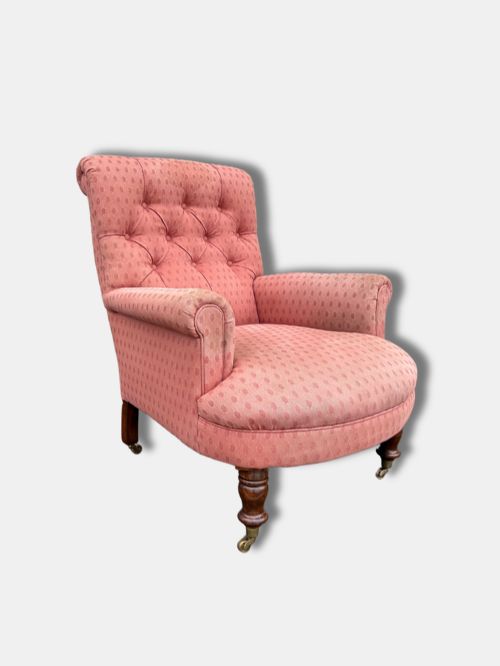
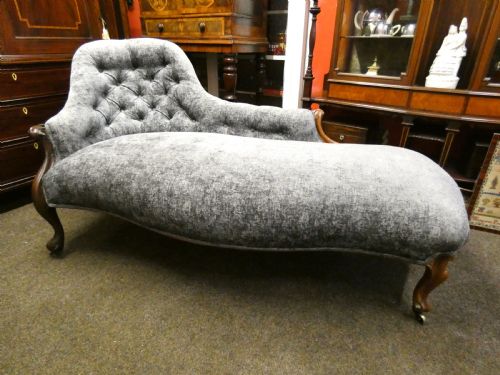
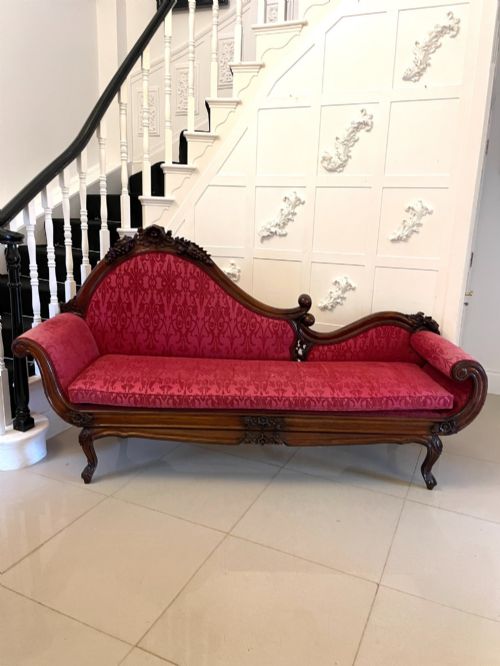
A victorian mahogany lounge chair spans generous gentleman's armchairs, button-back library seats, and elongated chaise longues designed for reclining. These nineteenth-century forms appear across Victorian, Regency, and Arts and Crafts styles, reflecting diverse domestic interiors from grand country houses to modest parlours.
The most common examples on this page feature rich mahogany timber frames paired with sprung upholstery and supportive armrests. Makers of the period utilised durable local and imported woods to build substantial frames capable of supporting heavy fabric coverings and deep cushioning.
Materials and construction methods
Makers shaped solid mahogany into curved structural frames, often incorporating exposed polished wood on arm supports, carved rails, and turned or barley twist legs. This dense timber provided the structural rigidity needed for heavy sprung seats and elaborate button-back upholstery.
Upholstery techniques relied on traditional stuffing materials secured over complex spring bases, then finished with textiles such as velvet, damask, leather, and floral fabric. Brass tacks and decorative cord borders frequently secured these heavy coverings to the wooden frames.
The documented styles span simple country house vernacular pieces alongside elaborate Victorian Rococo Revival forms and Arts and Crafts designs.
Assessing quality in nineteenth-century seating
Quality rests in the sculptural confidence of the mahogany frame and the integrity of the underlying joinery. Finer pieces demonstrate crisp hand-carving on structural elements and balanced proportions that support the body naturally.
The sophistication of the upholstery build distinguishes standard output from exceptional work. Pieces attributed to distinguished workshops show superior spring tying and resilient stuffing that maintain the intended silhouette over decades of use.
Howard and Sons·George Jack For Morris and Co·Gillows·Holland and Sons
The Victorian Mahogany Lounge Chair Glossary
- Button back
- An upholstery method where depressions are formed in the padding by stitching through to the frame, securing buttons in a geometric grid. This technique keeps internal stuffing from shifting and creates a tailored, textured surface.
- Bergere
- An enclosed armchair featuring woven cane panels on the back and sides within a wooden frame. These seats often accommodate loose down-filled squab cushions for added comfort.
- Spoon back
- A padded chair back shaped like the bowl of a spoon, curving inward to cradle the sitter's spine. This ergonomic form became widespread during the mid nineteenth century.
- Campaign chair
- Portable folding or dismantlable seating designed for travel by officers in the field. These clever pieces utilise brass hinges and screw-in components for easy packing.
Victorian Mahogany Lounge Chair: Frequently Asked Questions
How do I care for antique upholstery?
Protect delicate textiles like velvet, damask, and silk brocade from direct sunlight to prevent fading and fibre degradation. Regular gentle vacuuming with a soft brush attachment removes dust without snagging the weave.
Keep wooden mahogany frames polished with appropriate wax to nourish the grain and prevent the timber from drying out.
Where were chaise longues placed?
Chaise longues were traditionally positioned in drawing rooms, master bedrooms, and morning rooms where occupants could rest during the day without retiring to bed. Their elongated form allowed for fully reclined seating while remaining suitably formal for receiving visitors.
They often stood freestanding in large rooms or against a primary wall beneath tall windows.
Are these chairs comfortable for daily use?
Many nineteenth-century lounge chairs were built with deep sprung seats and ergonomic curves intended for long hours of reading or conversation. Modern owners frequently find them remarkably supportive when the internal webbing and springs remain sound.
Pieces that have undergone careful reupholstering provide contemporary comfort while retaining their historic aesthetic.