


Gold Fabric Armchairs
Gold fabric armchairs bring distinct character to a room, offering seating built across the nineteenth and twentieth centuries.
Gold Fabric Armchairs
Gold fabric armchairs encompass nineteenth-century seating alongside Edwardian and later twentieth-century forms. Buyers encountering gold fabric armchairs on this page find nineteenth-century examples alongside Edwardian and later interpretations.
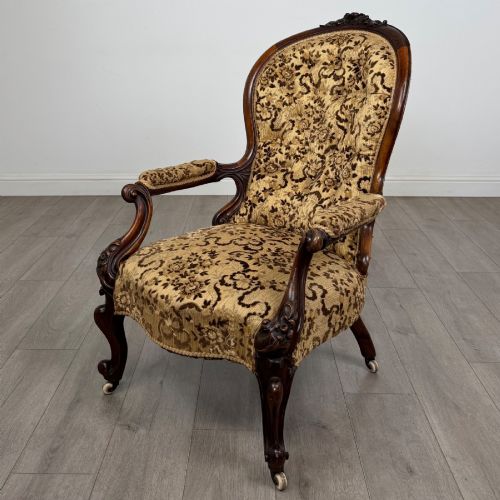
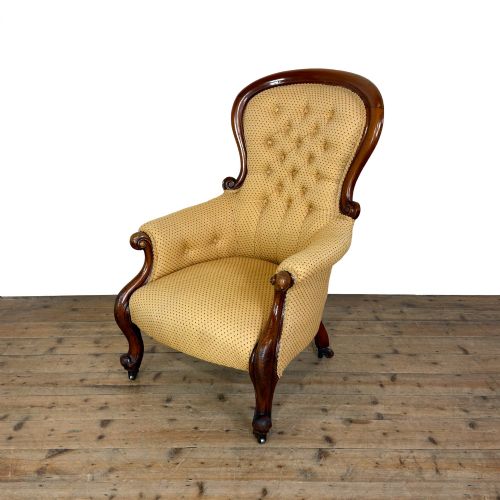
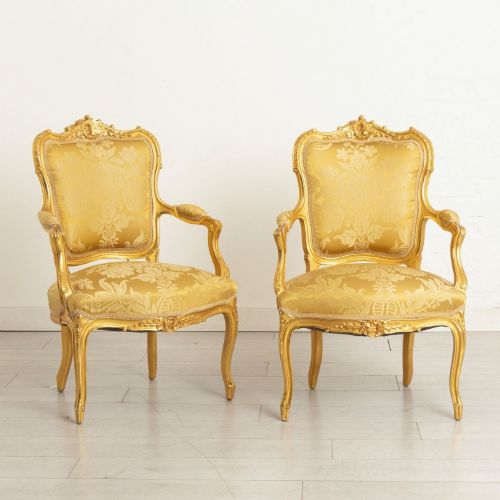
The selection includes French Rococo Revival models, Queen Anne style chairs, and Victorian button-back upholstered tub armchairs. Maker intent aligns with period stylistic shifts towards ornate carving or restrained upholstery.
Armchairs range from giltwood frames paired with silk fabric to mahogany carver chairs and low-back wing designs. Each piece reflects specific regional influences spanning French styles to Portuguese elbow chairs.
How they were made
Frames rely on giltwood and mahogany, shaped through traditional joinery and carved ornamentation. Giltwood surfaces receive thin layers of gold leaf over preparation layers.
Upholstery incorporates silk, damask fabric, and broader textile selections secured to internal webbing and stuffing. Button-back techniques and silk parrot designs demonstrate specific decorative approaches applied to the upholstery layer.
Styles represented include French Rococo, Queen Anne, and Edwardian, alongside salon chairs and low-back wing armchairs.
What varies in quality
Frame construction differs between deeply carved giltwood structures and simpler mahogany or wood carver chairs. Finer examples display intricate scroll arms and substantial giltwood detailing.
Upholstery execution ranges from plain fabric coverings to patterned silk and damask textile applications. The cohesion between frame style, such as French Neoclassical or Louis XIV, and the chosen fabric dictates the overall standard.
The Gold Fabric Armchairs Glossary
- Giltwood
- Wood carved and surfaced with gold leaf or powder. This finish appears frequently on nineteenth-century French frames.
- Damask
- Reversible figured fabric with patterns formed through weaving techniques. It provides a formal texture suitable for period upholstery.
- Carver chair
- An armchair designed with open arms, traditionally placed at the head of a dining table or used as a salon seat. Edwardian examples often utilise mahogany for this form.
- Tub armchair
- A fully upholstered chair with a continuous curved back and arms resembling a tub. Victorian versions often feature button-back detailing.
- Scroll arms
- Armrests shaped in a curving scroll profile. These appear on nineteenth-century occasional chairs.
Gold Fabric Armchairs: Frequently Asked Questions
What periods do these armchairs represent?
The selection spans pieces created during the nineteenth and twentieth centuries. Specific years and eras include Victorian, Edwardian, and the eighteen-eighties.
Craftsmanship evolves across these decades, shifting from ornate giltwood carving towards varied regional styles and simpler wood frames.
How do French styles differ from other types?
French styles, including Rococo Revival and Louis XIV, emphasise decorative giltwood frames and carved scroll arms. They often pair with silk fabric.
Other regional or period variations, such as Queen Anne or Edwardian pieces, utilise different structural silhouettes and upholstery textiles.
What types of upholstery fabrics appear?
Upholstery materials include silk, damask fabric, and general textiles. Some pieces incorporate silk parrot designs or traditional button-back padding.
These textile choices reflect both the period of manufacture and subsequent reupholstering work undertaken on the chairs.