

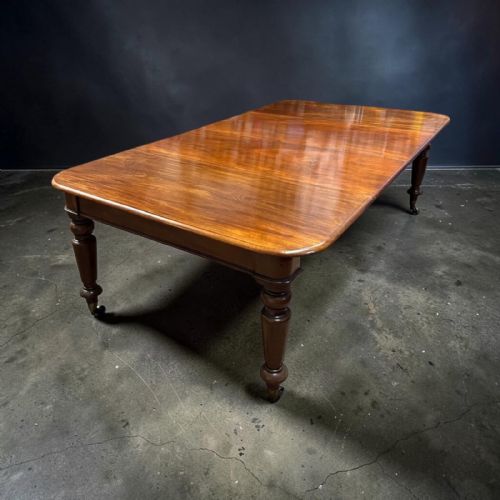
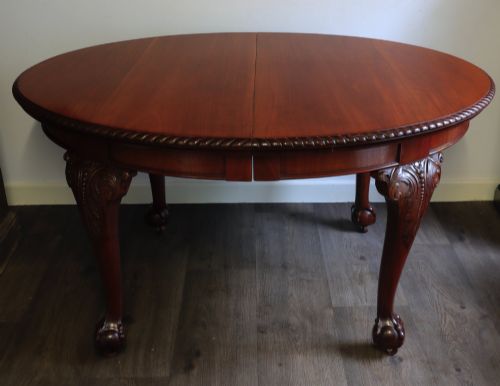
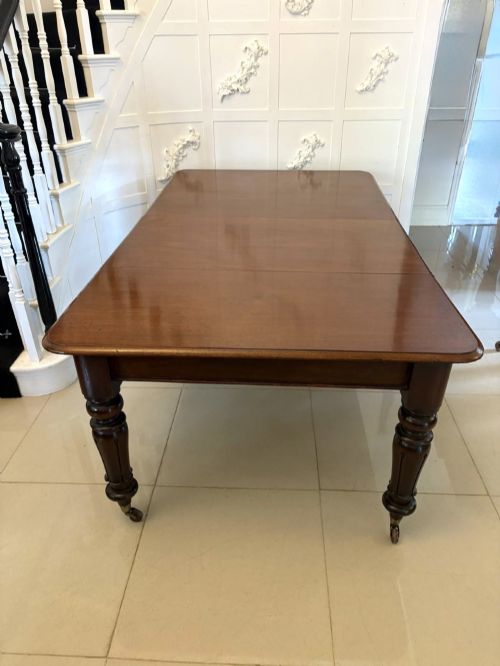
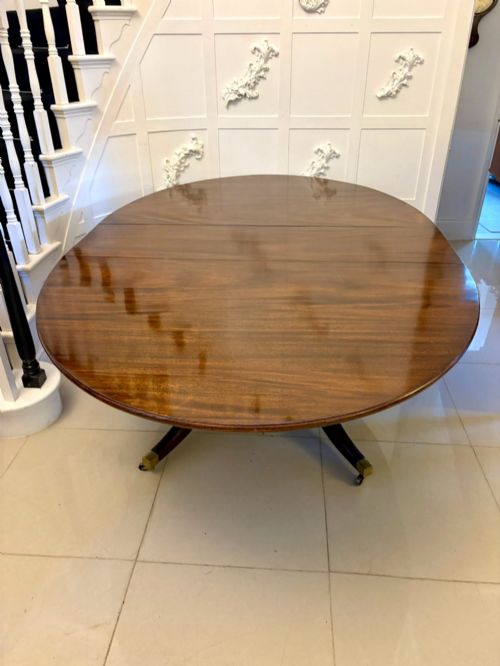
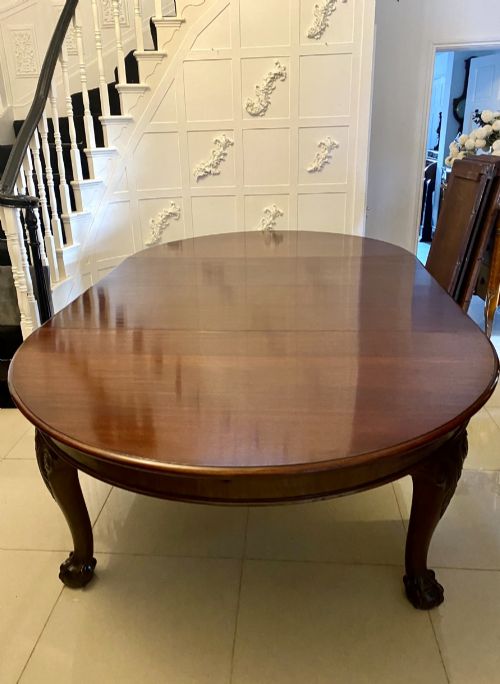
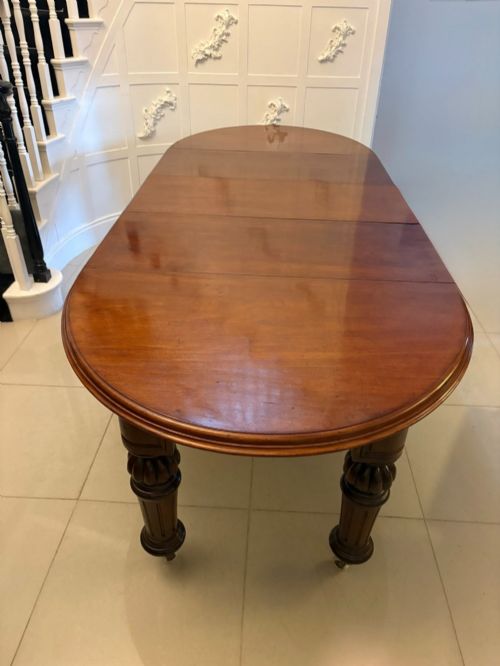
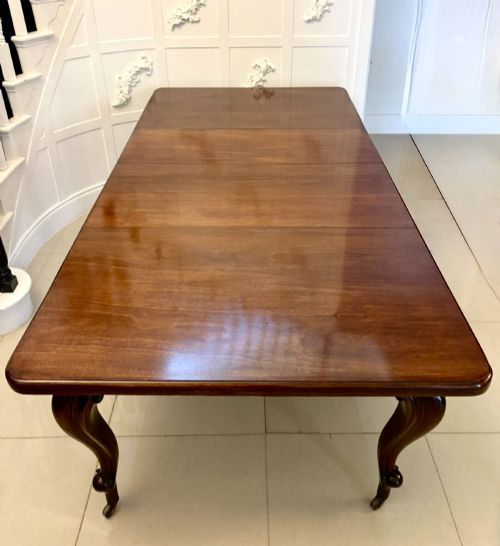
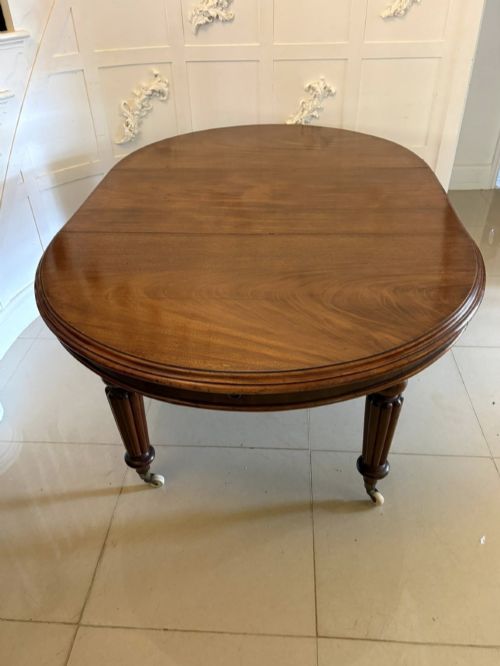
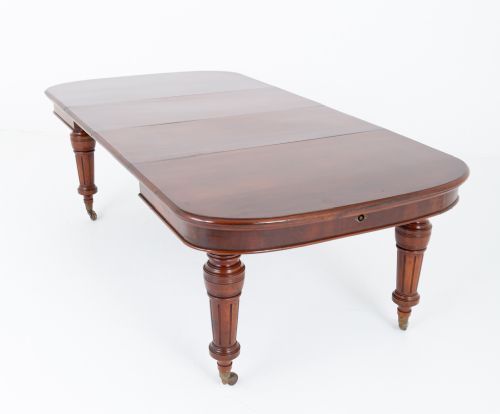
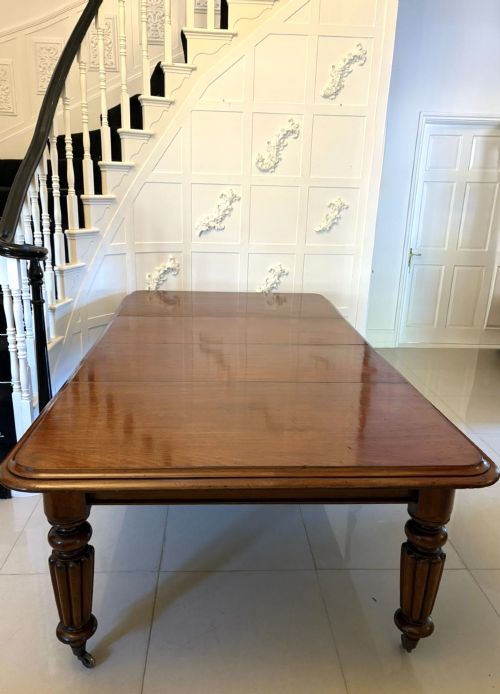
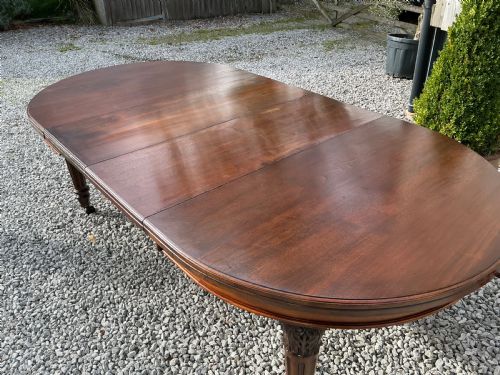
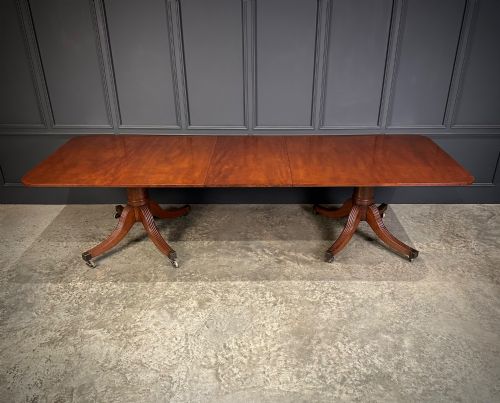
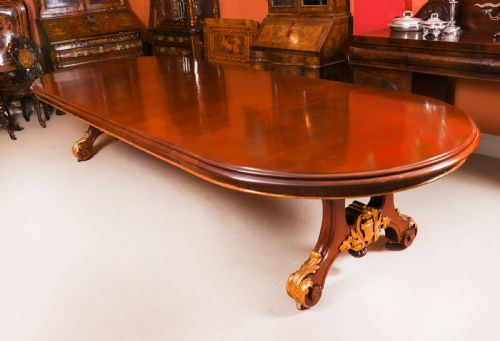
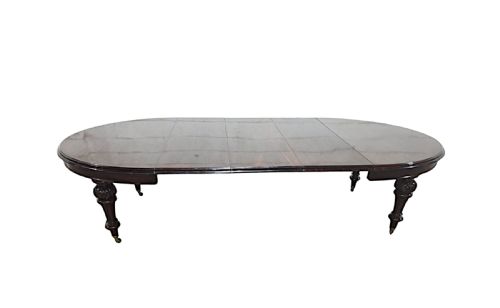
Victorian Mahogany Extendable Table
These robust victorian mahogany extendable table pieces offer adaptable dining spaces through clever leaf additions, shaped from rich timbers for lasting utility.
Victorian Mahogany Extendable Table
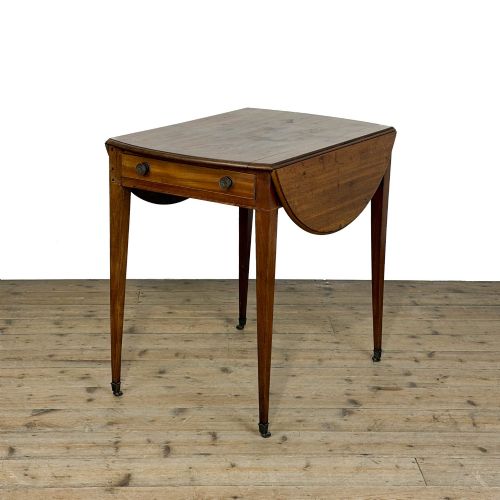
A victorian mahogany extendable table is a practical dining piece designed to expand for larger gatherings using extra leaves. The listings show forms ranging from compact drop-leaf and pembroke tables to substantial twin pedestal and multi-leaf dining tables.
Most examples originate from the nineteenth century, including Victorian, William IV, and Regency periods. Buyers will frequently encounter versions featuring winding mechanisms or drop leaves that alter length with ease.
How they were made
Craftsmen built these tables primarily using mahogany, selected for its deep grain and structural stability. Secondary materials such as brass, metal, ceramic, and gold leaf appear in fittings, castors, and decorative accents.
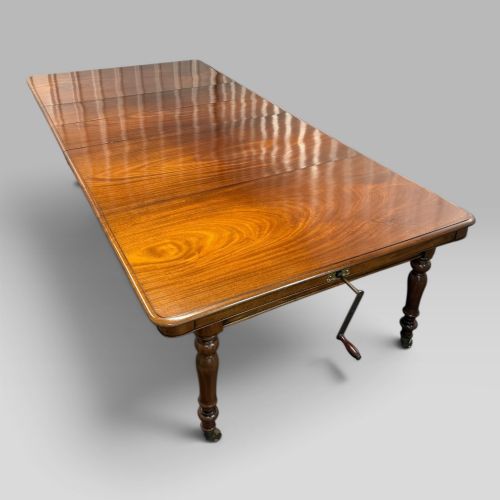
Makers utilised mechanical additions like wind-out screw mechanisms, draw leaves, and removable extra leaves to allow smooth extension. Pedestals, pillars, and D-ends provided the necessary support for heavy timber tops.
Victorian Mahogany Extendable Table Retail Price Guide 2026
Typical asking prices for victorian mahogany extendable table among the pieces listed under this phrase on Sellingantiques today, from the lower quarter to the upper quarter. They describe what is for sale here now, not the wider market.
Listings feature mahogany, brass, metal, gold leaf, ceramic, and steel across 19th-century periods.
What varies in quality
The distinction between standard examples and the finest pieces lies in the choice of figured or flame mahogany and the precision of the extension mechanism. Superior items display careful matching of timber across multiple extra leaves and robust pillar or split base supports.
Design complexity also marks out the better tables, seen in sophisticated D-end configurations and well-executed stylistic details influenced by Georgian and Regency traditions. Poorer examples rely on simpler construction without sophisticated winding systems.
Wylie & Lochead, Glasgow·F & J Smith
The Victorian Mahogany Extendable Table Glossary
- Extending table
- A dining table designed with a central gap or mechanism to accept extra leaves, increasing overall length. This allows the surface to expand for guests and contract for everyday use.
- Wind-out mechanism
- A mechanical screw system operated by a handle that draws the table halves apart or together. It enables smooth operation when inserting or removing leaves.
- Drop-leaf table
- A table with a fixed centre section and hinged flaps on either side that fold down. These flaps are supported by swing legs or brackets when raised.
- D-end table
- A dining table whose ends form semi-circles resembling the letter D. These sections often detach or separate from central leaves.
- Pembroke table
- A small occasional or breakfast table featuring two hinged drop leaves on opposing sides. It usually includes one or more small drawers beneath the top.
- Flame mahogany
- Timber cut to reveal a distinct, flickering flame-like grain pattern. Cabinet makers reserved this highly decorative veneer for prominent surfaces.
Victorian Mahogany Extendable Table: Frequently Asked Questions
How do winding mechanisms work?
A metal screw rod runs through the centre of the table beneath the top. Turning the handle rotates the screw, pulling the runner tracks apart to create space for extra leaves.
Once the gap matches the width of the leaves, you drop them into place and wind the mechanism back to lock everything securely together.
How many leaves can these tables take?
The capacity depends entirely on the specific frame, runners, and leg support of each individual piece. Listings show tables accommodating anywhere from two to four additional leaves.
Larger formats, such as grand dining tables from the mid-nineteenth century, support extensive leaf configurations to seat up to twenty people.
How do I identify William IV styles?
William IV furniture typically displays heavy proportions, robust pedestals, and carved scroll or paw feet. The timber is often dark, rich mahogany with prominent grain.
These pieces bridge late Regency styles and early Victorian production, leaning towards architectural weight and solid construction.
Are drop-leaf tables sturdy?
Drop-leaf tables rely on hinged flaps supported by swing legs, wooden gates, or pivoting wooden brackets. When properly engaged, these supports bear weight securely.
They offer flexible space-saving utility, allowing households to drop one or both sides when a smaller footprint is required.